

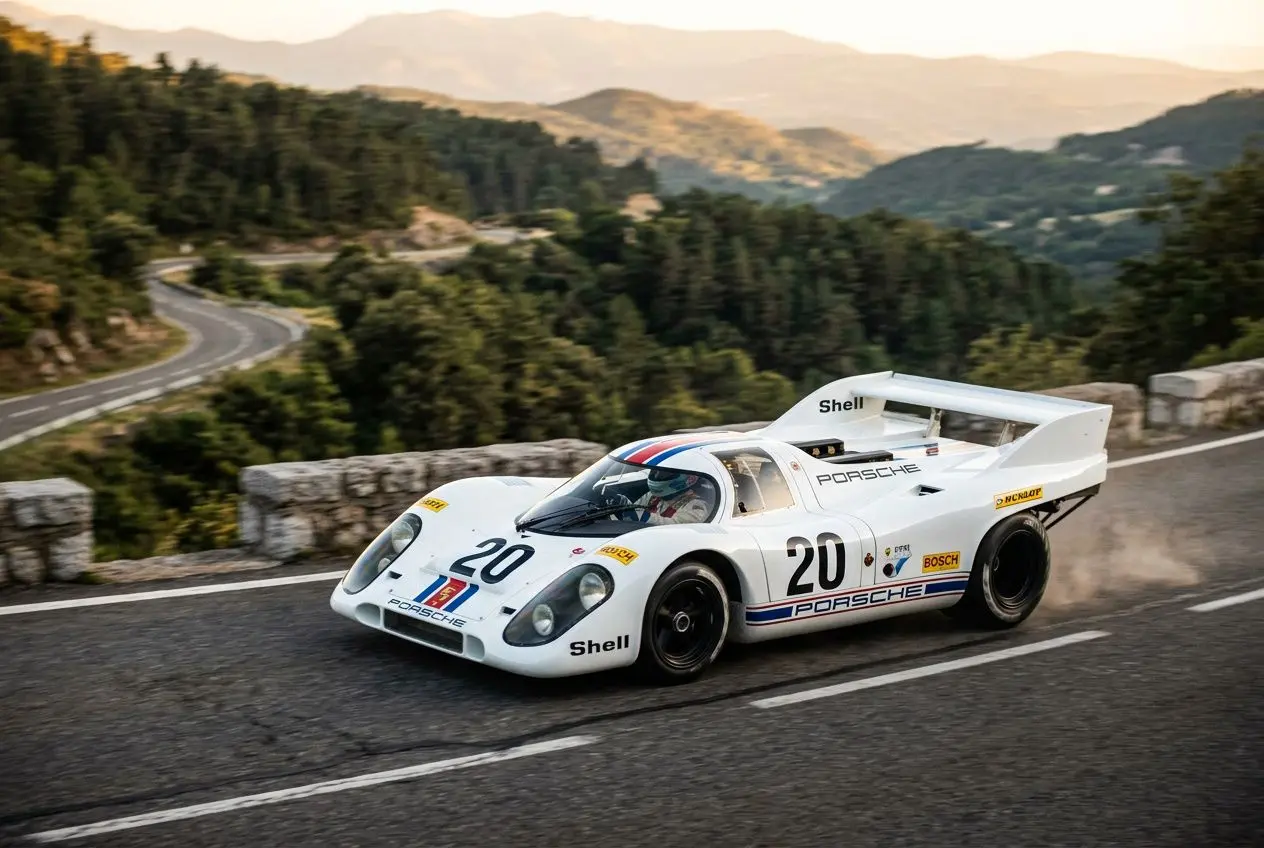
France holds a secret that few foreign automotive photographers know: its roads are among the most beautiful in Europe. Between Alpine switchbacks, cobbled Provençal streets and the winding corniche roads of the French Riviera, every kilometre is an invitation to reach for the camera. Here is our selection of the best spots to photograph an exceptional car in France.
Why France Is a Paradise for Automotive Photography
Few countries pack such diversity of scenery into a few hours of driving. A morning on the cobbled streets of a medieval village, an afternoon on an Alpine pass swept by clouds, an evening facing the Mediterranean — France concentrates in a single territory atmospheres that other countries can only reach after days of travel.
It is no coincidence that the world’s great automotive brands regularly choose France for their catalogue shoots. Bugatti in the Vosges, Porsche across Provence — French light, softer than Spain’s and more contrasted than Germany’s, flatters bodywork like nothing else. This is also what fine art photographers seek: a light that tells a story, that carries emotion.
France also benefits from a remarkably varied road network: low-traffic mountain passes, vineyard lanes in Alsace or Burgundy, small coastal roads that no modern GPS recommends. It is in these cartographic overlooked places that the finest automotive photographs are born.
The French Riviera: Mediterranean Light and Cinematic Backdrops
The Corniche de l’Estérel, between Cannes and Saint-Raphaël, is arguably one of the most spectacular automotive photography spots in Europe. Volcanic red rocks plunge directly into the Mediterranean, creating a striking chromatic contrast — perfect for a red berlinetta or a silver roadster. Early in the morning, before the tourist rush, the road remains manageable for classic cars.
The Grande Corniche, above Nice, offers a perspective that James Bond’s producers know well: a sinuous road suspended between sky and sea, with Monaco as a backdrop. In the golden hour (one hour after sunrise), raking light sculpts body curves with sculptural precision.
In Èze village, medieval alleyways frame cars in an incomparable historic setting. For compact vehicles or small sports cars, a shoot in the narrow streets of this hilltop village produces images that blend history and automotive elegance with natural grace.
The Alps and Col de Turini: Roads of Legend
The Col de Turini, in the Alpes-Maritimes, is inseparable from the Monte-Carlo Rally. Every January, the world’s finest rally cars slide through the snowflakes here — but outside winter, this pass offers ideal conditions for automotive photography: perfectly surfaced tarmac, centuries-old fir trees forming a natural tunnel, and hairpin bends whose perfect geometry suits every composition.
Further north, the Col de l’Izoard (7,743 ft), in the Hautes-Alpes, offers a lunar landscape — the Casse Déserte — found nowhere else in France. The grey stones and rocky spires create a dramatic backdrop ideal for vivid-coloured cars or tightly-lined sports saloons.
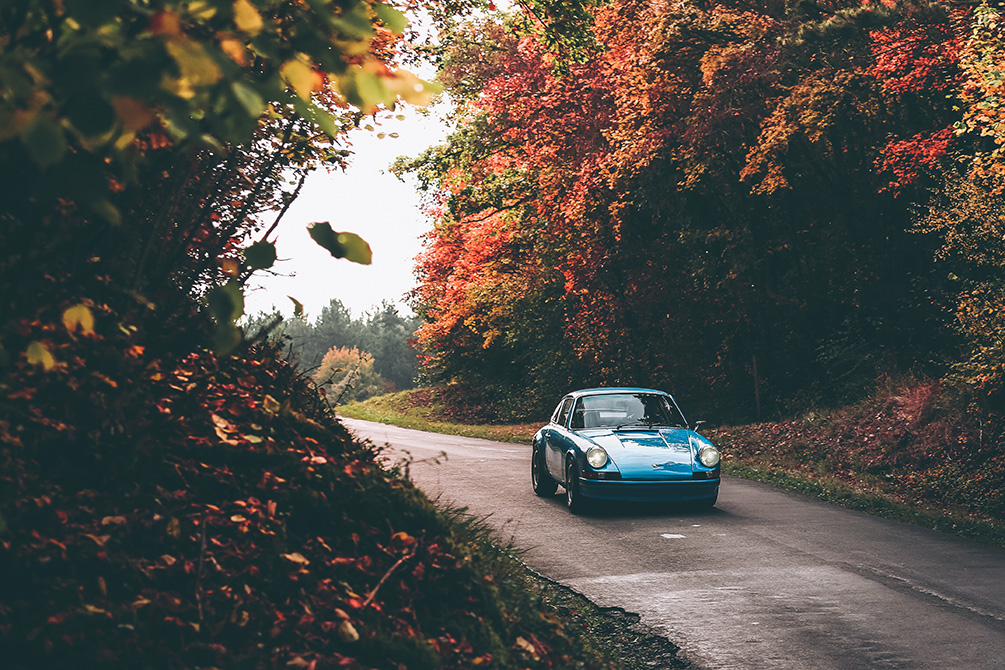
For photographers seeking complete absence of traffic, the Vercors in the off-season (October–November) offers winding roads through dense forests, with stretches of several miles without encountering another vehicle. The autumn light there is particularly beautiful — warm, filtered through golden foliage.
Provence and the Gorges du Verdon
The Gorges du Verdon are a natural spectacle that few roads in the world can rival. The Route des Crêtes (D23), which follows the cliff edge 2,300 feet above Lac de Sainte-Croix, offers vertiginous viewpoints. For a sunset shoot, position your car facing west: the warm golden light will turn it into a natural painting.
Les Baux-de-Provence, the villages of the Alpilles, Gordes in the Luberon — each Provençal village is a potential set. White stone streets, lavender in July, centuries-old plane trees lining shaded avenues: Provence offers a palette of settings that shifts with every season. Some photographers return each year with the same car, to document how the light changes on the same composition.
In the Camargue delta, the landscape shifts entirely: flatlands stretching to the horizon, straight roads that vanish into the distance, flamingos as a backdrop — total disorientation that can produce unusual and unforgettable images.
Practical Tips for Your Car Photography Session in France
Choose the right moment. The golden hour — one hour after sunrise or before sunset — is universally the best time for car photography. In the mountains, favour early mornings to avoid heat haze and find empty roads. On the Côte d’Azur, the blue hour (just after sunset) delivers soft light and turns the Mediterranean indigo.
Anticipate constraints. Traffic remains a challenge even on small French roads in peak season. Scout your locations via Google Maps or automotive photography forums, and plan weekday shoots rather than weekends. A safety assistant lets you focus entirely on the shot.
Weather: the underrated variable. A uniform overcast sky removes harsh shadows and produces natural softbox lighting — ideal for highly reflective cars (chrome, piano lacquer). Light morning mist in the Alps or Provence creates a poetic atmosphere. Conversely, full midday summer sun is generally best avoided: hard shadows and white reflections break image coherence.
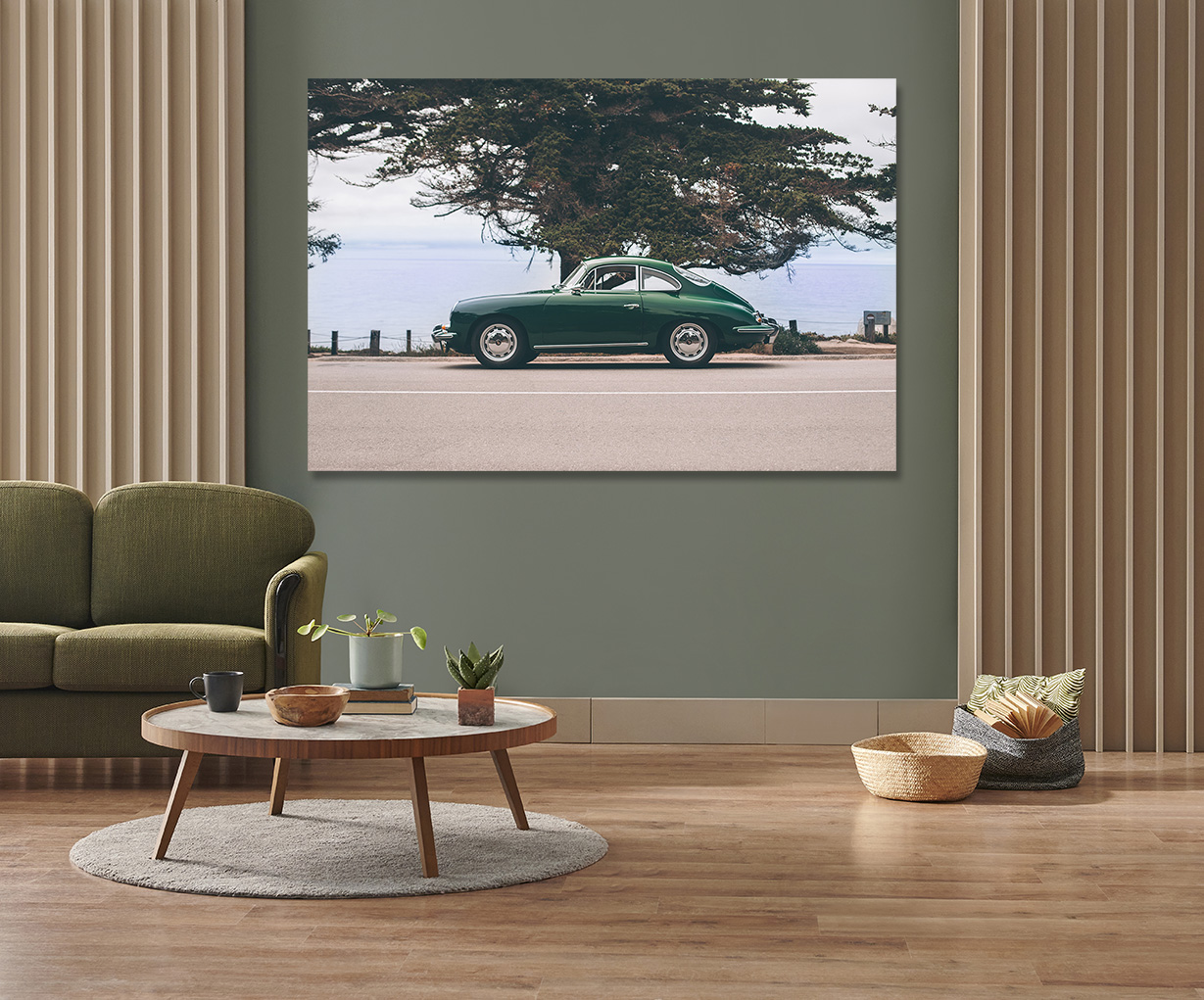
From location to fine art print. The finest French locations are only a starting point. It is in the process of colour grading and printing that a photograph becomes a work of art. An aluminium Dibond print captures the luminosity of a Provençal morning with a fidelity that even the finest screen cannot replicate — and that is the alchemy between location and print that Cars and Roses pursues in every fine art automotive photograph.
Cars and Roses Fine Art
These Roads Deserve to Be Framed
Our photographers travel France and Europe to capture the world’s finest cars in the most remarkable settings. Limited edition fine art prints.
Read also