

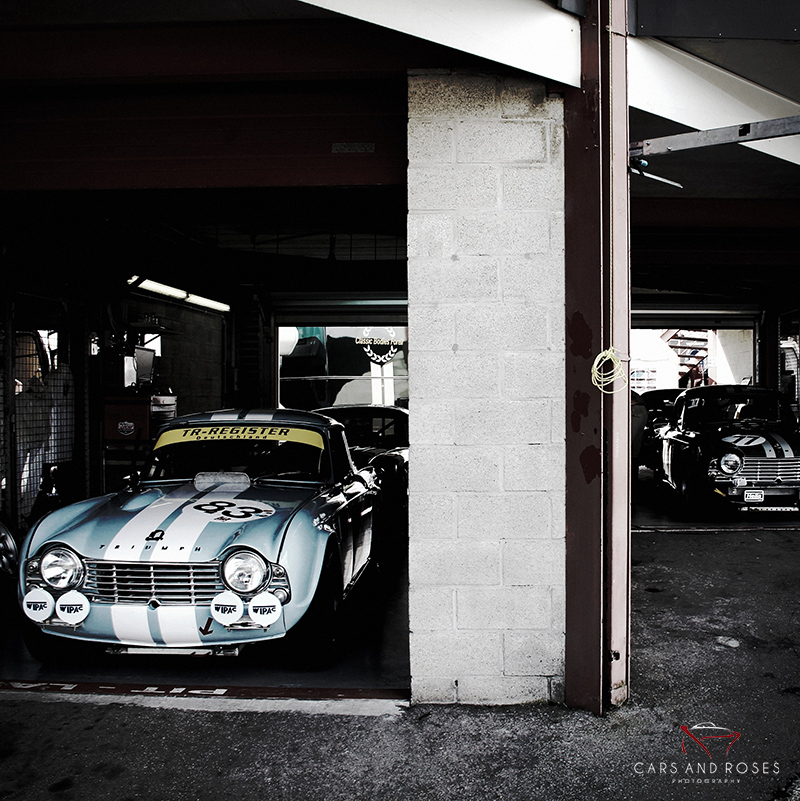
The Triumph TR6. A name, a destiny. Born in 1969, this British roadster embodies the “less is more” philosophy better than almost any car before or since: a pure silhouette, a straight-six engine, and a raw driving pleasure that has captivated enthusiasts for over half a century. Photographed with care, the TR6 reveals a soul that no static display can fully capture.
The Triumph TR6: Icon of British Motoring
Between 1969 and 1976, Triumph produced over 94,000 TR6 examples, making it one of the best-selling British roadsters of its era. Beneath the bonnet: a 2.5-litre inline-six developing 150 bhp in European specification — a figure that, paired with a lightweight body and a manual gearbox, translates into a remarkably direct and engaging driving experience.
Where its competitors chased refinement, the TR6 embraced its temperament. No unnecessary padding, no superfluous gadgetry — just a functional cockpit, a soft top that stows in seconds, and a precise steering rack that communicates every nuance of the road. This mechanical honesty, rare in modern automobiles, is precisely what fascinates collectors and automotive photographers alike.
The TR6 also earned its stripes in competition, particularly in SCCA racing in the United States, where it dominated the Production Racing category. But it is on winding Alpine roads or along the Dorset coastline that its silhouette truly comes alive — and it is there that fine art photography captures it at its absolute best.
A Pure Line, a Forceful Character
The TR6’s design — conceived by Michelotti and executed by Karmann — struck a perfect balance between sportiness and restraint. Unlike the rounded curves of its predecessor, the TR4, the TR6 features taut flanks, a squared-off Kamm tail and rectangular headlights that give it an immediate sculptural presence.
It reads best from the front three-quarter angle: the horizontal grille, the domed bonnet, the muscular front wings arching over 15-inch wheels — every line seems drawn with a ruler, every surface invites the light to play. In the low golden light of a late afternoon, the reflections across the bodywork transform the TR6 into a living work of art.
The TR6 in Fine Art Photography
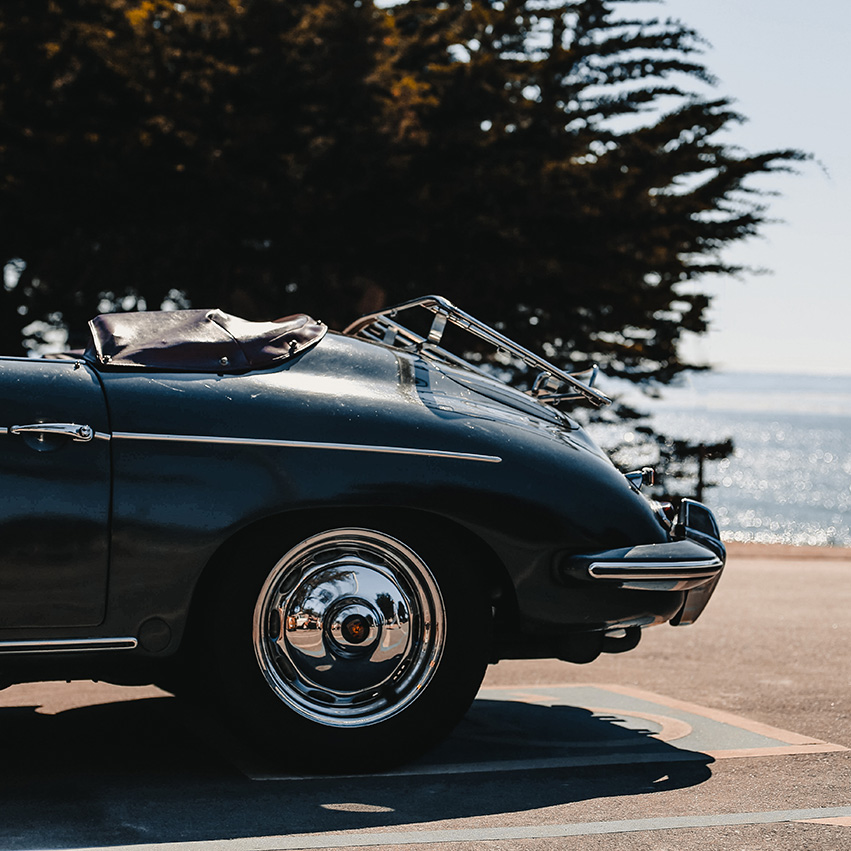
Fine art automotive photography does not merely document a vehicle — it extracts its essence, its emotion, its narrative. For the Triumph TR6, this approach reveals several dimensions that the untrained eye might miss: the tension between mechanical robustness and the vulnerability of an open-top body, the dialogue between polished metal and the surrounding landscape, the nostalgia for an era when driving was still a physical and fully engaged act.
Photographers who have mastered the TR6 often play on contrasts. A black-and-white print accentuates the volumes and textures — the matte paintwork, the chrome door handles, the cracked leather dashboard become details that tell a story. In colour, the TR6 in its period hues — Signal Red, Jasmine Yellow, Sapphire Blue — recaptures its vitality, carrying with it the spirit of 1970s road trips.
Photographs of the TR6 in motion against an open landscape carry something universal: they speak to anyone who has ever dreamed of an empty road and a car that responds to every thought. It is this universality that makes it an ideal subject for interior decor.
Choosing Your Triumph TR6 Fine Art Print
When selecting a fine art automobile print, several criteria guide the decision. Format first: the TR6 has markedly horizontal proportions, and a panoramic format (48×24 inches or 55×28 inches) best conveys its long bonnet and sweeping profile. For a more compact size (32×24 inches), a tight front three-quarter or straight-on framing works particularly well.
Print technique matters too. On aluminium Dibond, the TR6 literally shines — the metal substrate resonates with the bodywork, while the depth of dark tones is exceptional. On stretched canvas, the image takes on a more painterly quality, almost impressionistic — ideal for interiors with a vintage or mid-century modern character. A Hahnemühle fine art paper print, framed under anti-reflective glass, offers unmatched detail for those who appreciate film photography aesthetics.
Displaying a TR6 in Your Interior
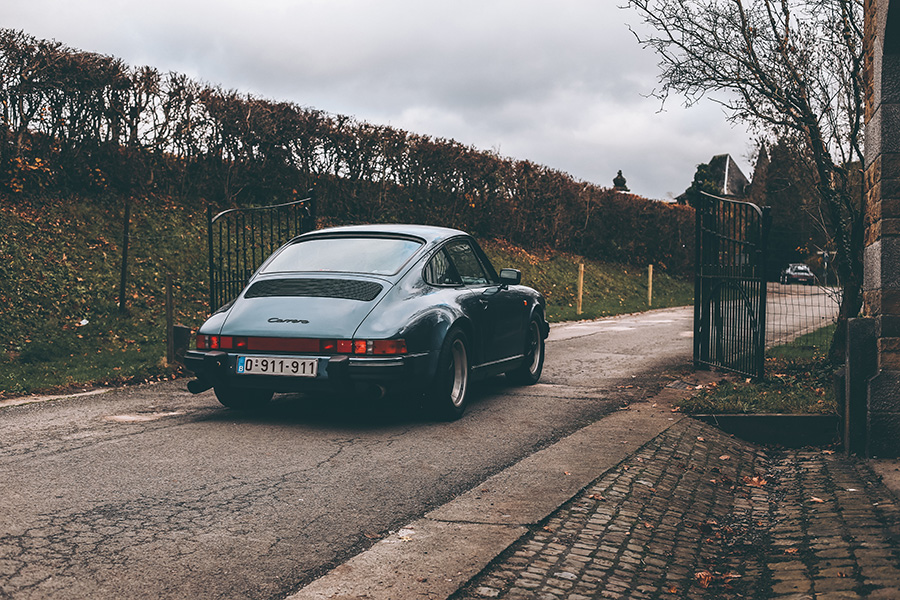
The Triumph TR6 integrates naturally into interiors with a strong personality. Spaces with dark wood, natural leather and brushed metal — classic English style or industrial loft — form an ideal setting. In a contemporary living room with white walls, a large black-and-white print creates a powerful anchoring effect without weighing down the space.
In terms of placement, the TR6 lends itself particularly well to corridor walls — its horizontal composition naturally suits the proportions of these often-neglected spaces. A hallway that opens onto a TR6 print at full pace, lit by a directional spotlight, becomes a private gallery. In a study or home office, it brings that touch of aspiration and freedom that makes long work sessions more bearable.
Finally, do not overlook lighting: a directional spotlight at 3,000K (warm light) brings out the warm tones of the bodywork and creates a shadow play that enhances the relief of the print. A Triumph TR6 photograph deserves this care — and it repays it many times over.
Cars and Roses Fine Art
Discover Our Automotive Photography Collection
Limited edition prints on premium substrates. Carefully packaged and delivered across Europe and worldwide.