

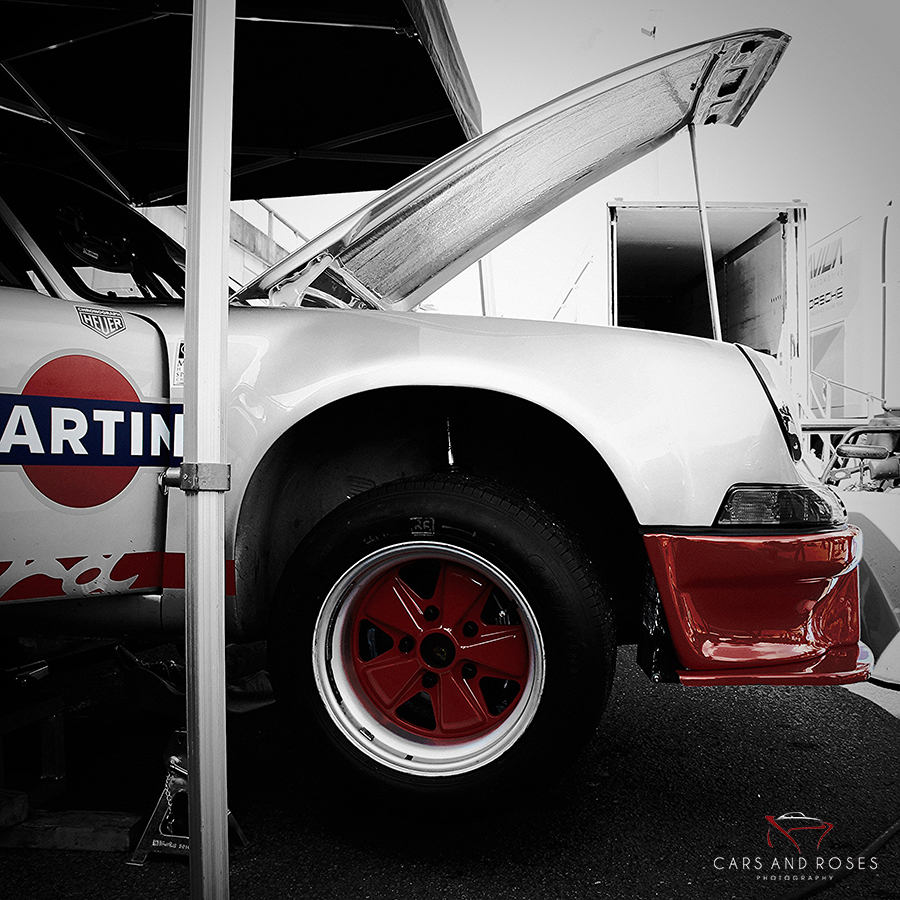
Few cars carry as much mythology in three letters as the Porsche 911 Carrera RS 2.7. Born from a homologation requirement and finished almost by accident with one of the most recognizable liveries in motorsport history, the “RS” isn’t just a model — it’s the moment Porsche decided that lightness was worth building a legend around.
Table of Contents
- The Birth of a Legend: 1972-1973
- The Ducktail: An Engineering Rebellion
- The Martini Racing Livery: A Design Icon
- RS or RSR: Understanding the Family
- Why Collectors Still Chase the Carrera RS
- Frequently Asked Questions
The Birth of a Legend: 1972-1973
In 1972, Porsche needed to homologate a race-ready version of the 911 for Group 4, which required building at least 500 units of a lightened model. No one, not even Porsche, expected this bureaucratic requirement to give birth to one of the most sought-after cars in the marque’s history. The Carrera RS 2.7 received the 911’s first 2.7-liter flat-six, producing 210 horsepower — modest by today’s standards, but enough to push a lightened body past 240 km/h (150 mph).
Porsche’s target was a minimum of 500 units for homologation. Demand blew past every projection: around 1,580 units were ultimately built between 1972 and 1973, split between the ultra-light “Sport” version (M471), built for competition, and the more comfortable “Touring” version (M472), designed for everyday road use.
The Ducktail: An Engineering Rebellion
The most recognizable detail on the Carrera RS 2.7 is its rear spoiler, nicknamed the “ducktail” (Bürzel in German) — the very first factory-fitted spoiler in Porsche’s history. Far from a cosmetic flourish, this polyurethane piece improved high-speed aerodynamic stability by reducing lift over the rear axle, a real problem on 911s of the era above 200 km/h.
The Sport version (M471) pushed the weight-saving philosophy to the extreme: thinner body panels, plexiglass side and rear windows, no rear seats, no carpet, no sound deadening, lightweight bumpers. The result: a mere 960 kg (2,116 lbs) on the scale — nearly 100 kg lighter than a standard 911 S. This philosophy of subtraction rather than addition would become the defining signature of every future Porsche “RS,” all the way to today’s GT3 RS.
The Martini Racing Livery: A Design Icon
While the Carrera RS 2.7 itself never raced under Martini colors, its direct descendant — the competition RSR — is what popularized this now-legendary visual pairing. Porsche’s partnership with Martini International Racing Team began in 1970 on the 908 and 917 prototypes, before extending to the 911 RSRs campaigned at Le Mans, the Targa Florio, and Daytona in the early 1970s. The red-and-blue stripes on white, paired with the “Martini Racing” name, have since become a universal visual shorthand for Porsche’s racing DNA — to the point that the livery is now almost more recognizable than some of the cars that wore it.
It’s this meeting point between the RS 2.7’s pure engineering and the Martini livery’s racing imagery that we wanted to capture in fine art — a single piece that tells the whole story of Porsche’s 1970s competition heritage.
RS or RSR: Understanding the Family
It’s easy to mix the two up, but RS and RSR are distinct cars. The Carrera RS 2.7 is the road-going, homologation-special version, running its 2.7L 210 hp engine. The Carrera RSR, on the other hand, is the pure competition version developed in parallel for Group 4 GT racing, with its engine enlarged to 3.0 liters and over 300 horsepower, wider fender flares, and a fully reworked chassis and braking setup. The RSR would win its class at both the 24 Hours of Daytona and the Targa Florio as early as 1973, cementing the RS lineage’s racing reputation for good.
Why Collectors Still Chase the Carrera RS
On the collector market, a well-kept Carrera RS 2.7 Lightweight now regularly clears seven figures at auction — some original examples with documented race history have crossed the two-million-euro mark. That rarity and price tag put the actual car out of reach for the vast majority of enthusiasts, which explains much of the appeal of fine art prints: owning a fragment of that history, in an accessible form, without ever worrying about a service record or an insurance premium.
We offer several angles and editions of the Carrera RS 2.7 in fine art, from a hood-open detail shot to a side-by-side duet composition — each capturing a different facet of what makes this car so special.
Frequently Asked Questions
It combined a homologation requirement (a minimum of 500 units for Group 4) with a radical weight-saving philosophy — under 960 kg for the Sport version — and introduced the first factory spoiler in Porsche’s history, the famous ducktail.
Around 1,580 units between 1972 and 1973, split between the ultra-light Sport version (M471) and the more comfortable Touring version (M472), built for everyday road use.
The Porsche-Martini Racing partnership began in 1970 on the 908/917 prototypes and extended to the competition 911 RSRs racing at Le Mans, the Targa Florio, and Daytona — making the livery inseparable from the 911’s 1970s racing DNA.
Yes — Cars and Roses offers several limited, numbered fine art editions of the Carrera RS 2.7, including the Martini Racing edition featured in this article, available on canvas or premium print.