

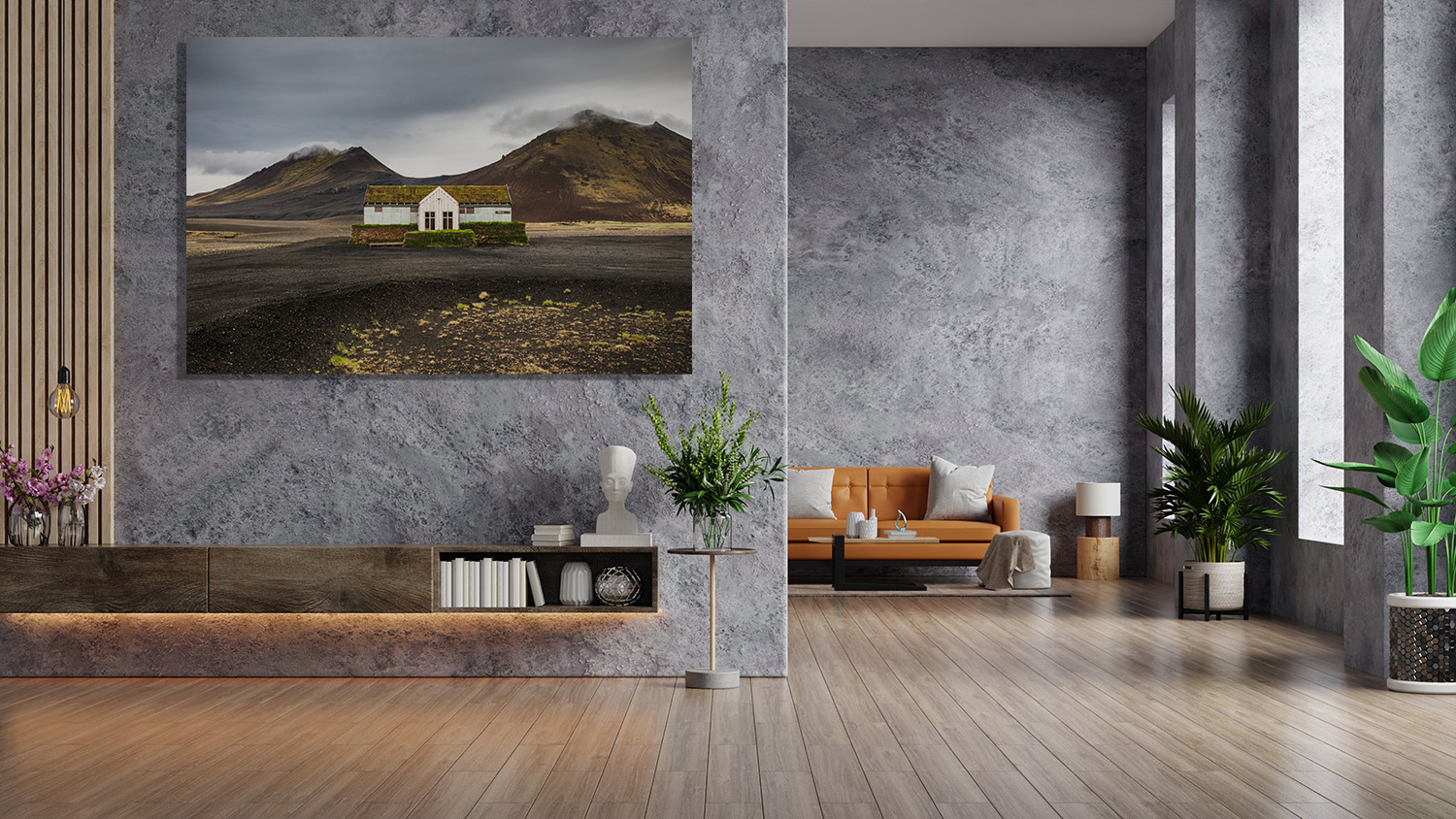
There’s a reason Nordic landscapes have become one of the most requested categories in fine art wall decor: the light does half the work for you. A glacial lagoon at twilight, a waterfall cutting through green cliffs, a lone tent facing an arctic fjord — these are compositions built on contrast, scale and restraint, the exact qualities that make a print feel like art rather than a postcard.
Table of Contents
- Why Nordic Landscapes Work So Well as Fine Art
- Waterfalls: Seljalandsfoss and Iceland’s South Coast
- Glaciers: Jökulsárlón and the Ice Lagoons
- Fjords and Arctic Light: Svalbard and Beyond
- Choosing the Right Finish and Placement
Why Nordic Landscapes Work So Well as Fine Art
Most decorative landscape photography leans on warmth — golden hour, lush greens, saturated skies. Nordic landscapes do the opposite, and that’s exactly their appeal. Iceland, Svalbard and the fjords of Norway are built around a narrower, cooler palette: glacial blues, basalt greys, muted greens, the occasional flash of pink twilight. That restraint reads as sophistication on a wall, the same way a black and white print reads as more deliberate than a colour one.
There’s also a scale effect at work. Icebergs, glaciers and fjord walls are enormous, and a well-composed photograph keeps that sense of scale even at print size — a small human silhouette, a lone tent, a distant road. That contrast between vastness and a single tiny detail is what turns a landscape print into a genuine focal point rather than a generic “nature photo.”
Waterfalls: Seljalandsfoss and Iceland’s South Coast
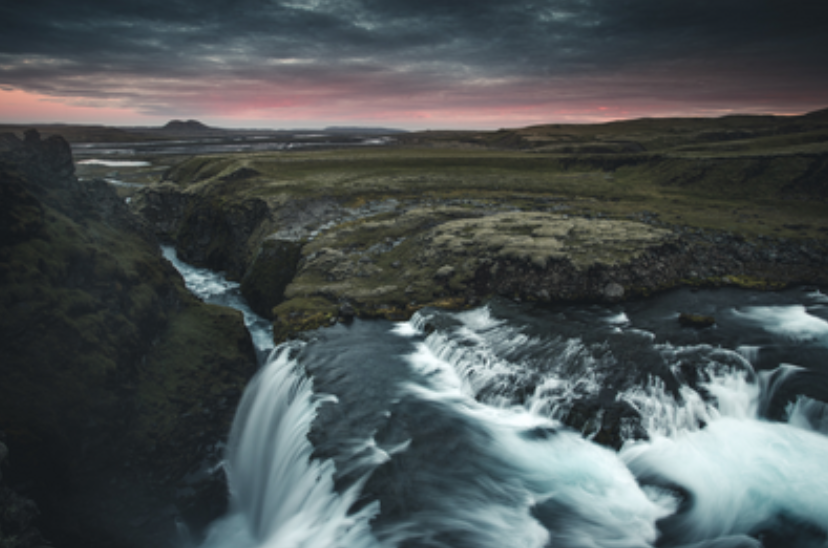
Iceland’s south coast is the country’s most photographed stretch for a reason: within a couple of hours you pass a dozen waterfalls, each with its own character. Seljalandsfoss is the most iconic — a curtain of water you can walk behind — and it photographs beautifully in both close, textured shots and wider compositions that place it against summer bluebells or winter frost.
What makes a waterfall print work in a home isn’t necessarily the water itself — it’s the surrounding rock and vegetation that frames it, and the exposure choice. A longer exposure turns the water into soft, almost fog-like streaks, which tends to suit minimalist and Scandinavian interiors; a sharper, faster exposure keeps more texture and detail, which reads better in a more traditional or rustic room.
Glaciers: Jökulsárlón and the Ice Lagoons
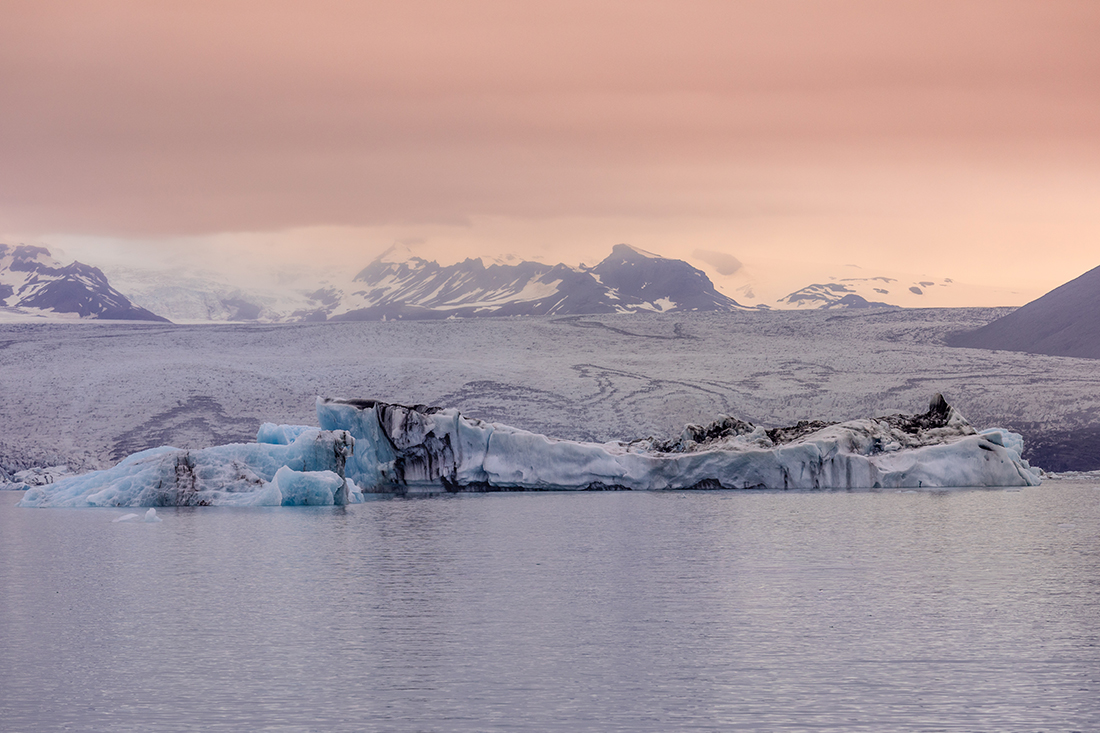
If waterfalls are about motion, glaciers are about stillness — and colour. At Jökulsárlón, icebergs calve off the glacier and drift across the lagoon before washing out to a black sand beach, turning translucent blue, white and even black as the light shifts. A twilight shot of the lagoon, with icebergs floating under a pink or violet sky, is one of the few landscape images that can carry a large blank wall entirely on its own.
Further along the coast, the Svínafellsjökull glacier offers a different mood — jagged, crevassed ice tongues instead of the smooth lagoon icebergs of Jökulsárlón. It’s a good pairing if you want two glacier prints in the same space without them feeling repetitive.
Fjords and Arctic Light: Svalbard and Beyond
Further north, the mood shifts again. Svalbard sits deep in the Arctic Circle, and its fjords are photographed less for colour than for scale and isolation: a single tent pitched against snow-covered mountains, a fishing cabin dwarfed by a fjord wall, or — when conditions align — the aurora borealis rippling over the water. These images work particularly well in a home office or reading nook, where the sense of quiet and distance suits a space meant for focus rather than conversation.
The Ring Road that circles Iceland ties all of this together, and a shot of an empty road disappearing into a vast landscape — no cars, no people — is often the easiest “first Nordic print” for someone who isn’t sure where to start, because it reads as travel and adventure as much as pure landscape.
Choosing the Right Finish and Placement
Because Nordic landscapes lean cool and low-saturation, the finish you choose changes the mood more than it would with a warmer subject. Aluminium brings out the blues and greys with a slight sheen that suits modern, minimalist rooms — the same reasoning we cover in our guide to minimalist decor. Canvas softens the same image into something closer to a painting, which works well if the rest of the room already leans warm (wood, linen, warm white walls) and you want the print to feel less clinical.
On placement: glacier and fjord shots, with their strong horizontal lines, tend to suit wide, low walls — above a sofa or a sideboard — better than tall, narrow spaces. Waterfall shots, especially vertical crops, are the exception and can work well in a hallway or stairwell. Whatever the finish, the same long-term care rules apply — see our guide to caring for aluminium, plexiglas and canvas prints for the details.
Frequently Asked Questions
What makes Nordic landscape photography good for wall art?
Its cool, restrained colour palette and strong sense of scale. Glacial blues, basalt greys and twilight pinks read as sophisticated rather than busy, and the vastness of the subject (icebergs, fjords, glaciers) keeps a print visually interesting even in a large format.
Should I choose a waterfall, a glacier, or a fjord print?
It depends on the mood you want. Waterfalls bring movement and work well in hallways or as a vertical piece; glaciers bring colour and stillness and suit a wide statement wall; fjords bring scale and quiet, and pair particularly well with a home office or reading corner.
Aluminium or canvas for a Nordic landscape print?
Aluminium tends to sharpen the blues and greys and suits modern, minimalist interiors. Canvas softens the same image and works better in a warmer room built around wood and linen. Neither is wrong — it’s about matching the finish to the rest of the space.
Where should I hang a glacier or fjord print?
Their strong horizontal lines usually suit a wide, low wall best — above a sofa, sideboard or bed — rather than a tall, narrow space. Vertical waterfall crops are the exception and can work well in a hallway or stairwell instead.