

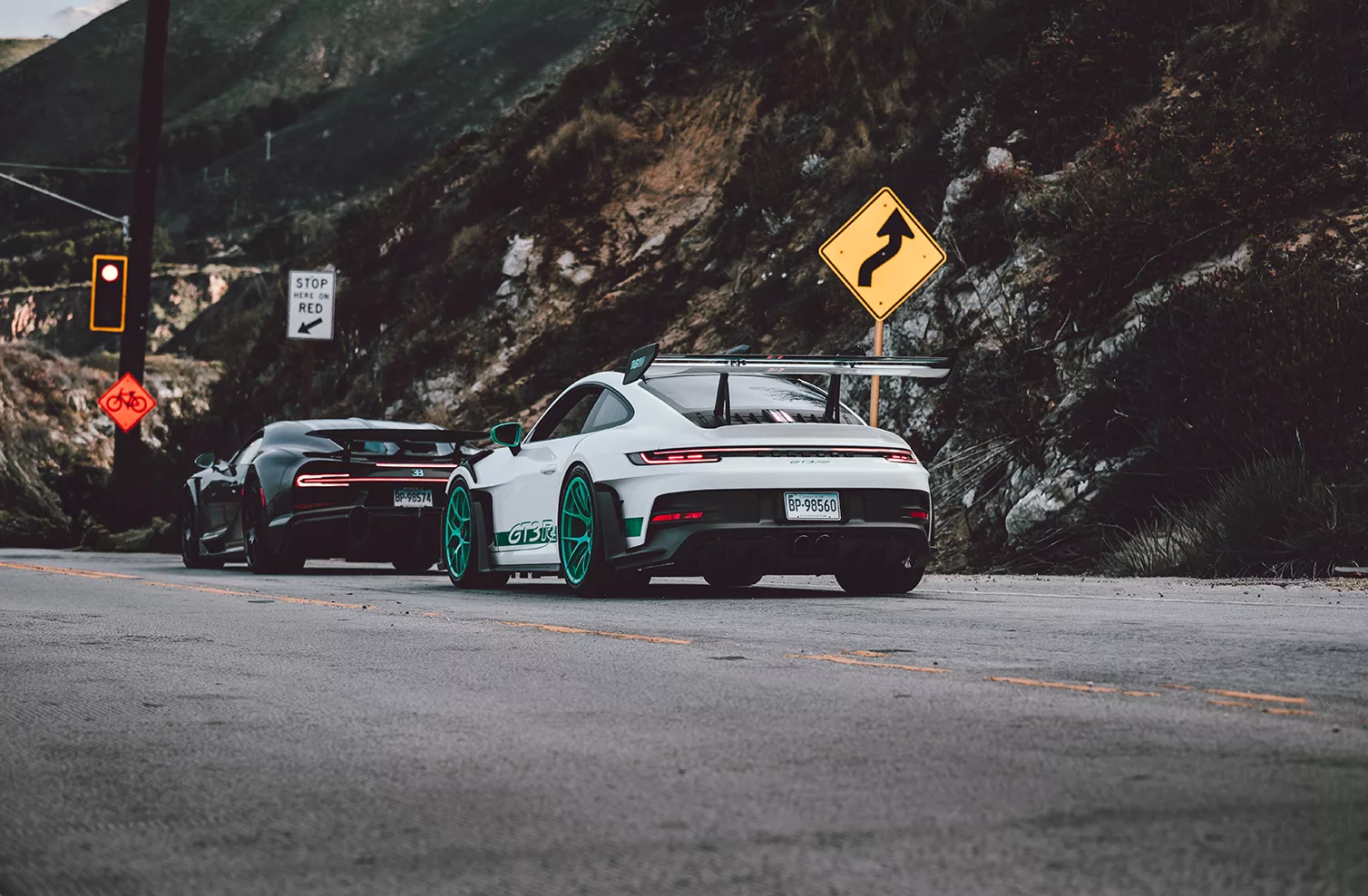
Some machines transcend their function to become works of art in their own right. The Bugatti Veyron is one of them: sixteen cylinders, one thousand horsepower, and a silhouette that seems sculpted by the wind itself. Capturing this beauty in fine art photography means freezing the essence of mechanical perfection in a print that transcends time. Bugatti photography is not a simple car poster — it is a statement of intent, a tribute to what humanity has created at its most extraordinary. Here is why these photographs inhabit the most discerning interiors.
Table of Contents
- The Bugatti Veyron: A Work of Art at 253 mph
- Why Bugatti Photography Fascinates Collectors
- The Art of Photographing the Bugatti: Light, Angle, Moment
- Bugatti and Fine Art: A Prestige Interior Design Statement
- Choosing Your Limited Edition Bugatti Photography Print
The Bugatti Veyron: A Work of Art at 253 mph
When Ettore Bugatti founded his marque in 1909, he declared that his cars should be works of art as much as machines. A century later, the Veyron embodies this philosophy with absolute radicalism. With its 1,001 horsepower and a top speed of 253 mph, it redefined what “automotive performance” means.
What distinguishes the Bugatti Veyron from all the hypercars of its era is its refusal to choose between raw power and absolute refinement. The lines of its bodywork are not dictated by aerodynamics alone — they also obey an aesthetic grammar drawn from haute couture. The curves of its body, the two-tone paint treatment, the ventilation fins on the flanks: every detail is an invitation to look closer.
It is precisely this tension between brutality and grace that makes it an exceptional photographic subject. Bugatti photography captures this paradox — a machine capable of exceeding 400 km/h that seems suspended in perfect stillness on fine art photographic paper.
Why Bugatti Photography Fascinates Collectors
Automotive art collectors are not speed enthusiasts who hang posters on their walls. They are aesthetes who seek in the automobile the same absolute that others find in painting or sculpture. And the Bugatti Veyron answers this quest with rare evidence.
Produced in only 450 examples between 2005 and 2011, the Veyron is already rare in reality. Its photography in limited edition extends this rarity into the art world: owning a numbered Bugatti photograph means claiming a fragment of that exclusivity. The symbolic value of the object joins its aesthetic value.
Collectors also appreciate the narrative consistency that Bugatti brings to an interior: it naturally dialogues with contemporary design pieces, noble materials — leather, marble, brushed steel — and the sober chromatic palettes that characterize prestige interiors. A Bugatti photograph does not impose itself on a space; it elevates it.
The Art of Photographing the Bugatti: Light, Angle, Moment
Photographing a Bugatti Veyron in fine art is not improvised. The automotive photographer must tame a silhouette that overwhelms space by its very presence. Classic angles — three-quarter front, pure profile — reveal the architecture of the bodywork, but it is often in bolder framings that the magic happens.
The golden light of the golden hour transforms chrome surfaces into liquid mirrors. Rain makes reflections vibrate on the central engine hood. The fog of an autumn dawn isolates the silhouette in an almost painterly atmosphere. These meteorological conditions, often feared in fashion or landscape photography, become precious allies for the fine art automotive photographer.
The most memorable Bugatti photograph is not necessarily the one taken at full speed on a circuit. Sometimes it is a shot taken stationary, at dusk, in front of an industrial or natural backdrop that contrasts with the extravagance of the machine. This dialectic between the car and its environment creates a visual tension that pushes photography into the realm of art.
Bugatti and Fine Art: A Prestige Interior Design Statement
Integrating a Bugatti Veyron photograph into an interior is making a statement. Not that of a garage enthusiast who plasters posters on concrete walls, but that of the connoisseur who understands that mechanical excellence and aesthetic excellence share the same roots.
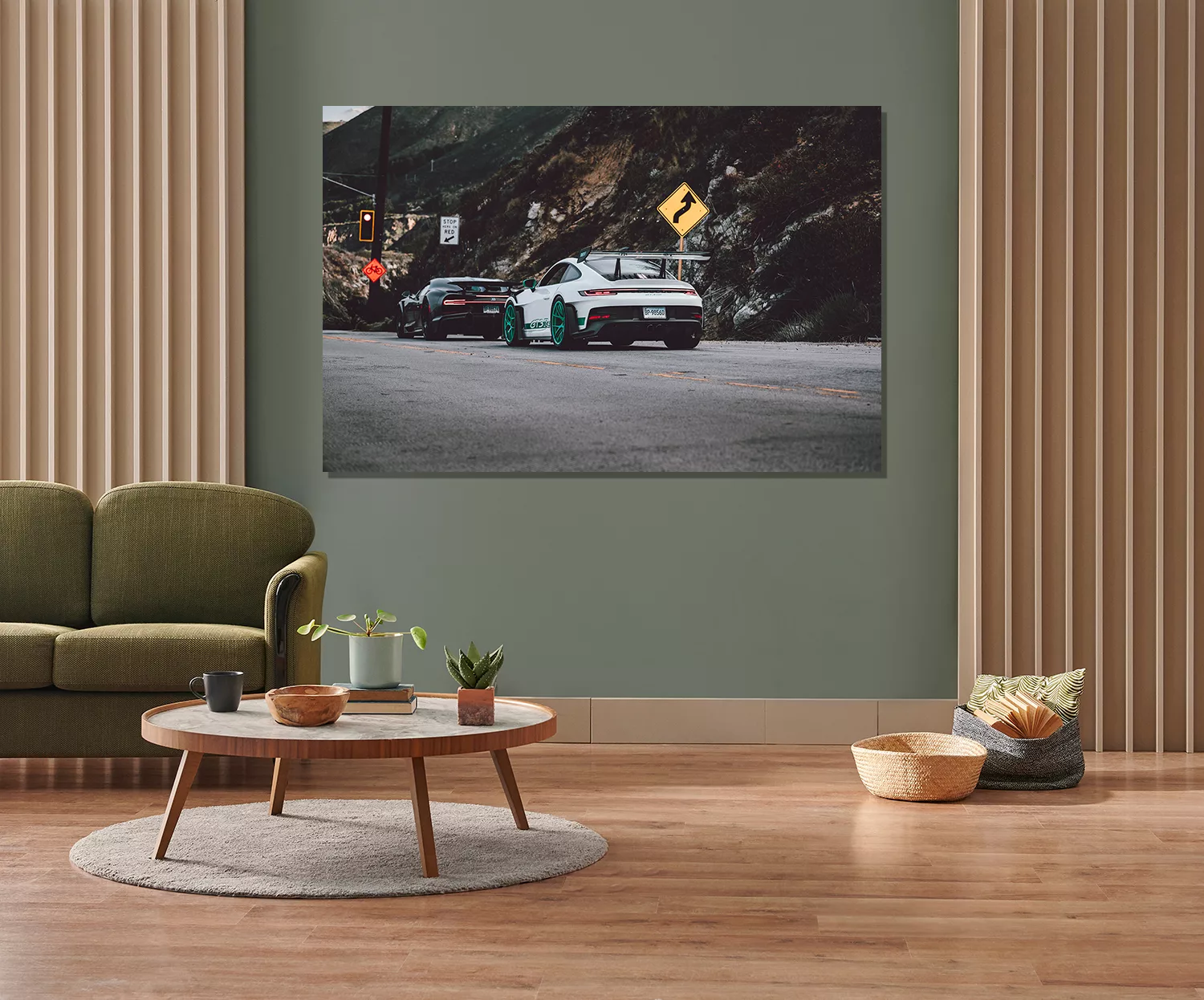
In a contemporary living room, the Bugatti photograph becomes the centerpiece above a dark leather sofa or a stone fireplace. It creates an immediate focal point that gives the rest of the room its direction. The carbon tones, silvers and blues of the Bugatti Veyron naturally complement interiors with sober palettes and noble industrial materials.
For a premium office or workspace, Bugatti photography sends a subliminal message to visitors: here, nothing is done halfway. It symbolizes the aspiration for perfection, the exigency of detail, the refusal of compromise. This is why these photographs are found in executive offices, waiting rooms of top law firms, and showrooms of the luxury industry.
Choosing Your Limited Edition Bugatti Photography Print
Not all Bugatti photographs are equal. Between a mass-produced poster and a numbered fine art print, there is a difference that the eye perceives immediately and that time confirms. An authentic limited edition print rests on three fundamental criteria.
Print quality. Baryta paper or gallery-quality photographic paper absorbs pigment inks in a way that delivers a depth of blacks and a range of detail absent from ordinary digital prints. Whites remain luminous, shadows are rich and nuanced — the two extremes of exposure that the Bugatti Veyron, with its chrome surfaces and dark interiors, puts particularly to the test.
Numbering and authenticity. A limited edition print bears a number — 3/30, 7/50 — that guarantees the rarity of the work. This certificate of authenticity is the sine qua non of artwork status, and the guarantee that your Bugatti photograph will gain value over time rather than lose it.
Format adapted to your space. A Bugatti photograph gains power with format. A 32×24 inch print is a minimum for a standard living room wall; 48×32 inch or larger creates an absolutely striking presence in a large space. The horizontal proportion of the Veyron lends itself to panoramic formats that further accentuate the sensation of contained speed.
FAQ — Bugatti Fine Art Photography
What makes a Bugatti photograph unique compared to other cars?
The Bugatti Veyron combines qualities rarely associated: extreme power and absolute refinement, a silhouette recognizable among all, and a naturally sophisticated color palette. It presents a complex reflective surface that responds to light in a unique way, creating photographs whose depth rivals the best abstract paintings.
How do you tell a fine art print apart from a simple Bugatti poster?
A fine art print is produced with pigment inks on gallery-quality photographic paper, numbered and accompanied by a certificate of authenticity. A poster is printed in series on standard paper. The difference is immediately visible: depth of blacks, precision of details, brilliance of chrome reflections. Durability is also incomparable: a fine art print resists fading for several decades.
What size should I choose for a Bugatti print in a living room?
For a standard living room wall (between 8 and 10 feet wide), a 36×24 inch format creates strong visual impact without overwhelming the space. For large walls or lofts, a 48×32 inch or 60×40 inch format offers monumental presence. The general rule: the artwork should occupy between 50% and 75% of the width of the wall or furniture it hangs above.
Where can I buy a limited edition Bugatti photography print?
Cars and Roses offers a curated selection of fine art automotive photographs in limited edition, printed on gallery-quality photographic paper. Each print is numbered, accompanied by a certificate of authenticity, and available in multiple formats with or without framing.
Fine Art Collection
Automotive Photography Prints — Limited Edition
Porsche, Ferrari, Lamborghini, Bugatti — From $78