

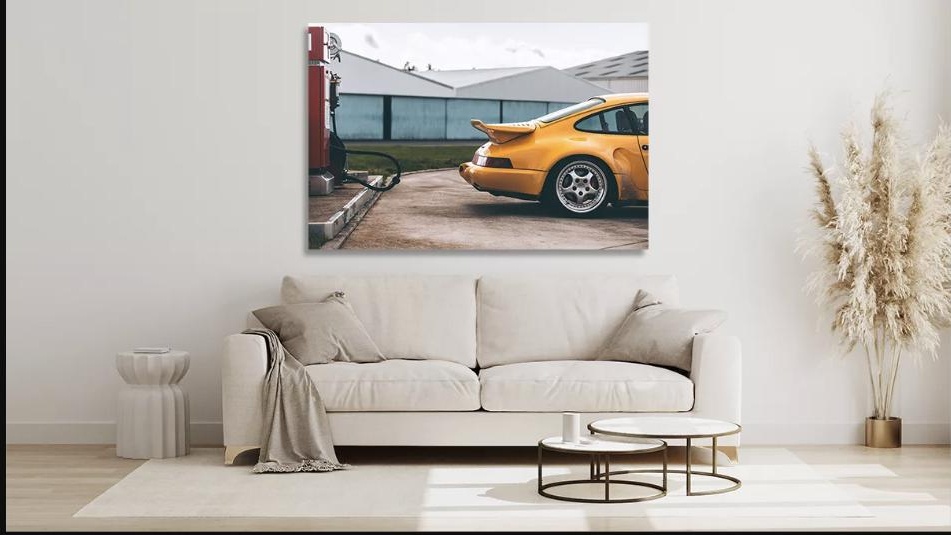
A fine art print is not a poster. It’s a physical object, hand-finished and built to last for decades — but only if it’s treated the right way. Aluminium, plexiglas and canvas each age differently, and each has its own small rules for cleaning, placement and handling. Get them right, and your print will look as sharp in twenty years as it did the day it arrived.
Table of Contents
- Why Proper Care Matters for a Fine Art Print
- Caring for Aluminium (Dibond) Prints
- Caring for Plexiglas (Acrylic Glass) Prints
- Caring for Canvas Prints
- Where and How to Display Your Print
Why Proper Care Matters for a Fine Art Print
Every Cars and Roses print is produced as a limited, numbered edition — which means the materials and printing process are chosen for longevity, not just for the first impression. Aluminium, plexiglas and canvas are all far more durable than paper or standard poster stock, but “durable” doesn’t mean “maintenance-free.” Dust settles, fingerprints happen, and direct sunlight or humidity can quietly work against even the best materials over years of display.
A few minutes of care every couple of months is really all it takes. The rules below are specific to each material, because what works perfectly on plexiglas can scratch canvas, and what’s fine for canvas would look streaky on brushed aluminium.
Caring for Aluminium (Dibond) Prints
Aluminium prints (often called Dibond, after the composite panel they’re mounted on) have a smooth, slightly reflective surface that makes colours look crisp and modern — but that same smoothness shows dust and fingerprints more readily than canvas.
- Dust with a dry, soft microfibre cloth in one direction, rather than circular scrubbing motions.
- For fingerprints or smudges, lightly dampen the cloth with plain water — never spray liquid directly onto the print.
- Avoid ammonia-based glass cleaners and abrasive sponges; they can dull the printed surface over time.
- Aluminium is naturally moisture-resistant, which makes it one of the best choices for a bathroom or kitchen wall, as long as it isn’t in direct contact with running water.
Caring for Plexiglas (Acrylic Glass) Prints
Plexiglas (acrylic glass) prints sit behind a thick, glossy pane that gives the image real depth and a gallery-like shine. It’s a wonderful finish, but acrylic is softer than real glass, so it scratches more easily if you’re not careful.
- Always use a clean, soft microfibre cloth — never paper towels or tissues, which contain wood fibres that can leave fine scratches.
- If needed, use a small amount of dedicated acrylic cleaner or lightly soapy water, applied to the cloth rather than the surface.
- Skip standard glass cleaners containing ammonia or alcohol, which can cause the acrylic to cloud or craze over time.
- When dusting, lift debris away rather than dragging the cloth across the surface, especially if you can feel any grit.
Caring for Canvas Prints
Canvas prints have a matte, textured surface stretched over a wooden frame — the most forgiving of the three materials, and the closest in feel to a traditional painting.
- A soft, dry brush or a feather duster is usually enough to keep canvas clean, since the texture doesn’t show dust the way a glossy surface does.
- Never use water or cleaning products on canvas — the fabric and ink can absorb moisture, leading to staining or warping.
- Avoid pressing on the surface, which can leave a permanent indentation in the canvas weave.
- Keep canvas away from steam and high humidity (bathrooms, kitchens near stovetops) — unlike aluminium, canvas fibres can slowly absorb moisture from the air.
Where and How to Display Your Print
Cleaning is only half the story — where you hang your print matters just as much for how long it stays looking new.
- Keep it out of direct sunlight. UV exposure is the single biggest cause of colour fading over time, on any material. A wall that gets indirect or filtered light will keep colours truer for far longer than one hit by direct sun for several hours a day.
- Watch the humidity. Bathrooms are fine for aluminium and plexiglas if ventilation is decent, but canvas is best kept in living rooms, bedrooms, offices or hallways.
- Mind the temperature swings. Avoid hanging any print directly above a radiator or fireplace — repeated heating and cooling can stress both the mounting and the print surface.
- Handle by the edges. If you ever need to move or rehang a print, hold it by the frame or edges rather than the printed face, even briefly.
Follow these simple habits and any of our three finishes — aluminium, plexiglas or canvas — will hold its colour, sharpness and certified edition value for many years on your wall.
Frequently Asked Questions
How often should I clean my fine art print?
A light dusting every two to three months is usually enough for a print displayed indoors away from direct sunlight or cooking areas. Kitchens and high-traffic rooms may need dusting slightly more often, simply because more airborne particles settle there.
Can I clean my print with regular glass cleaner?
Not recommended. Most household glass cleaners contain ammonia or alcohol, which can dull aluminium’s coating or cause plexiglas to cloud over time. Plain water on a soft microfibre cloth is the safest option for both materials, and canvas should never be cleaned with any liquid at all.
Is direct sunlight bad for fine art prints?
Yes — prolonged direct sunlight is the main cause of fading on any print material, including museum-grade pigment inks. Indirect or filtered natural light is fine and won’t meaningfully affect colour over time; it’s sustained, direct UV exposure that causes gradual fading.
What’s the difference in care between aluminium, plexiglas, and canvas?
Aluminium and plexiglas can both be lightly cleaned with a barely damp microfibre cloth, while canvas should only ever be dusted dry, never with water. Aluminium is the most humidity-resistant of the three, plexiglas is the most prone to visible scratching if wiped with the wrong material, and canvas is the most sensitive to moisture and pressure marks.
Also Read
- How to Choose the Right Size for Your Photo Print: The Practical Guide
- Fine Art Print vs Poster: How to Choose the Right One for Your Home
- How to Create a Fine Art Gallery Wall: The Complete Guide
- The Art of Car Interiors: Steering Wheels, Dashboards & Cockpits as Fine Art
- Minimalist Decor with Fine Art Automotive Photography