

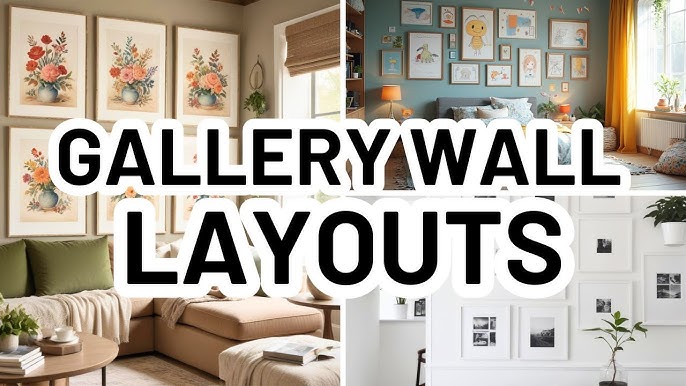
A fine art gallery wall is more than a collection of frames — it’s a curated composition that tells a story, sets a mood, and transforms any room into a space of intention and taste. Whether you’re starting from scratch or ready to level up, this complete guide gives you the framework to get it right the first time.
Table of Contents
- What is a Fine Art Gallery Wall?
- Choosing the Right Photographs
- The Rules of Composition
- Prints and Formats: What Changes Everything
- Hanging and Maintaining Your Gallery Wall
What is a Fine Art Gallery Wall?
A gallery wall — sometimes called a salon wall — is a curated grouping of artworks or photographs arranged with intention on a single wall. Unlike a single statement piece, a gallery wall creates a visual conversation between works, multiplies points of interest, and allows a far more personal, layered expression of taste.
A fine art gallery wall takes this a step further by using high-quality photographic prints — on aluminium, plexiglass, or museum-grade paper — rather than mass-produced posters. The difference is immediately visible: depth, colour accuracy, longevity. You’re building something that will still look extraordinary in twenty years.
For car enthusiasts and collectors, the fine art automotive gallery wall offers a sophisticated way to bring a passion for iconic vehicles into a home interior — without resorting to the motorsport memorabilia clichés. Done right, a gallery of fine art car photographs reads as art first, automotive second. That’s the standard worth aiming for.
Choosing the Right Photographs
The first rule of a successful gallery wall is thematic coherence. Your photographs don’t all need to depict the same subject — but they must share a thread: a colour palette, an era, a photographic style, a mood. For an automotive fine art gallery, strong connecting threads include:
Black and white: Monochrome automotive photographs integrate seamlessly with other black and white works — portraits, urban landscapes, architecture. The coherence is immediate and the effect timeless. Ideal for contemporary interiors in neutral tones. Our guide to black and white car photography dives deep into why this approach always works.
The golden era of car design (1960s–1980s): Photographs of Porsche 356s, Ferrari 308s, Lamborghini Countachs grouped together create a gallery that narrates the golden age of automotive design. Their warm, saturated colours harmonise naturally, and the shared era gives the composition an unmistakable unity.
A single legendary location: photographs shot on the same iconic road — Big Sur, Pebble Beach, the Col du Galibier — form a powerful narrative gallery, as if each image were a different chapter of the same journey.
When building your selection, aim for an odd number of works — 3, 5 or 7. Asymmetry creates a more dynamic visual balance than even-numbered groupings. And for more ideas on how to style car photography in your living room, our dedicated guide covers the full picture.
The Rules of Composition
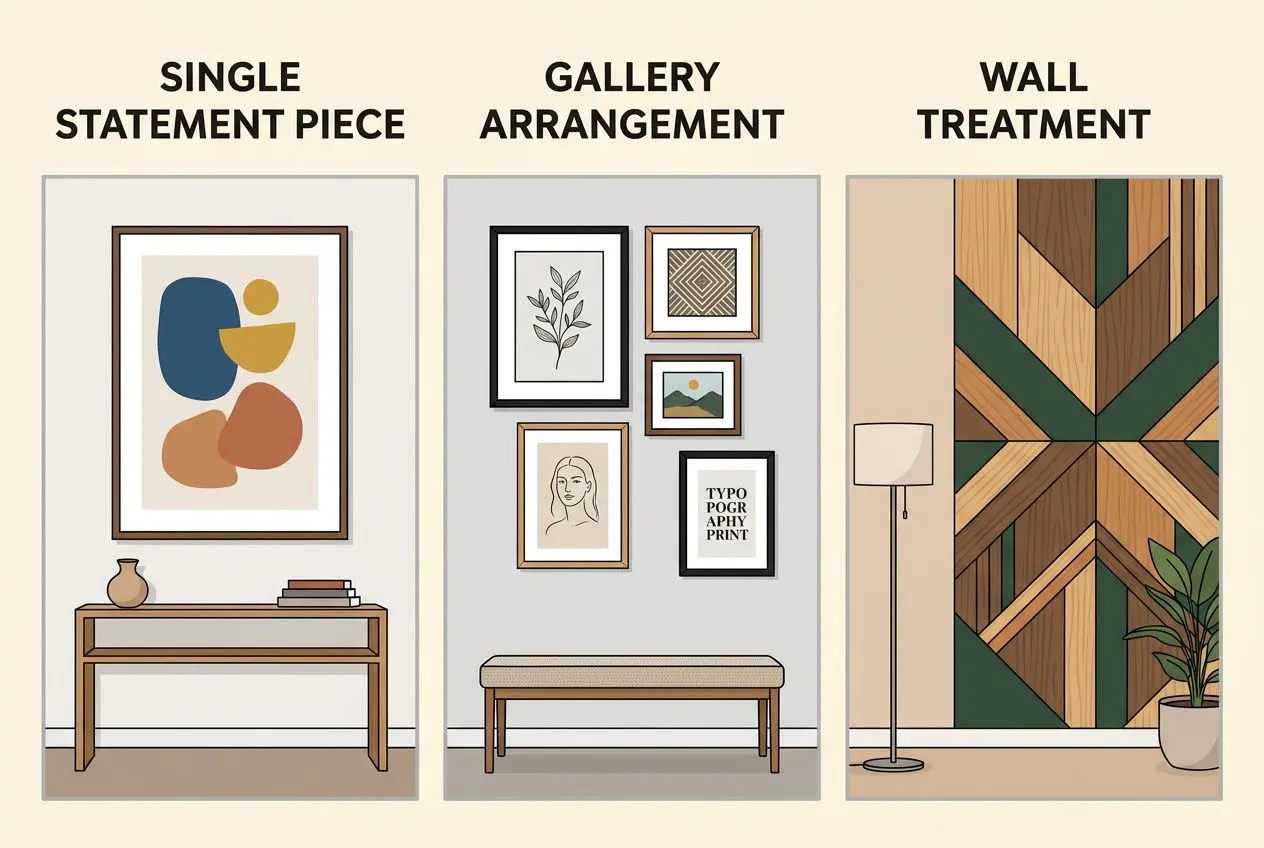
How you arrange works on the wall is the heart of the project. These are the rules that separate a gallery wall that distracts from one that delights.
Always plan on the floor first. Before putting a single nail in the wall, cut kraft paper templates to the exact dimensions of each piece and arrange them on the floor. Experiment until you find the right composition, then transfer it directly to the wall using masking tape. This step takes thirty minutes and saves hours of repositioning.
Maintain consistent spacing. The gap between each work should be identical — typically between 5 and 10 cm. Too much space breaks the sense of group; too little creates visual congestion. The 7 cm rule is a reliable starting point for most formats.
Define a central axis. In most successful gallery walls, works are organised around a horizontal centre line — usually at eye level, around 150 cm from the floor. The anchor piece (your largest or visually heaviest work) sits at the centre of this axis; the others radiate outward from it.
Mix formats deliberately. A gallery wall composed entirely of the same size becomes monotonous. Alternate a large anchor piece (80×60 or 100×70 cm), several mid-size works (60×40 cm), and a few accent pieces (30×20 or 40×30 cm) to create rhythm. The guiding principle: one dominant piece (60% of the visual weight), two or three supporting pieces, and a few accent formats.
Prints and Formats: What Changes Everything
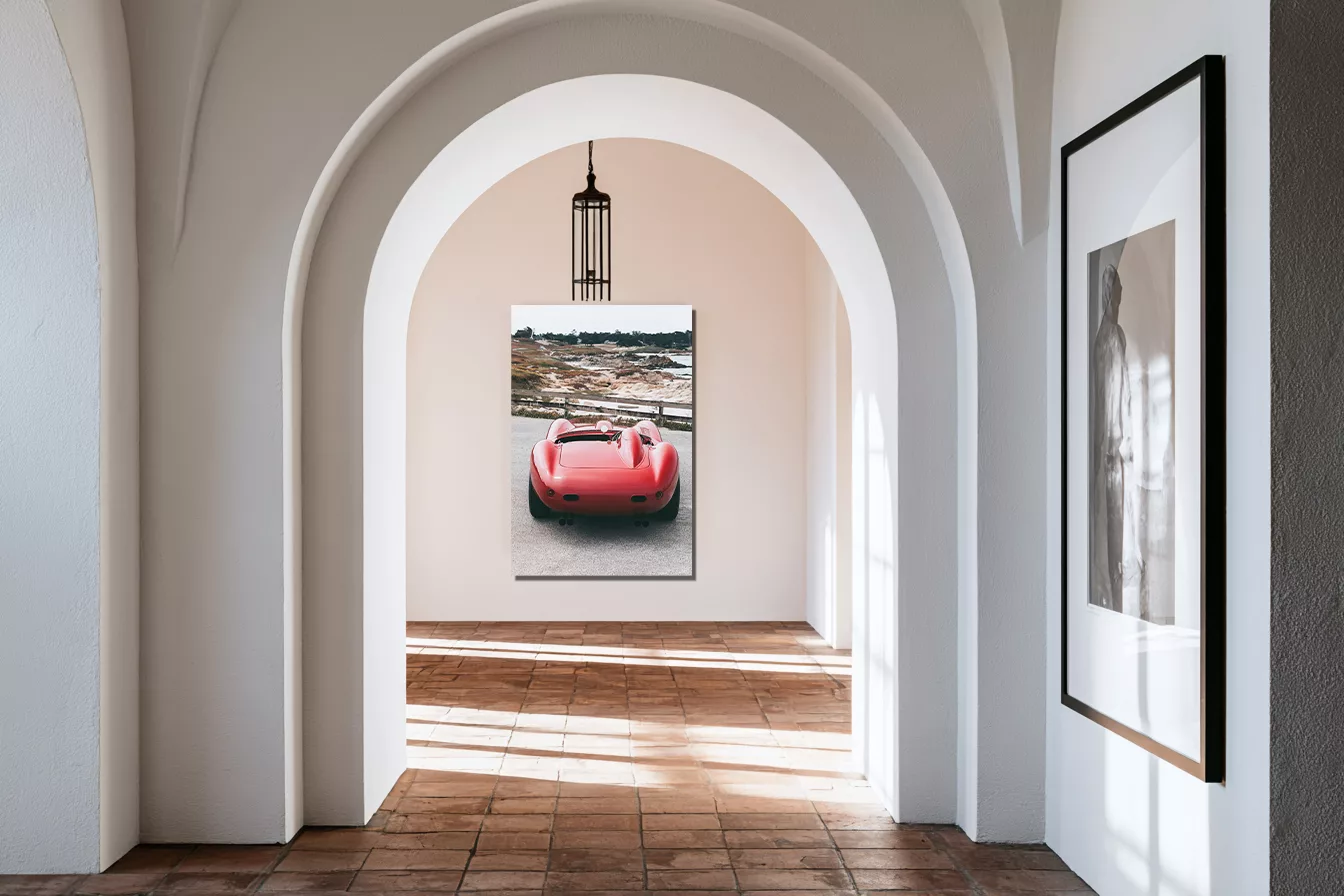
The print medium matters as much as the image. It determines atmosphere, maintenance requirements, and — critically — how long your gallery wall will hold up.
Aluminium Dibond is the premium choice for colour photography. Metal gives unmatched depth and chromatic vibrancy, a subtle relief quality that makes the image appear to float away from the wall. Frameless and glass-free, it suits contemporary and minimalist interiors perfectly. For an automotive fine art gallery, this is often the most impactful choice.
Fine Art Baryta paper — slightly textured, matte, with deep blacks — is the reference medium for black and white photography. It recalls the silver gelatin prints of the film era and gives a painterly gravitas to the work. In a black or dark wood frame, it creates a classical elegance nothing else matches.
Plexiglass (Diasec) is reserved for works you want to present as collector’s pieces. The image is bonded behind a crystal-clear acrylic sheet that magnifies it, creating an almost three-dimensional luminosity and depth. Reserve it for the anchor piece of your gallery.
To select the right format for your wall size and ceiling height, our practical size guide walks you through the decision with concrete benchmarks.
Hanging and Maintaining Your Gallery Wall
Hanging a gallery wall requires modest preparation but is entirely accessible. A few essential rules to get the installation right.
Use a spirit level. Even the most experienced eye deceives itself. A slightly tilted print is barely noticeable on day one — but it becomes impossible to unsee within a week. A digital spirit level (under €15) makes the difference between an installation you’ll live with happily and one you’ll constantly want to adjust.
Match fixings to weight. An aluminium Dibond print at 80×60 cm can weigh 3–5 kg depending on panel thickness. Verify that the plugs and hooks you use are rated for the load. For plasterboard walls, always use specialist plasterboard anchors rather than standard rawlplugs.
Manage light carefully. A fine art gallery wall reveals itself under good lighting. Avoid direct sunlight, which degrades pigments over time — even the most archival prints are vulnerable. Opt for indirect lighting or warm LED spotlights (2700–3000K colour temperature) that bring out the warm tones of automotive photography. Our guide on large wall art for living rooms includes lighting recommendations that apply equally to gallery walls.
Maintenance is minimal for frameless prints. A dry microfibre cloth is all you need to dust an aluminium print. Avoid household cleaning products. For plexiglass-mounted works, use only specialist anti-scratch acrylic cleaners.
FAQ — Fine Art Gallery Wall
A successful gallery wall typically uses between 3 and 9 works. Fewer than 3 lacks visual dynamism; more than 9 risks visual confusion. The right number depends on your wall area and the formats chosen. Always prefer an odd number for a more naturally balanced composition.
The visual centre of the gallery wall should sit at eye level — approximately 145–155 cm from the floor. If you have a central anchor piece, position its centre at this height. The remaining works organise above and below according to your chosen composition.
Yes — as long as there is a unifying thread. You can mix colour and black and white if the subjects are coherent, or if you unify the composition through consistent frame colours. A simple rule: don’t exceed 30% black and white if the majority is in colour, or vice versa, to avoid a disjointed effect.
A fine art print is produced on archival-quality media with pigment-based inks rated for 80–100 years of light-fastness. It is issued in a numbered limited edition and delivered with a certificate of authenticity. A poster is mass-produced on standard paper with no longevity guarantee. For a gallery wall that ages beautifully, fine art prints are the only meaningful choice.
Use adhesive strips (quality brands like Command) for lightweight prints under 2 kg. For heavier pieces, screw proper hooks into appropriate wall anchors and fill holes with filler compound when rearranging. Always plan your composition on the floor with paper templates before hanging — this minimises the number of holes you’ll need to make.
Also Read
- How to Choose the Right Size for Your Photo Print: The Practical Guide
- Large Wall Art for Living Room: Fine Art Photography That Transforms
- Black and White Car Photography: Why It Never Goes Out of Style
- Minimalist Decor with Fine Art Automotive Photography
- How to Care for Your Fine Art Print: Aluminium, Plexiglas & Canvas