

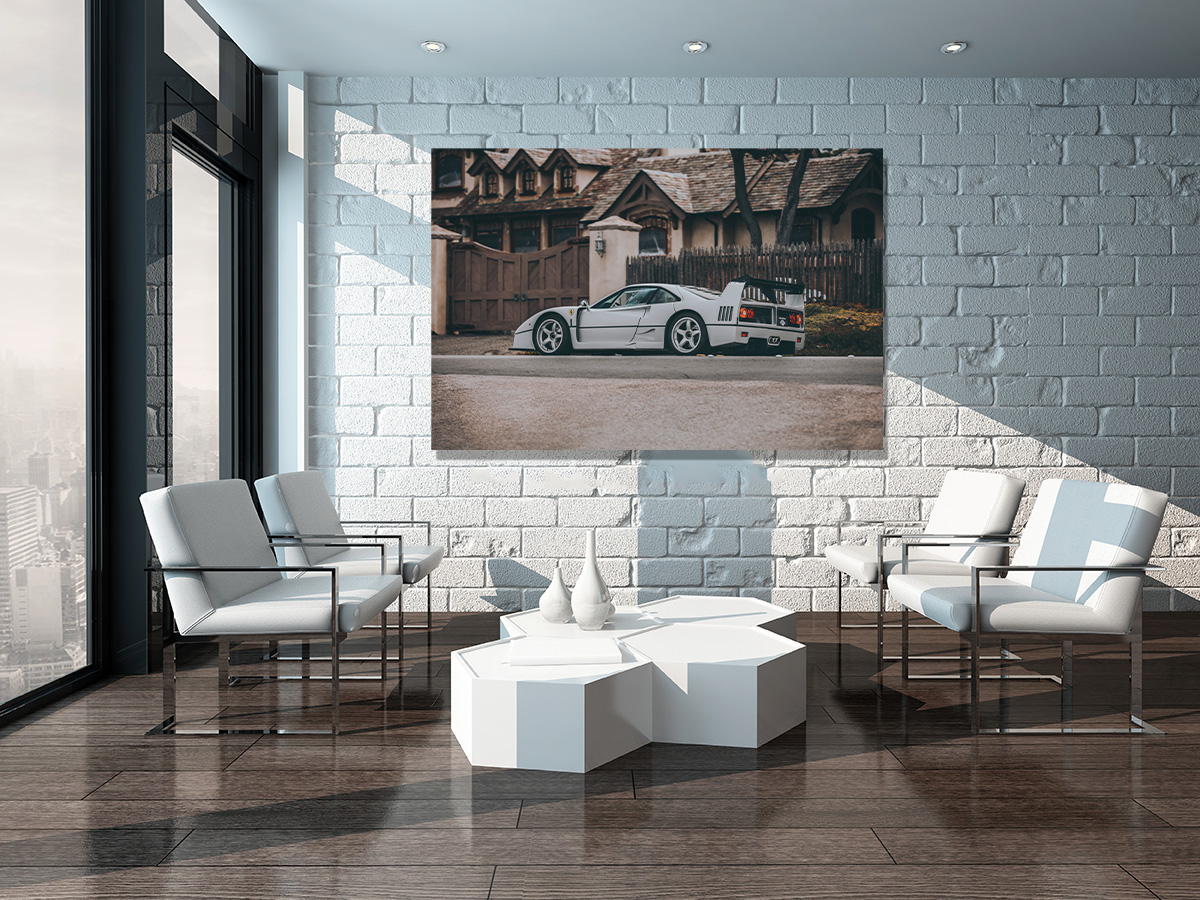
A well-chosen fine art photograph can transform an interior — but it needs proper lighting and care to keep its full brilliance for decades. Here’s our complete guide to showcasing and preserving your fine art automotive prints.
Lighting a Fine Art Print the Right Way
Indirect natural light remains the best option for showcasing a fine art photograph — but avoid direct sunlight exposure, which can fade colors over time. For artificial lighting, choose adjustable LED spotlights with a color temperature around 3000K (warm white), which render tones faithfully without yellowing the image.
Lighting placed at roughly a 30° angle above the piece, slightly off-axis, avoids glare while revealing the depth and texture of the print — particularly important for glossy materials like aluminum Dibond or acrylic.
Lighting by Material (Canvas, Aluminum, Acrylic)
Each material reacts differently to light. Matte gallery canvas tolerates more direct lighting without distracting glare — it works beautifully in rooms bathed in natural light. Aluminum Dibond, with its satin finish, calls for softer, more indirect lighting to avoid reflections on the darker areas of the image. Acrylic, the glossiest of the three, pairs best with dimmed ambient lighting rather than a direct spotlight, which would create distracting reflections on the glass-like surface.
In every case, avoid placing a fine art print directly above a heat source (radiator, fireplace) — temperature swings accelerate material aging.
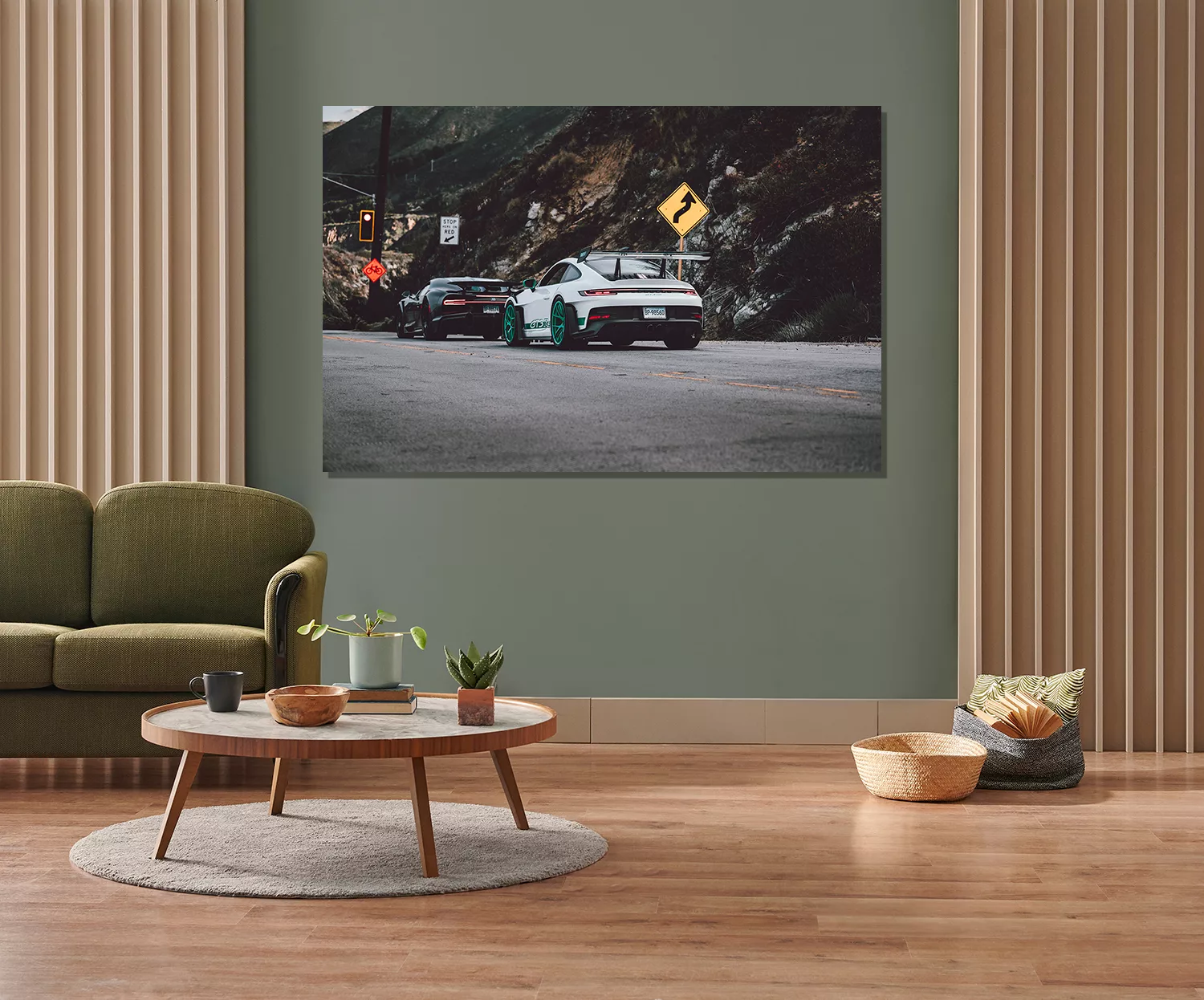
Everyday Care
Regular dusting remains the single most important care step. Use a dry microfiber cloth with gentle circular motions, roughly once a month depending on the room’s dust exposure. For aluminum Dibond and acrylic, a slightly damp cloth (demineralized water) is enough for light marks — avoid any alcohol- or ammonia-based products, which can damage the print surface.
For gallery canvas, use a soft duster or a low-power vacuum with a brush attachment, moving gently across the surface without pressing down, to avoid damaging the print’s texture.
Mistakes to Avoid
Never use standard household cleaners (glass cleaner, all-purpose spray) on a fine art print — their chemical components can permanently dull the colors. Also avoid excessive humidity: a poorly ventilated bathroom or a kitchen directly exposed to steam aren’t ideal locations for a quality print.
Finally, don’t overlook wall mounting — a poorly secured frame that shifts or vibrates with every passerby can, over time, damage the frame or the print itself.
Adjusting Care by Season
In summer, stronger light and temperature swings call for extra vigilance against direct sun exposure, especially in south-facing rooms. In winter, indoor heating dries out the air — an added point of vigilance for gallery canvas, which is more sensitive to humidity fluctuations than aluminum or acrylic.
Frequently Asked Questions
What lighting works best for a fine art print?
Choose adjustable LED spotlights at 3000K, placed at roughly a 30° angle above the piece, avoiding direct sunlight.
How do I clean an aluminum Dibond print?
A slightly damp microfiber cloth (demineralized water) is enough — avoid any alcohol- or ammonia-based products.
Can I hang a fine art print in a bathroom?
Not recommended without proper ventilation — excessive humidity can damage the print over time.
How often should I dust a fine art print?
About once a month with a dry microfiber cloth, depending on the room’s dust exposure.
Does acrylic require special care?
It’s more prone to scratches than canvas or aluminum prints — always use a soft cloth and avoid firm pressure.
Read Next
- How to Create a Fine Art Gallery Wall: The Complete Guide
- Discover Aluminum Photo Prints: Premium Quality for Your Decoration
- Porsche 911 Targa Photography: The Iconic Targa Bar in Fine Art