

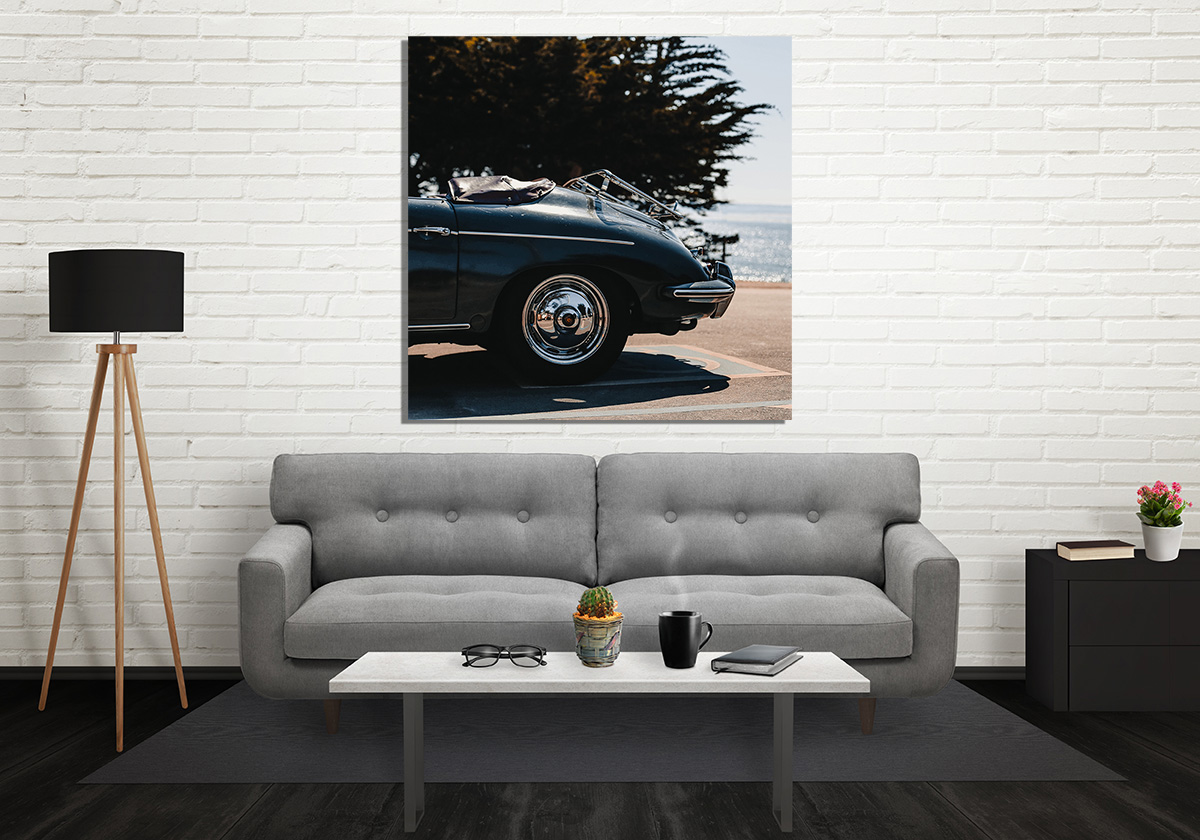
The Porsche 356 is more than a car. It is the first expression of Porsche’s sporting genius, a rolling work of art born in the late 1940s. Porsche 356 photography captures this timeless grace to enrich the finest interiors with an unmatched sense of history.
History and Legacy of the First Porsche
The Porsche 356 was born in 1948 under Ferdinand Porsche Jr.’s direction. In fact, this inaugural model established a unique philosophy: lightness in the service of performance. Thus, the 356 quickly became the benchmark for purists around the world.
Unlike the heavy cars of its era, the 356 chose finesse and elegance. Its organic forms give it a timeless appeal that remains instantly recognisable. Indeed, these lines have lost none of their seductive power more than sixty years after their creation.
In competition, the 356 distinguished itself rapidly on European and American circuits. For example, at Le Mans and the Carrera Panamericana, it proved that performance and beauty are not incompatible. Consequently, every photograph of this model carries the very essence of motor sport within it.
Today, the Porsche 356 belongs to the world’s automotive cultural heritage. Moreover, its rarity and history make it a favourite subject for fine art photographers. That is why a Porsche 356 photography print holds a place of honour in the most discerning collections.
Why the 356 Makes Such a Compelling Fine Art Subject
The Porsche 356 possesses exceptional formal qualities for photography. First of all, its flowing curves create rich plays of light and shadow. Thus, whether captured head-on, in profile or from a low angle, the 356 always offers a powerful composition.
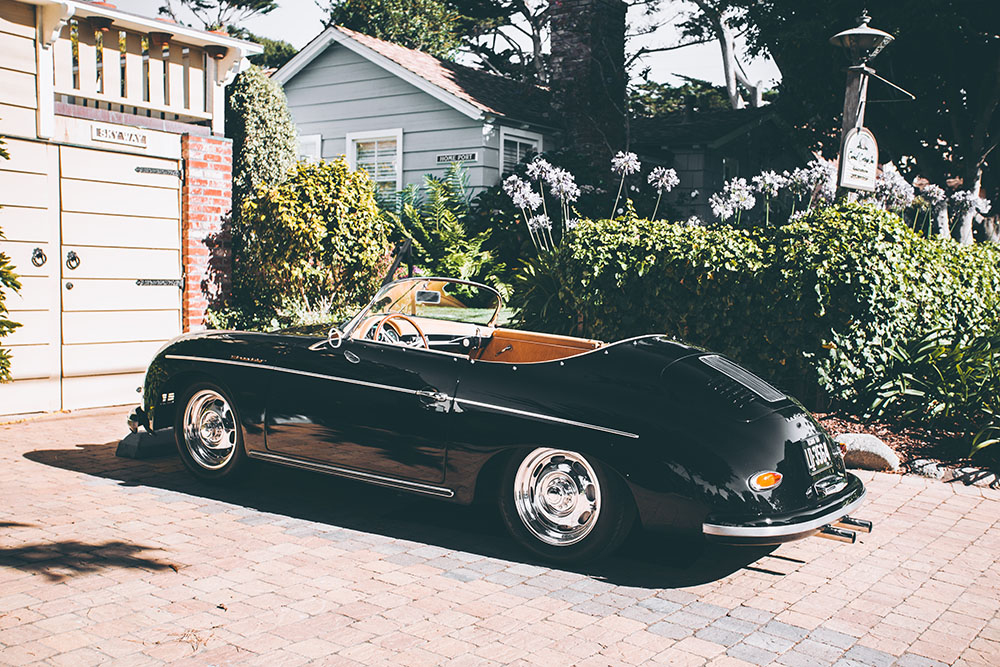
Furthermore, the colour palette of period 356s — ivory, crimson red, silver grey — lends itself beautifully to fine art treatment. In fact, these restrained tones highlight the work on light rather than colour. As a result, even in black and white, the 356 retains its absolute elegance.
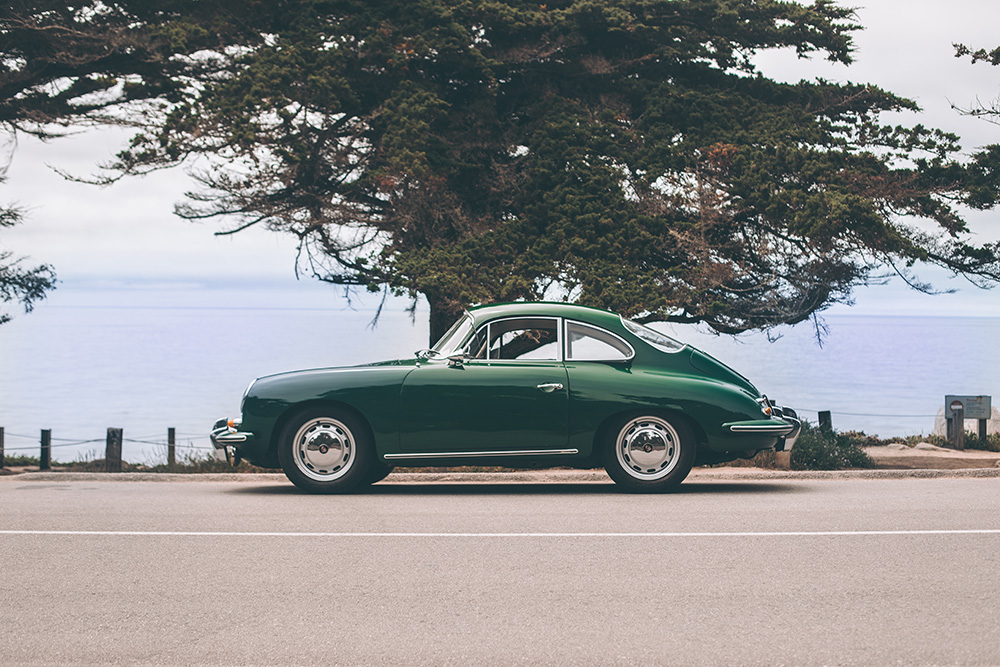
The locations that accompany the 356 add a narrative dimension to the image. For example, a 356 Cabriolet on the California coast evokes the freedom and spirit of the 1950s. In contrast, a 356 Coupé on a historic racing circuit speaks of competition and self-surpassing.
Finally, the interior details of the 356 are an inexhaustible source of fine art subjects. Besides, the Bakelite steering wheel, round dials and braided leather seats each tell the story of a vanished era. Every detail is a subject worthy of a fine art photograph in its own right.
How to Integrate Porsche 356 Photography in Your Home
A Porsche 356 photography print integrates naturally into a home with character. Indeed, its classic look works equally well in a Haussmann apartment or a contemporary loft. That is why it makes a particularly versatile choice for interior decoration.
In a living room with neutral tones — white, light grey, taupe — the 356 creates an immediate focal point. Moreover, its ideal format ranges from 80×60 cm to 120×80 cm for a standard living room. In fact, these dimensions let you appreciate the details from anywhere in the room.
For a study or home office, compact formats of 60×40 cm work perfectly. In contrast, a large entrance hall or corridor welcomes panoramic formats up to 150 cm wide. Consequently, there is a Porsche 356 photograph for every space and every decorative ambition.
The choice of frame also influences the final result. Thus, a light natural wood frame emphasises the vintage character of the 356. On the other hand, a floating matte black metal frame brings a modernity that contrasts elegantly with the subject. Similarly, frameless aluminium dibond mounting is ideal for minimalist interiors.
Porsche 356 Photography: Format and Print Choices
Choosing the right medium is decisive for a successful Porsche 356 photography print. Indeed, each material changes the perception of the work and its integration into the décor. Consequently, it is essential to understand each option before deciding.
Fine Art Baryta paper is the absolute reference for authenticity lovers. First of all, this thick, slightly satin paper delivers incomparable depth of blacks and richness of detail. Moreover, its longevity guarantees the photograph retains its qualities for more than a century.
Aluminium dibond offers a popular contemporary alternative. Thanks to its slightly reflective surface, it accentuates the brightness of the image and gives it an almost three-dimensional appearance. Furthermore, this medium is particularly resistant to humidity and temperature changes.
Finally, limited edition prints signed by the artist add extra value to the work. In fact, each print is numbered and accompanied by a certificate of authenticity. Thus, owning a limited edition Porsche 356 photography print means decorating your home and building an art collection at once.
Our Selection of Classic Car Fine Art Prints
Cars and Roses offers a selection of Porsche 356 photographs captured in iconic settings. Indeed, our images are taken at prestigious gatherings such as Pebble Beach or Carmel By The Sea. Each photograph tells a unique story of this legendary model.
Moreover, our collection covers all 356 body styles: the Coupé with its perfect lines, the open Cabriolet and the stripped-back Speedster. In addition, both colour and black-and-white versions are available to suit every decorative style. Thus, you will find the photograph that matches your exact vision.
Furthermore, every print is produced with the finest materials available. As a result, the quality of your fine art piece will be visible at first glance. That is why our clients trust Cars and Roses to decorate their interiors with the most beautiful automobile photographs.
Frequently asked questions about Porsche 356 photography
What is the difference between a fine art photograph and an ordinary print?
A fine art photograph is printed on high-quality paper or medium, in a limited edition, and comes with a certificate of authenticity. Unlike an ordinary print, it is designed to last more than a century without colour degradation.
What size should I choose for Porsche 356 photography in a living room?
For a standard living room, a format between 80×60 cm and 120×80 cm is ideal. For a larger wall, a panoramic format from 120×80 cm to 150×100 cm creates a strong visual impact. Check our guide to find the right size.
Is Porsche 356 photography a good choice for a professional office?
Yes, absolutely. Its understated character and iconic status make it a perfect choice for an office or reception area. It combines automotive passion with refinement without ostentation, ideal for high-end professional environments.
Do limited edition Porsche 356 prints increase in value over time?
Fine art photographs in limited editions tend to appreciate in value, especially when they feature icons such as the 356. Each numbered and signed print is a collector’s piece in its own right.