

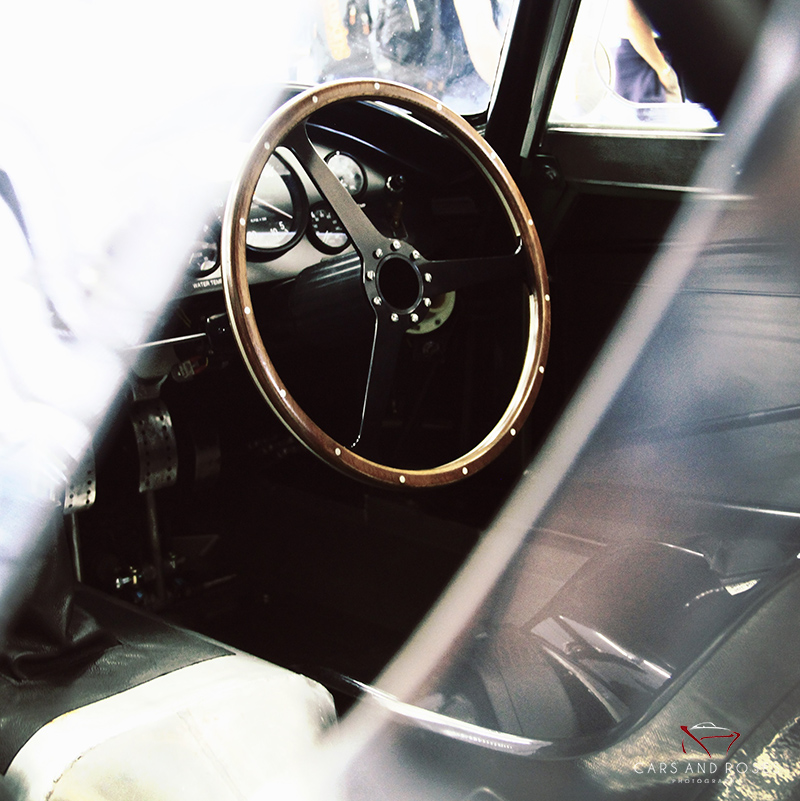
From the track to your wall — fine art automotive photography has become one of the most compelling ways to give a living room real character. Whether it’s the cockpit of a Le Mans racer, the profile of a classic Jaguar, or the headlights of a Porsche cutting through the night, the right car photography print transforms a blank wall into something worth talking about. Here’s how to do it well.
👉 Browse our automotive photography collection — From €78
Contents
- Why car photography prints work in a living room
- Choosing the right size: from small accent to statement XXL
- Which style of automotive photography for your décor?
- Where to hang your car photography print in the living room
- Pairing car prints with your interior style
Why car photography prints work in a living room
There’s a reason automotive photography has moved from specialist prints to mainstream interior design: the images are simply extraordinary. The curve of a fender, the blur of a rear wheel at speed, the reflection of circuit lighting on wet bodywork — these are images that hold your attention in a way that generic decorative prints rarely do.
Fine art automotive photography occupies a unique position in interior design: it carries the emotional weight of a passion, the visual drama of sport, and the aesthetic refinement of contemporary art photography — all at once. It speaks to car enthusiasts without excluding those who simply appreciate a compelling image.
This is why car photography prints are increasingly found in living rooms, home offices, and entrance halls that have nothing to do with garages. Interior designers use them because they create instant focal points, give a room personality, and make a space feel curated rather than simply decorated.
The key difference between a decorative poster and a fine art print lies in how it’s made: archival pigment inks, fine art paper or aluminium dibond, limited edition numbering. A car photography print of this quality doesn’t just look good on day one — it holds its impact for years.
Choosing the right size: from small accent to statement XXL
Size is the most important decision when decorating with car photography. The right format makes the difference between a piece that commands the room and one that disappears into it.
Standard living room (3–4 metre wall): a 100×70 cm or 120×80 cm format is the sweet spot. The classic recommendation is for the print width to be 60–75% of the furniture it hangs above.
Large open-plan space: go XXL. A 160×120 cm or larger automotive print becomes an architectural element in its own right. Fine art photography scales beautifully — detail remains razor sharp at very large sizes.
Home office or smaller room: a 60×40 cm or 80×60 cm format works perfectly at eye level, personalising the space without overpowering it.
On framing: aluminium dibond (frameless, flush to the wall) suits contemporary and minimalist interiors. A fine art print with a white mount and slim frame works beautifully in traditional or Scandi spaces.
Which style of automotive photography for your décor?
The style of the photograph matters as much as the subject. Different approaches create entirely different atmospheres in a living room.
Circuit and endurance racing photography: Le Mans, GT3 racing, pit lane drama, night racing with light trails — raw energy and tension. Ideal for bold living rooms, home bars, or home offices.
Classic car photography: Jaguar E-Type, Porsche 911, Aston Martin DB5, Ferrari 250 GT — timeless images that age beautifully on a wall. In black and white, they bring an elegance that works in virtually any interior.
Detail and close-up photography: engines, cockpits, logos, headlights — hung in series, these create a sophisticated gallery feel. The most convincing bridge between automotive passion and contemporary art collection.
Lifestyle and road photography: a Porsche on a mountain pass, a Ferrari in Monaco — images that invite the viewer into a world, particularly effective in living rooms designed for relaxation and conversation.

Where to hang your car photography print in the living room
Above the sofa: centre the print at eye level (approximately 150–160 cm from floor to centre) and ensure it spans 60–75% of the sofa’s width. A statement car photography print here becomes the room’s visual anchor.
On a feature wall: a single large-format automotive print on a plain wall is the most confident approach. Add a directional spot light to bring out the detail in the print.
As a gallery wall: mix varying sizes, a hero piece at centre, surrounded by smaller prints. Mix black and white with colour, racing with classics, wide shots with close-ups.
In the entrance hall: a bold car photography print at the front door sets the tone immediately — it says something about who you are before you’ve said a word.
Pairing car prints with your interior style
Contemporary and minimalist: large formats, frameless aluminium dibond, clean automotive images with neutral backgrounds. Let the print be the sole decorative statement.
Industrial lofts: racing photography, night circuit images, pit lane scenes — the grittiness of race photography complements exposed-material interiors naturally.
Classic and traditional: framed fine art prints with white mount, classic car subjects, black and white. The limited edition nature of fine art photography sits comfortably alongside heritage furnishings.
Scandinavian and natural: black and white classic car photography, clean compositions, light backgrounds. Avoid highly saturated race photography — opt for timeless subjects in monochrome.
Whatever your interior style, the one rule that always holds: choose a print you genuinely love. A car photography print you connect with emotionally will always look better on your wall than one chosen purely for compatibility.
👉 Explore our full automotive photography collection — From €78
FAQ — Decorating your living room with car photography prints
What size car photography print should I choose for my living room?
For a standard living room, a 100×70 cm or 120×80 cm format works well as a focal point. The print should span roughly 60–75% of the width of the furniture below it. For large open-plan spaces, XXL formats (160×120 cm+) create the most dramatic impact.
Do car photography prints work in all interior styles?
Yes — with the right image. Black and white classic car photography works in minimalist, Scandinavian, and traditional interiors. Racing photography suits industrial and contemporary spaces. Fine art automotive photography is more versatile than most people expect.
What’s the difference between a poster and a fine art automotive print?
A poster uses standard dye-based inks that fade within years. A fine art print uses archival pigment inks on museum-quality paper or aluminium, guaranteed to last over 100 years without fading. The visual difference — especially at large format — is immediately apparent.
Can I hang multiple car prints together?
Absolutely. A gallery wall of automotive photography — varying formats, black and white mixed with colour — can be one of the most striking approaches. Start with a central hero piece and build outward with a consistent automotive theme.
Colour or black and white car photography for a living room?
Black and white is more timeless and integrates easily into any palette. Colour adds visual energy — a Gulf-livery Porsche or a red Ferrari can become the chromatic accent of an entire room.
What is the price range for fine art automotive photography?
At Cars and Roses, limited edition fine art prints start from €78 for a 30×20 cm format. Larger formats and premium substrates (aluminium dibond) start from €180. Each print is numbered and comes with a certificate of authenticity.