

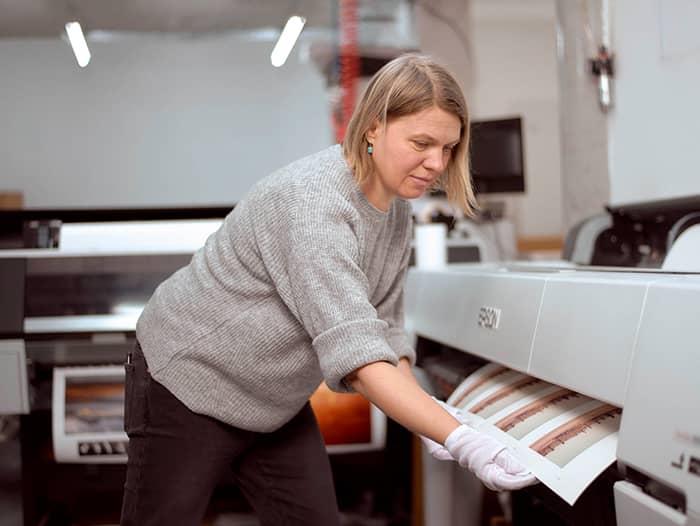
This guide to high quality photo printing online covers every decision determining the final result on your wall. The choice of paper, substrate, and matte or gloss finish dictates how the piece responds to your specific room lighting. In practice, selecting a photo lab with strict color standards, archival inks, and expert review ensures the image retains its depth thirty years from now.
How to choose the best photo lab service
The gap between a professional photo print and a consumer-grade run rests on four verifiable metrics. Color calibration, ink longevity, substrate quality, and human expert review fundamentally alter the final object. These technical distinctions clarify exactly what you are acquiring for your collection.
Key quality criteria for a print lab
Evaluating high quality photo printing services requires measuring production time against color accuracy and substrate range. A premium service that achieves perfect tones but uses inadequate packaging ruins the photograph before framing. The final result depends entirely on how these variables interact in practice.
- G7® color certification: This standard enforces strict color reproduction rules across international methodology parameters. It guarantees the calibrated file matches the final photo printing output precisely.
- ICC color profile calibration: This process ensures total chromatic fidelity to the original file. Precise profile management is non-negotiable when rendering a 1967 Ford GT40 or a dramatic landscape.
- Archival ink systems: Professional papers paired with archival inks are engineered to last over a century on display. Standard prints inevitably suffer fading within five years unless protected by specialized glass.
- Production time: A standard professional fulfillment window spans two to three business days. Certain specialized facilities dedicate up to fifteen days to rigorous quality oversight.
Specialized independent facilities often maintain a structural advantage over automated high-volume operations. A dedicated print lab inspects every piece for consistency and physical damage prior to dispatch. This manual intervention is precisely what distinguishes a considered result from a generic one.
Why expert review sets professional services apart
Inside a professional photo lab, technicians evaluate each file on calibrated monitors before applying ink to paper. They manually adjust density and contrast to preserve crucial shadow details. What this means for the wall is a visible difference in the rendering of metallic automotive paint or twilight skies.
Achieving true color fidelity across volcanic rock, glacier ice, and pale bodywork requires precise ICC profile calibration. Automated systems force diverse subjects through identical uncalibrated pipelines, dulling the final image. I would choose a facility that actively manages ink profiles: the difference comes down to results that hold their integrity over time.
Archival standards and color fidelity benchmarks
Inks and papers certified for a century of home display represent the baseline for any serious photographic acquisition. Without proper archival materials, consumer prints fade significantly within five years. This gap in longevity stems directly from measurable differences in pigment density and base pH levels.
Professional photographers evaluate labs based on verified color accuracy, premium substrates, and secure transit packaging. These specific benchmarks must guide your comparison of any high quality photo printing services available today. At this scale, the decision shifts: when these standards are met, the resulting photo print earns its place in framing and on your wall.
Best paper finishes for a high quality photo print
A 100 × 150 cm image printed on pure cotton rag absorbs ambient light differently than a resin-coated surface. The finishes you select dictate aging behavior and whether the piece requires glass or specialized framing. This is a technical decision with measurable consequences for both visual performance and longevity.
Lustre, glossy, and matte compared
When commissioning high quality photo printing UK services, the primary distinction lies in light management. Lustre photo paper provides a semi-matte surface that resists fingerprints while preserving precise color accuracy. In practice, this makes it a sound choice for portraiture and unglassed wall displays in active environments.
Glossy photo paper delivers striking contrast, making it the definitive choice for intense automotive subjects. Its vulnerability to glare under directional lighting, however, remains a strict physical constraint. Place a glossy photo print opposite a south-facing window, and reflections will overpower the image.
| Finish | Best use case | Glare resistance | Fingerprint resistance | Archival value |
| Lustre / E-Surface | Portraits, landscapes, unglassed display | Good | Good | 100 years (home display) |
| Glossy | Automotive, high-contrast color | Low | Low | 100 years (home display) |
| Pearl / Metallic | Fine art, architectural, automotive | Medium | Medium | 100 years (home display) |
| Matte | Unframed wall display, even lighting | Excellent | Excellent | Varies by ink system |
A pearl finish yields a metallic sheen that enhances the dimensional quality of fine art photography. A true matte finish, by contrast, eliminates glare entirely: the finish that earns its place in this light when the space offers no protective glazing. Lustre photo prints treated with UV coatings perform particularly well in corridors where no framed glass is present.
Fine art and giclée paper for professional results
A premium photo print rendered on heavy cotton paper becomes a fundamentally different physical object. True fine art paper weighing above 200 GSM ensures strong archival stability alongside pigment-based inks. This photo printing method is the established standard for professional editions.
- 100% cotton fine art paper: provides a silky surface texture alongside superior archival properties. Paired with pigment inks, this material defines the baseline for edition prints holding collector value.
- Hahnemühle Fine Art Baryta: yields a semi-gloss surface matching the tonal resonance of traditional darkroom paper. I would choose this specific substrate for high-contrast color work and critical monochrome reproduction.
- Canson Platine Fibre Rag: unites a classic fiber texture with a smooth, platinum-like surface. It offers an immense dimensional tonal range suited to full-color automotive imagery.
Standard photo paper typically degrades within five years when displayed without framed enclosures. Museum-grade fine art materials paired with archival inks maintain color fidelity for decades. The material specification confirmed at the time of ordering permanently dictates how your framed photograph will endure.
Acrylic and aluminum prints for lasting photo quality
When longevity becomes the priority, the decision moves beyond a framed photo print on traditional photo paper toward rigid substrates. Metal and acrylic prints deliver a lifespan exceeding forty years with proper UV protection. This is where the choice of material declares itself clearly.
Why acrylic transforms a photo print visually
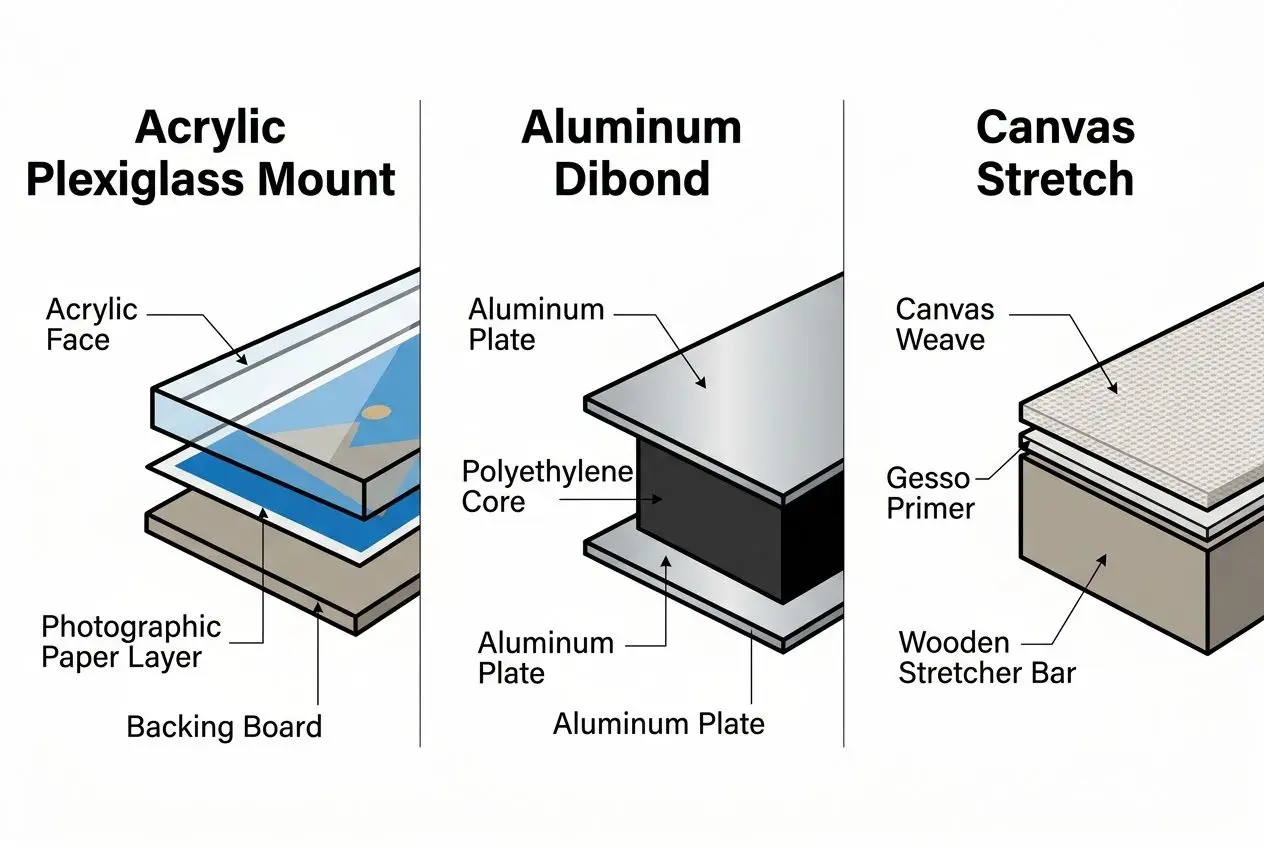
Among high quality photo printing australia customers seeking immediate visual presence, acrylic mounting is the format that provokes the strongest response. Light filters through the clear plexiglass face, illuminating the photographic layer from within. This creates a three-dimensional glow that matte paper cannot replicate.
Acrylic plexiglass is scratch-resistant, reduces glare, and eliminates the need for traditional framing. Two quality tiers exist: standard OP3 and premium TruLife acrylic, which offers a refined surface. For a 1968 Ford GT40 portrait, I would choose TruLife without hesitation.
Aluminum Dibond structure and durability advantages
Aluminum Dibond differs from acrylic mounting through its rigidity, flatness, and chromatic intensity. The white undercoat of the Dibond panel amplifies image brightness beyond standard mounting. This structure, featuring two aluminum plates, remains non-deformable year after year.
- Permanent dimensional stability: the composite structure ensures perfect flatness over decades, eliminating the warping that affects canvas and unframed photo paper over time.
- Full environmental resistance: aluminum and acrylic are completely waterproof and resistant to humidity and UV rays, making both finishes suitable for high-moisture environments.
- Lightweight installation: at approximately one kilogram per square metre, Dibond avoids heavy wall fixings, a practical advantage for both residential and commercial installations.
Direct photo printing on aluminum uses advanced technology for exceptional sharpness and saturation. Archival inks preserve vivid tones for decades, ensuring high quality reproduction. The full range of aluminum photo prints, from glossy to brushed metallic finishes, is available to explore directly online.
Finish options for automotive and landscape photography
Three finishes on Dibond address distinct visual contexts. A glossy finish maximizes chromatic intensity, suited to a red Ferrari photographed at sunset. A satin anti-glare finish serves refined compositions where subtlety matters more than impact.
A brushed metallic finish introduces a contemporary effect well suited to architectural automotive subjects. For landscape photography, the choice between acrylic and aluminum shifts with the subject: an Icelandic aurora image benefits from the luminous depth that acrylic provides.
Understanding which photo print materials suit which subjects precedes decisions about size and price. A material chosen for the wrong room will underperform regardless of the photo printing process. At Cars and Roses, that material decision is built into every edition print.
Sizes, formats, and online photo printing ordering guide
Ordering an online print requires four precise decisions: preparing your image file, checking resolution, selecting the format, and configuring the finish. Each phase introduces a technical threshold that dictates the final aesthetic. Ignore these boundaries, and the quality of your photo print visibly deteriorates on the wall.
Uploading and resolution checks before photo printing
When seeking high quality photo printing nz, a disappointing result usually stems from file resolution rather than the photo printing service. Technical requirements remain absolute. At 300 dpi, large formats reproduce without fault; at 150 dpi, you retain clear detail up to 80 cm.
- 300 dpi minimum for enlargements: This density guarantees crisp edges on custom photo prints over 80 cm, preventing pixelation at normal viewing distances.
- 150 dpi minimum up to 80 cm: This baseline performs reliably for medium formats when you upload a capture from a modern digital sensor.
- Accepted file formats: PNG, JPG, and HEIC files deliver true high quality, whereas compressed social media files lack the data required for a premium finish.
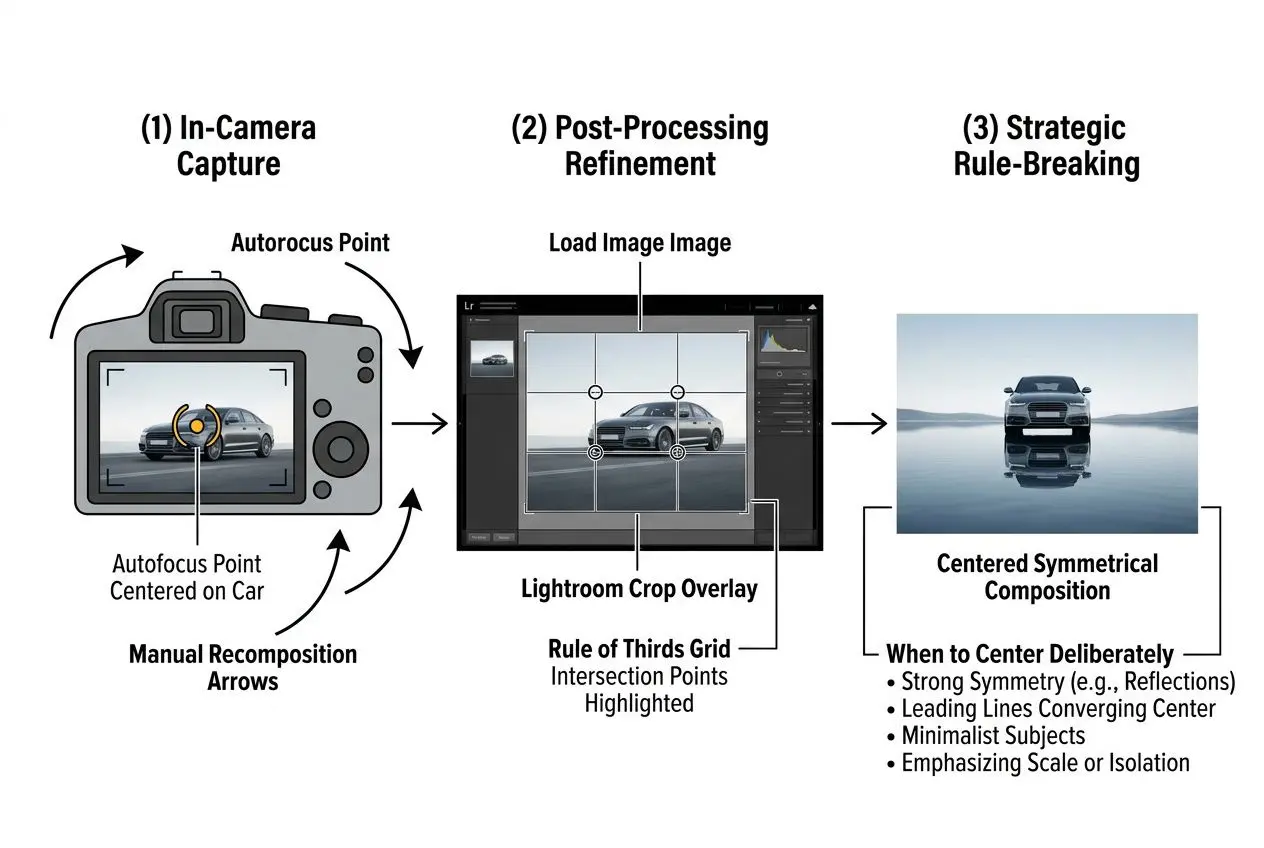
- Automatic cropping awareness: Standardizing a smartphone capture alters its composition; manual review is therefore essential before finalizing your online photo printing order.
An integrated resolution tool on professional platforms verifies your file before production begins. Use this feature to confirm your dimensions. It eliminates the risk of stretching an image beyond what its original data can faithfully support.
Mobile applications simplify the upload process, allowing direct file transfers from your device. For immediate requirements, 4×6 photo prints offer rapid turnaround, while expedited shipping secures delivery for larger pieces. This logistical efficiency does not compromise the standards expected from a fine art laboratory.
Available print sizes and customization options
Standard photo printing scales from compact desk displays to substantial gallery walls, while fine art editions extend the visual field up to 180 × 120 cm. When an architectural space demands precise scaling, custom photo prints provide an exact, tailored fit: the difference comes down to substrate selection and structural integrity. At Cars and Roses, online photo printing at this scale meets the same premium quality threshold applied to every format in the catalogue.
Museum-grade print lab standards for fine art photography
A 120 × 80 cm fine art photo print requires a verifiable production standard to sustain its physical value over time. The distinction between a premium acquisition and a consumer unit comes down to the accompanying documentation. A hand-signed edition number and an authenticity certificate transform the object entirely.
Certificates of authenticity and limited edition quality
For collectors evaluating high quality photo printing Singapore standards against global gallery benchmarks, the certificate acts as the definitive record. Each framed or unframed piece carries a verifiable identity through the photographer’s direct hand signature. This strict documentation secures provenance for the long term.
- Individual numbering and signature: Each edition features a unique identifier and the artist’s signature, confirming its exact place in the run.
- Certificate of authenticity: This document records the substrate, edition scale, and production date, ensuring secure resale provenance for collectors.
- Limited edition caps: Restricting production to 200 copies per size preserves the scarcity of your high quality acquisition.
- Archival standard: Museum-grade archival inks applied consistently mean every piece meets the exact same quality bar over time.
Capping limited edition production at 200 copies per support aligns this photography with the established collector market. The number on the certificate carries the same weight as a bronze sculpture’s casting mark.
Packaging, shipping, and service reliability worldwide
A print lab utilizing advanced color management negates its own standard if shipping relies on inadequate protection. Rigid packaging, reinforced corners, and internal buffers are necessary structural commitments: proper service demands that the physical journey never compromises the print’s surface quality.
Maintaining these materials post-installation requires minimal intervention; a slightly dampened microfiber cloth suffices. In humid environments, aluminum Dibond and acrylic substrates resist temperature fluctuations reliably. This presents a practical advantage over canvas and traditional photo paper, which remain vulnerable to moisture.
Why aluminum and acrylic lead for lasting art display
Prints on rigid metals endure for decades, whereas basic framing on standard paper degrades considerably faster. When an image of a racing vehicle carries collector value, forty-year durability is the baseline standard. See this method applied directly in these museum quality car prints, produced with archival inks and fully certified.
The piece you acquire today will retain its precision decades later through professional photo printing on solid substrates. When vous decide to print photos or browse photos online, demand a process that prioritizes permanence: proper online photo printing is what separates a lasting investment from a temporary decoration.
Frequently asked questions
What is the best paper finish for printing automotive photography?
Metallic photo paper delivers the precise reflective intensity needed to amplify the chromatic depth of painted bodywork. For a room with strong directional lighting, an anti-glare finish on aluminum Dibond provides comparable saturation with reduced surface reflection. In practice, I would choose metallic paper for a framed photo print, and satin Dibond for an unframed large format piece.
How large can I print a photo without losing image quality?
A file at 300 dpi contains the pixel density required to enlarge an image without compromising visible quality. Always submit the original, uncompressed file rather than a version stripped of data by social media platforms. What actually changes at this scale is structural: large format prints produced through premium photo printing demand source files that have never been recompressed.
Are aluminum and acrylic prints worth the cost premium over standard photo paper?
Without proper framing, standard materials degrade over time, whereas acrylic and aluminum substrates printed with archival inks maintain color fidelity across decades. The difference comes down to intended longevity: this is an investment in a piece you plan to keep. Standard photo printing on fine art photo paper remains a proportionate choice when the format is temporary by design.