

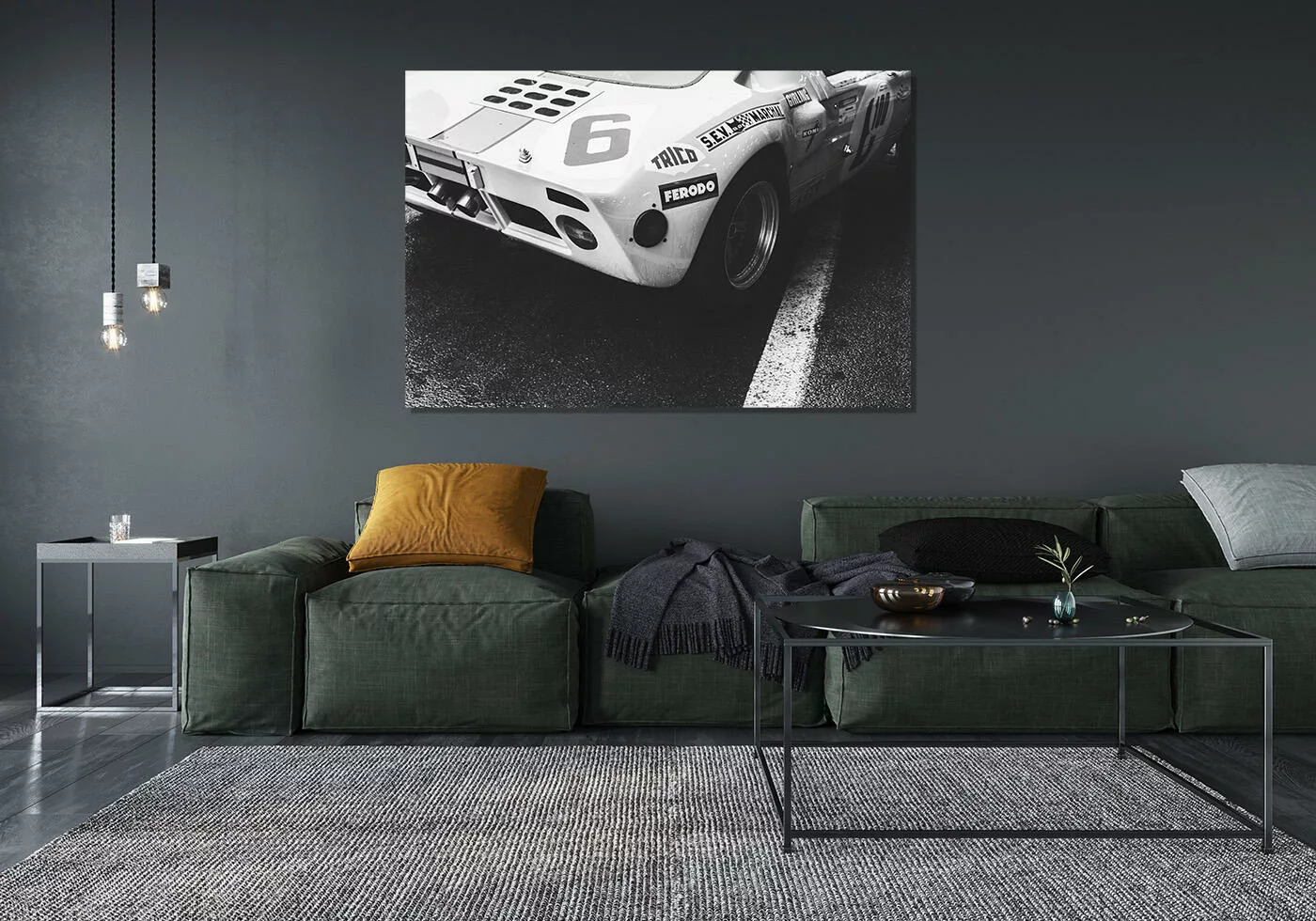
In the world of interior design, few elements match the emotional power of black and white photography. Indeed, this timeless medium transcends trends to become the ultimate expression of refinement. Moreover, luxury hotels and designer apartments have always given pride of place to these monochrome works. So what is it that makes black and white photography decor transform an ordinary space into an exceptional living environment? A deep dive into the art of monochrome decoration.
Contents
Why Black and White Photography Reveals the Soul of Your Interior
Black and white photography decor possesses a unique quality. Thus, it strips away the visual noise of color to retain only the essentials — light, form, emotion. Moreover, in a contemporary interior, this visual restraint creates a focal point of remarkable power. It fits naturally in minimalist spaces and classic settings alike, without ever seeming out of place.
Unlike a colorful artwork that might compete with a room’s existing tones, black and white photography integrates effortlessly. Furthermore, it dialogues with materials — polished concrete, marble, light wood — and adapts to every design code, from Scandinavian minimalism to bold Art Deco. Leading interior design publications have long understood this: monochrome in interior design is what the little black dress is to fashion.
Black and white photography decor also carries a singular temporal dimension. Indeed, in the absence of color, reality appears suspended outside of time. Thus, this quality instills in your interior a presence that is both timeless and alive. It is this tension between the fleeting nature of the subject and the permanence of the grayscale that gives it its extraordinary evocative power.
The Keys to Successful Black and White Photography Decor

Not all photographs are equal in interior decoration. A black and white photography decor piece that truly transforms a space possesses certain invariable characteristics. First, the contrast must be mastered. Neither too soft to the point of appearing dull, nor too harsh at the risk of becoming aggressive. Thus, the photographer must have worked the midtones — those half-lights that give an image its depth.
Composition is the second decisive criterion. Indeed, a strong image for wall decoration must have a clearly defined subject. It must also offer a visual hierarchy that naturally guides the eye. For example, in fine art automotive photography, this means a staging that celebrates the lines and volumes of the bodywork — elegant curves, reflections on polished metal, mechanical details revealed by raking light.
Finally, print quality is crucial. A standard print simply does not do justice to the tonal richness of a crafted black and white image. This is precisely why a Giclée Fine Art print on Hahnemühle paper makes all the difference. Thus, it faithfully renders every shade of gray, from the deepest blacks to the most luminous whites, for wall art of exceptional visual impact.
How to Choose Your Black and White Photography Decor by Interior Style
Choosing black and white photography decor should take into account your interior’s style and the atmosphere you want to create. For example, in an industrial loft with concrete and steel, high-contrast photographs with graphic subjects — a racing car in full motion, a geometric architecture — stand out with confidence. They amplify the raw energy of the space without weighing it down.
In contrast, for a classic period apartment with detailed moldings and parquet floors, softer lighting is preferable. Rich midtones and a more serene composition suit the classical architecture far better. Thus, a grand touring car photographed on a mountain road, its curves revealed by lateral light, creates a perfect dialogue with the refined surroundings.
In a contemporary minimalist interior — whites, concrete, natural materials — all styles of black and white work well. However, proportions must be respected. A single large piece creates a stronger effect than several small formats. Furthermore, for those who love bold decoration, a black and white diptych featuring an iconic car makes for a truly remarkable wall installation.
Black and White Photography Decor: Formats and Prints
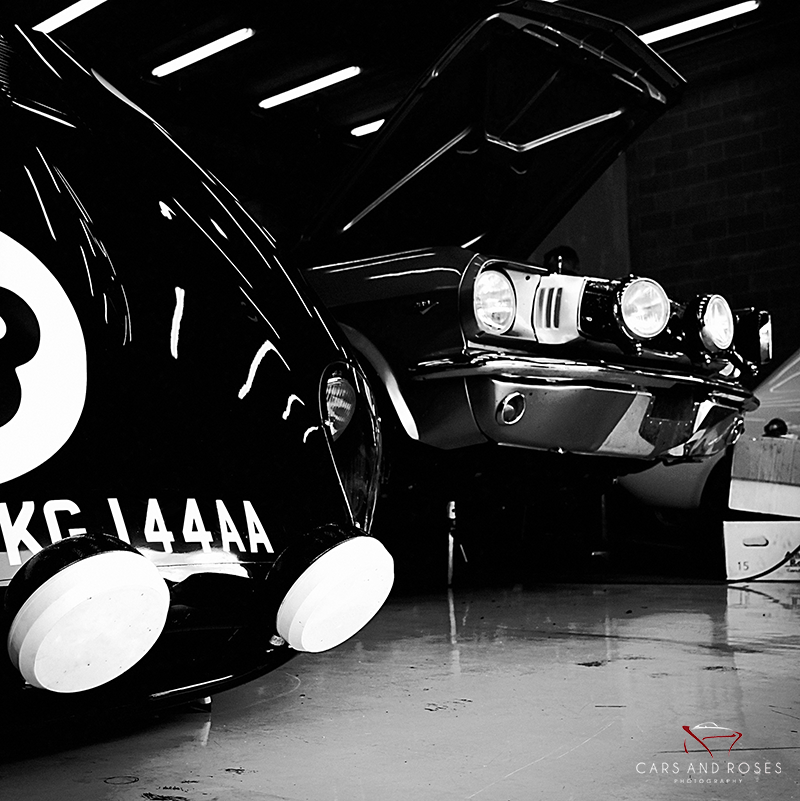
Format is one of the most important decisions for a successful black and white photography decor piece. As a general rule, a wall photograph gains impact from 24 × 16 inches (60 × 40 cm). Below this size, fine details and tonal subtleties lose their presence. Therefore, for a living room wall, formats ranging from 32 × 24 to 48 × 32 inches represent the ideal choice.
At Cars and Roses, our black and white automotive photographs are available as Giclée Fine Art prints. Indeed, this technique uses pigment-based inks on Hahnemühle paper for outstanding longevity. The result is remarkable: color stability guaranteed for over 100 years and photographic precision in tonal reproduction, from the most intense blacks to the brightest whites.
For long walls — corridors, extended living room walls — our panoramic formats create an elegant statement. For gallery-style arrangements, our square and vertical formats allow for varied wall compositions. Be sure to check our complete size guide to find the perfect format for your space.
Our Fine Art Selection: Iconic Cars in Black and White
Cars and Roses offers an exclusive collection of fine art black and white automotive photographs, showcasing the greatest icons in automotive history. Thus, from the Porsche 911 to the Jaguar Type E, through legendary racing cars, each image is the result of rigorous pursuit of perfect lighting and total mastery of monochrome photographic art.
These black and white automotive photographs bring together two exceptional worlds. On one hand, the mechanical heritage of cars that shaped history. On the other hand, the aesthetic standards of fine art. As a result, each work transcends mere automotive photography to achieve the status of true wall art — elegant, timeless, perfect for high-end interior decoration.
Furthermore, each piece is produced as a limited edition, signed and numbered. It is available in multiple sizes and formats to suit all decoration projects, from contemporary apartments to demanding professional spaces. In short, black and white photography decor finds its highest expression here: a work of art that tells a story and inhabits a space for generations.
Black and White Fine Art Photography
From $78
Giclée Fine Art Prints · Limited Edition · Certificate of Authenticity
Discover the CollectionFrequently Asked Questions
What black and white photo should I choose to decorate a living room?
For a living room, opt for a large format (24 × 16 inches minimum) with a strong subject — an iconic car, a graphic landscape, or a geometric composition. Contrast should be balanced: deep blacks without blown-out areas, luminous whites with detail. A fine art print on art paper delivers the most faithful rendering.
Does black and white photography work in all interior styles?
Yes — this is one of the great advantages of black and white photography decor: it adapts to all interior styles. Minimalist, industrial, classical, contemporary, Art Deco — monochrome photography works with every design aesthetic. It integrates effortlessly into any existing color palette, whether neutral or bold.
What size should a black and white wall photograph be?
The ideal size depends on your space. For a standard wall (8 ft ceiling), a 32 × 24 to 40 × 28 inch format works well. For a large wall or high-ceilinged room, go for 48 × 32 inches or larger. As a rule, black and white photography decor gains impact as the format increases.
What is the difference between a standard photo and a fine art black and white print?
A standard print uses ordinary paper with short-lived inks. A fine art print uses high-quality pigment inks on art paper (Hahnemühle, baryta) with a lifespan exceeding 100 years. The richness of midtones, depth of blacks, and luminosity of whites are incomparable — the difference between a copy and a true work of art.