

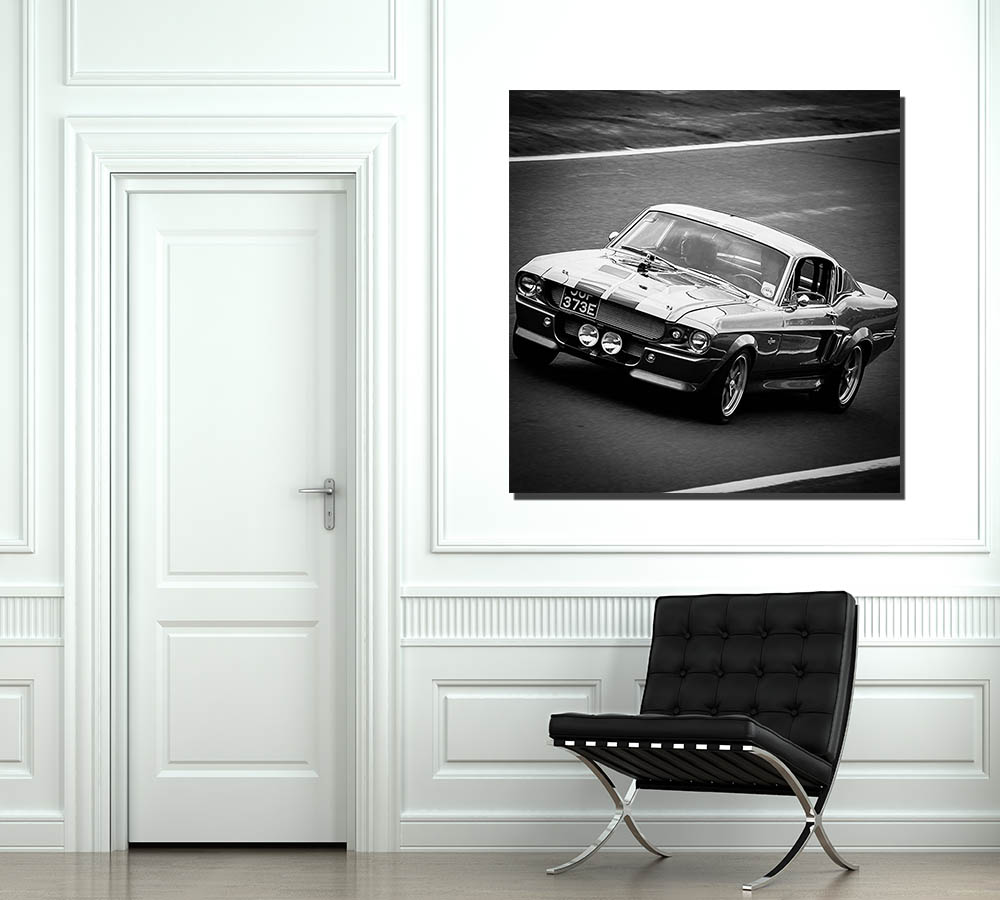
Born from the collaboration between Carroll Shelby and Ford, the Mustang Shelby GT500 embodies raw American muscle from the late 1960s. A closer look at an icon now found in our fine art prints.
Table of Contents
- The Birth of a Shelby Legend
- A Design Built for Power
- Eleanor: the GT500 That Became a Movie Star
- The Shelby Racing Legacy
- The Shelby GT500 in Fine Art Photography
The Birth of a Shelby Legend
In 1967, Carroll Shelby decided to go further than his GT350 by fitting the Mustang with a 7-liter big block V8. The GT500 was born — a powerhouse built to dominate American straightaways as much as the racetrack. Under its extended hood, it produced nearly 355 horsepower straight from the factory, a monstrous figure for its time.
Produced through 1970 in its first generation, the GT500 quickly established itself as one of the most desirable muscle cars of its era, alongside the Dodge Charger and Chevrolet Camaro SS.
A Design Built for Power
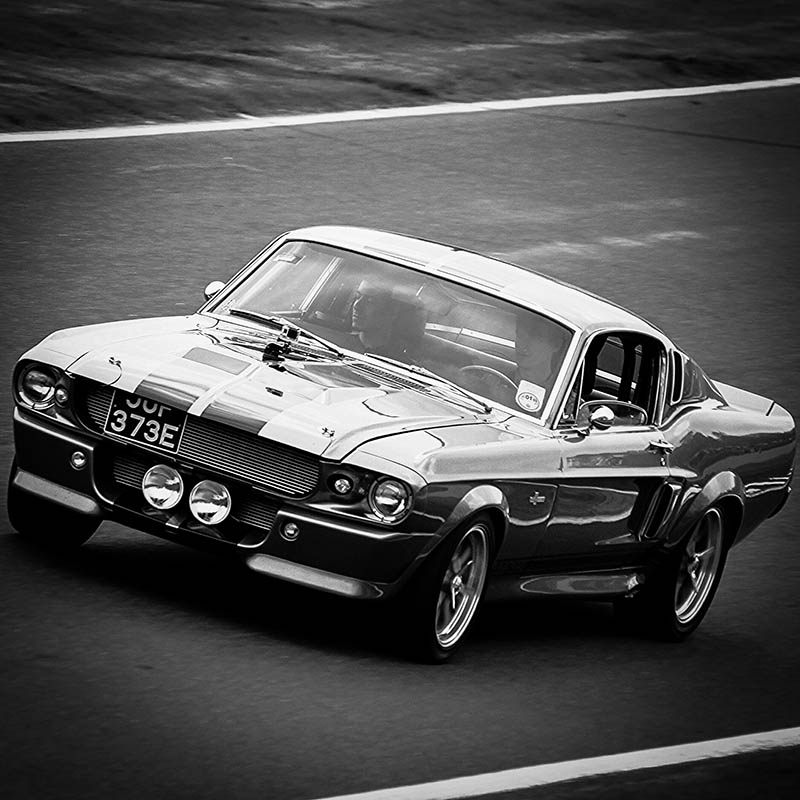
The extended hood, aggressive air intakes, and wide racing stripes running across the body aren’t just aesthetic choices — they express a philosophy of pure performance. The front grille with its recessed headlights gives the GT500 an unmistakable face.
At the rear, the subtle spoiler and dual chrome exhaust tips complete a silhouette designed to intimidate on the road — a style that continues to inspire Ford designers on modern GT500 models.
Eleanor: the GT500 That Became a Movie Star
No discussion of the Shelby GT500 is complete without mentioning “Eleanor,” the 1967 Mustang GT500 made legendary by the film Gone in 60 Seconds (2000) starring Nicolas Cage. Repainted gray with black stripes, this cinematic version created a genuine cult following, to the point where “Eleanor” replicas now command premium prices among collectors.
This pop-culture moment significantly cemented the GT500’s place in the collective automotive imagination, far beyond the circle of muscle car enthusiasts.
The Shelby Racing Legacy
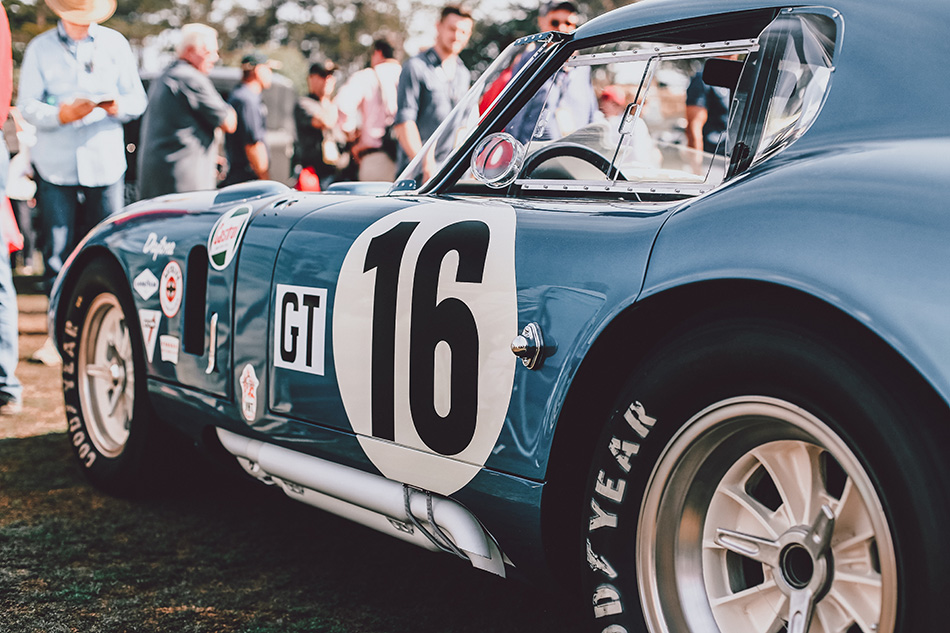
Before the GT500 ever hit the road, Carroll Shelby had already built his reputation on the racetrack with cars like the Shelby Daytona Coupe, engineered to beat Ferrari at Le Mans. That racing DNA — obsessive weight-saving, aerodynamic bodywork, and raw power — carried directly into the street-legal GT500 that followed.
Today, both the racing Daytona Coupe and the road-going GT500 are held in equally high regard by collectors, each representing a different chapter of the same Shelby story.
The Shelby GT500 in Fine Art Photography
Photographing a Shelby GT500 means capturing both its raw power and its timeless elegance. A large-format fine art print perfectly renders the play of light across the striped body and the texture of the chrome — a decor choice that makes a bold statement, blending automotive passion with wall art.
Frequently Asked Questions
How much horsepower did a 1967 Shelby GT500 have?
About 355 horsepower, thanks to its 7-liter big block V8 — a considerable output for its era.
Why is the GT500 called “Eleanor”?
Eleanor is the nickname given to the 1967 Mustang GT500 made famous by the film Gone in 60 Seconds (2000).
What is the difference between the GT350 and the GT500?
The GT350 favors agility with a lighter engine, while the GT500 relies on the raw power of a big block V8.
How much does a vintage Shelby GT500 cost today?
Prices vary widely depending on condition and authenticity, with well-preserved examples reaching several hundred thousand dollars at auction.
Who created the Shelby GT500?
Carroll Shelby, American race car driver and automotive designer, in partnership with Ford.