

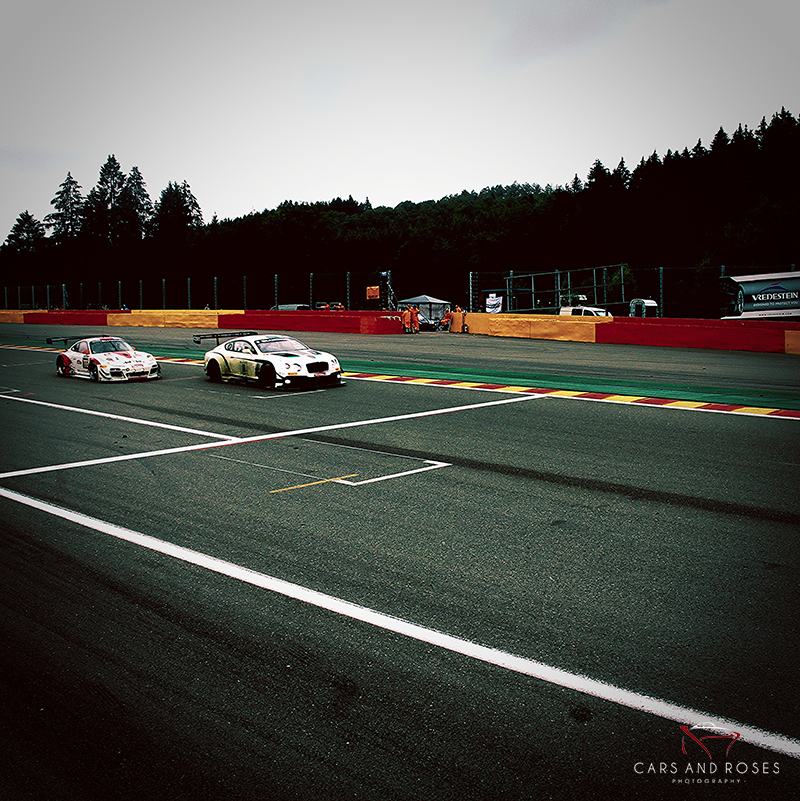
Automotive photography is one of the most demanding and fascinating disciplines in the world of images. Combining pure technique, artistic sensitivity and a passion for machines, it attracts thousands of enthusiasts every year. But how do you actually go from passionate amateur to working professional? Here’s the full picture.
Discover our limited edition automotive fine art prints — every print tells a story.
Table of Contents
- 1. A Passion First: The Automotive Photographer’s Eye
- 2. Mastering the Techniques of Car Photography
- 3. The Essential Gear of an Automotive Photographer
- 4. Building Your Portfolio and Getting Noticed
- 5. Career Paths in Automotive Photography
- FAQ
A Passion First: The Automotive Photographer’s Eye
Every great automotive photographer started with an obsession: machines. Whether it’s a Porsche 911 parked in a Milanese alley, a Ferrari roaring down a racetrack, or a weathered Mustang sitting in an American field — the image begins with an emotion.
Automotive photography is not simply “pointing a lens at a car.” It demands understanding how raking early morning light plays across chrome bodywork, how to freeze a spinning wheel at 200 km/h, how to capture the soul of a machine through a detail — a door handle, a worn badge, a patinated leather dashboard.
The photographers who define their era in this field — Dominique Leroy, Tim Wallace, Michael Furman — share one thing in common: they photograph what they feel, not just what they see. That emotional dimension is what transforms a snapshot into a work of art.
To develop that eye, nothing replaces intensive practice. Shoot cars at every hour, in every condition. Study the great automotive photographers. Analyse why certain images move you and others don’t.
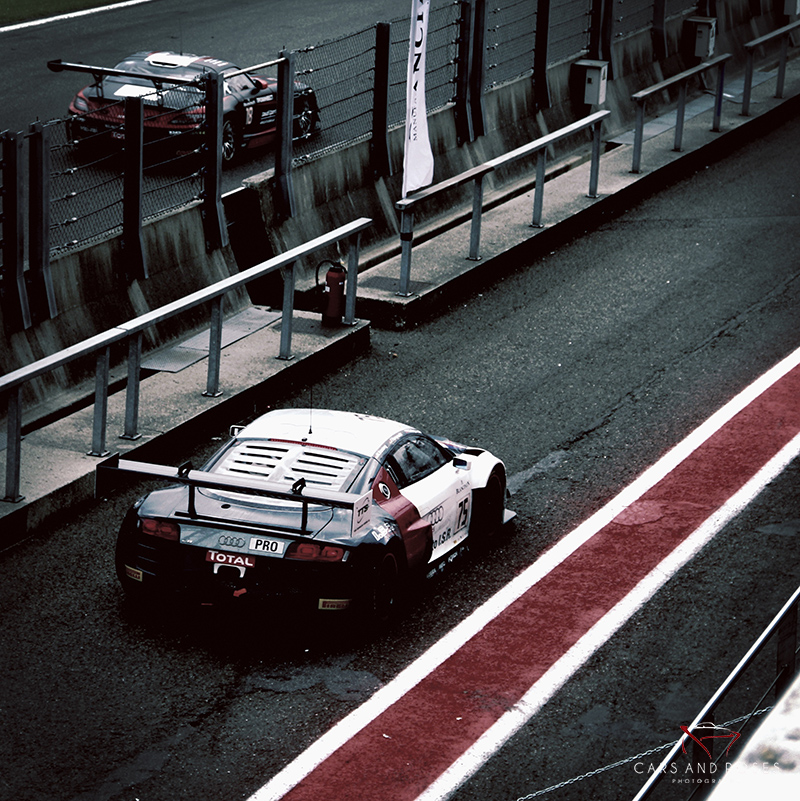
Mastering the Techniques of Car Photography
Automotive photography rests on several distinct techniques every aspiring professional must master:
Panning is the signature technique of moving car photography. You follow the vehicle with your camera using a slow shutter speed (1/30th to 1/100th of a second depending on speed). The result: the car stays sharp while the background blurs into streaks, creating a visceral sense of motion. Mastering panning takes dozens of hours of practice, but the results are spectacular.
Static studio photography is an entirely separate discipline. It demands absolute mastery of artificial lighting — softboxes, reflectors, grids — to reveal every curve of the bodywork without unwanted reflections. Car manufacturers use this technique for their official catalogues.
Tracking shots involve shooting from a moving vehicle. The camera is mounted on a special arm or hand-held, and the photographer captures the target car rolling alongside. This technique requires perfect coordination and usually a full crew.
Night photography reveals cars in a radically different light. Light painting on bodywork, long exposures on a bridge or in a tunnel, reflections on wet tarmac — the creative possibilities are endless and client demand in this niche is strong.
The Essential Gear of an Automotive Photographer
There’s no need to go into debt to start, but certain equipment is essential for serious progression:
Camera body: a full-frame mirrorless or DSLR is ideal — Sony A7 series, Canon EOS R, Nikon Z. High dynamic range is crucial for managing bodywork reflections and deep shadows. A quality APS-C body (Fujifilm X-T series) is an excellent starting point.
Lenses: three focal lengths cover 90% of situations. A wide angle (16–35mm) for sweeping environment shots; a 70–200mm f/2.8 for panning and distant details; a 50mm or 85mm for classic car portraits. Avoid extreme distortions that warp body lines.
Tripod: essential for static shoots and long exposures. Invest in a solid model — a quality ball head makes a real difference.
Post-production is a skill set in its own right. Adobe Lightroom and Photoshop are industry standards. Knowing how to retouch bodywork, manage reflections and correct converging verticals is as important as knowing how to take the shot.
Building Your Portfolio and Getting Noticed
A solid portfolio is your entry ticket into the professional world. But remember: 10 extraordinary images are worth infinitely more than 100 average ones. Select with absolute ruthlessness.
The essential platforms for an automotive photographer in 2025 are Instagram (still indispensable for visibility), Behance for a polished professional portfolio, and 500px to reach a quality photography community. A personal website with your own domain remains the absolute professional reference.
To build your portfolio without paid clients, attend automotive events (Goodwood Festival of Speed, Concours d’Élégance, track days). These are gold mines for photographing exceptional vehicles. Contact owners of rare cars directly through car clubs — many are happy to be photographed in exchange for the images.
Collaborating with automotive influencers or specialist YouTube channels can also accelerate your visibility. Offer your services for free in the early days in exchange for photo credits and sharing.
Career Paths in Automotive Photography
The automotive photography market is broader than it appears. There are multiple career paths:
Manufacturers and importers regularly commission shoots for catalogues, social media and dealerships. This is the most lucrative segment but also the most competitive — you need a strong portfolio and often go through agencies.
Specialist media (magazines, websites, YouTube channels) hire or commission freelance photographers for reviews and reportages. Rates are modest but exposure is real.
Private clients are an underestimated market. The owner of a Porsche GT3 or a classic Ferrari is often willing to pay for professional photography of their car. This segment is growing fast, driven by Instagram and car lifestyle culture.
Automotive fine art photography is a premium market in full expansion. Works like those offered by Cars and Roses — limited edition fine art prints on premium substrates — answer a growing demand from collectors and design enthusiasts who want to hang mechanical beauty on their walls.
👉 Explore Cars and Roses Automotive Fine Art Prints — From €78
FAQ — Automotive Photographer
Do you need a specific qualification to become an automotive photographer?
There is no dedicated “automotive photographer” degree. Most professionals are self-taught or come from general photography schools. What matters above all is technical mastery, a developed eye, and a convincing portfolio. Specialist courses in studio photography or vehicle photography also exist as continuing education.
What budget do you need to start seriously?
A credible starter setup — a second-hand APS-C or full-frame body, two lenses, a tripod — can be assembled for €1,500 to €3,000. The key isn’t the gear but the experience you accumulate. Many professional photographers started with modest equipment.
How do you land your first paid work?
First commissions often come from your immediate network: car-enthusiast friends, local car clubs, nearby dealerships. Offer a few near-free shoots to build your reference work, then progressively raise your rates as your reputation grows.
Can you make a living from automotive photography?
Yes, but it often takes several years to reach a stable income. Diversification is key: combining client commissions, print sales, workshops and digital content (YouTube, Instagram) allows you to build a solid business model. Established photographers in this sector charge from €500 to several thousand euros per shooting day.
What is the difference between automotive photography and motorsport photography?
Automotive photography covers all aspects of the car: studio, lifestyle, detail, events. Motorsport photography (F1, rally, endurance) is a specialty in its own right, highly competitive, requiring specific accreditations and excellent physical fitness to work on circuits. Both can be combined across a career.
Is automotive photography a growing market?
Absolutely. The rise of electric vehicles is creating a new visual language to invent. Digital platforms and social media have multiplied the demand for quality automotive visual content. And automotive fine art photography — collector prints, limited editions — is experiencing sustained growth driven by a passionate and discerning clientele.