
31 Jul Black and White Car Photography: Timeless Prints & Shooting Techniques
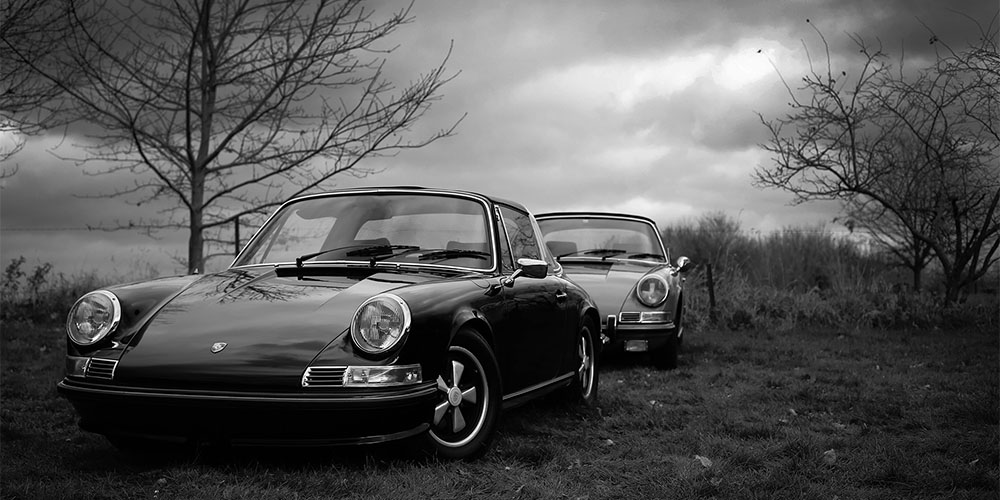
Automotive photography possesses the remarkable ability to transform vehicles into genuine works of art. Black and white car photography masterfully eliminates color distractions, revealing the sculptural lines, dramatic shadows, and intricate textures that define these legendary machines. This artistic approach turns classics like the Porsche 911, Ford GT40, and Ferrari into museum-quality pieces, perfect for enhancing any interior space.
Why Monochrome Reveals Automotive Soul
By stripping away color, monochrome photography forces the viewer to focus on what truly matters: the vehicle’s fundamental shape, the interplay of lighting, and the exceptional craftsmanship. High contrast emphasizes the relationship between shiny chrome and matte surfaces, while grayscale tones highlight the curves that designers spent years perfecting. Whether capturing a vintage 356 on a mountain road or a GT40 mid-race, this approach communicates heritage and motion with pure, undiluted impact.
Contrast Amplifies Emotion
Strong directional lighting—whether from sunrise, sunset, or track spotlights—casts shadows that trace every contour of the vehicle. Reflections on wet pavement add layers of depth and visual interest, while background motion blur implies speed without overpowering the main subject. Together, these elements create a car photo that feels simultaneously timeless and immediate, capturing the essence of automotive emotion.
Shooting Techniques for Dramatic Black and White Results
Capturing compelling monochrome images requires intentional decisions regarding lighting, composition, and timing. Mastering these core fundamentals will transform simple snapshots into gallery-worthy prints that stand the test of time.
Light Direction and Quality
The bright midday sun at legendary tracks like Spa-Francorchamps dramatizes vehicle curves by casting harsh, defining shadows. Conversely, the golden hour offers softer gradations of light, often ideal for white car photography techniques where subtlety and nuance are key. Nighttime streetlights create isolated pools of illumination, highlighting the vehicle against deep blacks for distinct tonal possibilities in your black and white car photography.
Composition Strategies
- Low shooting angles exaggerate the car’s stance and power, making a Porsche GT3 RS appear ready to attack the road.
- Higher viewpoints reveal silhouettes and emphasize the perfect symmetry of the design.
- A shallow depth of field isolates specific details, such as headlight reflections, wheel rims, or leather stitching.
- Simple backgrounds, like empty garage walls or open desert roads, keep the viewer’s attention firmly on the vehicle’s form.
- Incorporating environmental elements, such as canyon walls or coastal cliffs, adds narrative context to the scene.
Capturing Motion and Stillness
Long exposures can blur background traffic into smooth gray gradients, ensuring the main subject remains crisp and defined. This technique in automotive photography effectively conveys velocity without sacrificing clarity. Alternatively, static compositions with perfect lighting allow viewers to appreciate every texture, from tire rubber grain to brushed aluminum and even the paint scratches that tell the car’s unique story through car photography.
Post-processing for maximum impact
Shooting in RAW format captures the full tonal spectrum, providing you with exceptional contrast control during editing. You can apply powerful contrast curves to intensify textures while preserving crucial mid-tone details. Techniques such as dodging are perfect for enhancing reflections on the hood or chrome trim, and burning deepens shadows to create a striking three-dimensional look.
Film emulation and grain
A subtle addition of grain can evoke the authentic feel of documentary car photography from the golden era of racing. Split-toning—warming the highlights and cooling the shadows—helps guide the viewer’s attention while adding rich atmospheric depth. These stylistic choices work especially well with vintage models like a Ford Shelby Daytona or a classic Ferrari 250 GTO.
Premium materials for lasting elegance
The final print quality is essential to ensure your black and white car photography appears just as impressive in person as it does digitally. We offer several museum-grade material options, each with distinct qualities and advantages.
Aluminum Dibond
Direct printing onto aluminum yields a resilient matte finish that enhances contrast while maintaining crisp highlights. The material is both lightweight and stable, thanks to its polyethylene core that resists warping—even in humid climates. It’s a superb option for modern interiors seeking a sleek, frameless car photo display.
Acrylic glass with Fuji Crystal coating
Plexiglass glazing introduces remarkable gloss and depth to your image while delivering robust protection. Kodak Pro Endura inks offer high UV resistance, making this finish ideal for brightly lit rooms. As you move, the surface produces gentle shifting reflections, adding dynamic dimension to what would otherwise be static white car photography.
Canvas with linen structure
Stretched canvas delivers a tactile, almost painterly texture that excels in larger formats. This material softly diffuses light, ensuring your black and white car image remains easy on the eyes under various lighting conditions. The woven linen texture introduces an artisanal quality that pairs beautifully with timeless subjects like the Porsche 964 Carrera 4.
Archival fine-art paper
Matte paper excels at minimizing glare and revealing nuanced tonal transitions that glossy surfaces often obscure. This museum-quality stock guarantees the long-term preservation of your black and white car photography. It remains a favorite among collectors who appreciate framing their artwork behind glass for a traditional presentation.
Sizing and display options
Our standard print sizes range from compact 60 × 40 cm options for smaller spaces to impressive 180 × 120 cm pieces for feature walls. Choosing XXL canvas formats can elevate iconic models, transforming a single Porsche 911 photograph into the absolute centerpiece of any room. Alternatively, multi-panel layouts can divide a scene across diptychs or triptychs while maintaining a unified visual narrative.
Framing choices
Floating frames offer a professional gallery aesthetic, creating the illusion that the artwork is suspended within its border. Whether you prefer classic wood or modern metal finishes, these options complement a wide variety of interior decor styles. For a truly contemporary vibe, frameless mounting on silicone-backed aluminum panels allows the image to hover slightly away from the wall.
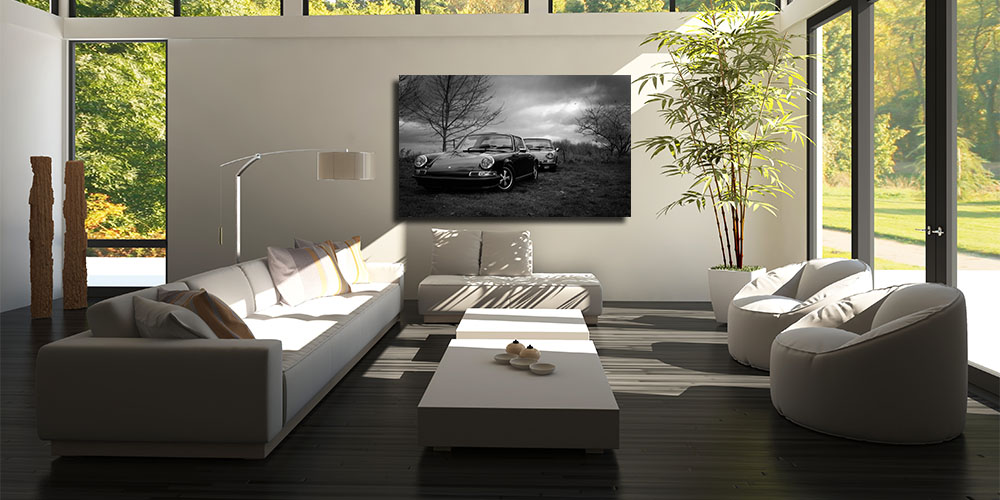
Iconic models that define automotive art
This curated collection spans decades of design evolution, highlighting the specific vehicles that reshaped automotive history. Explore Timeless Black & White Car Art to see these legends captured in stunning high-resolution monochrome.
Porsche lineage
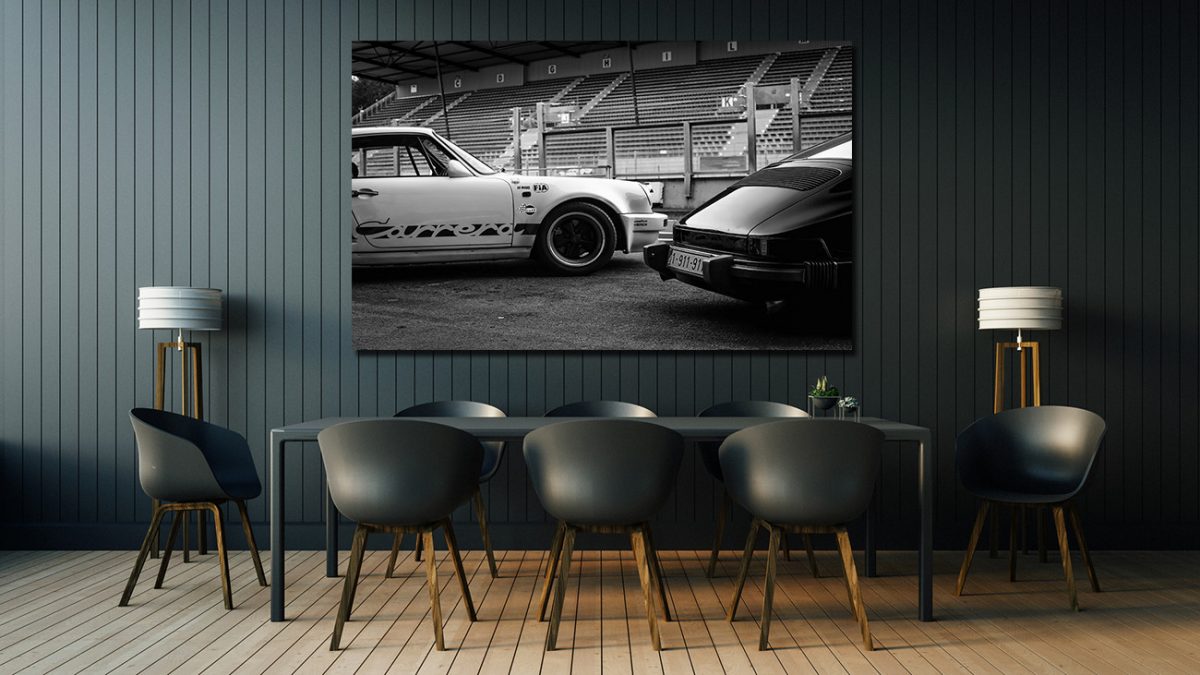
From the classic 356 to the 964 Carrera 4 and the modern GT3 RS, Porsche’s unique design language remains unmistakable. Explore striking black-and-white car photography featuring two 911s at the famous Belgian track, where dramatic lighting highlights their connection across different generations.
American muscle and racing heritage
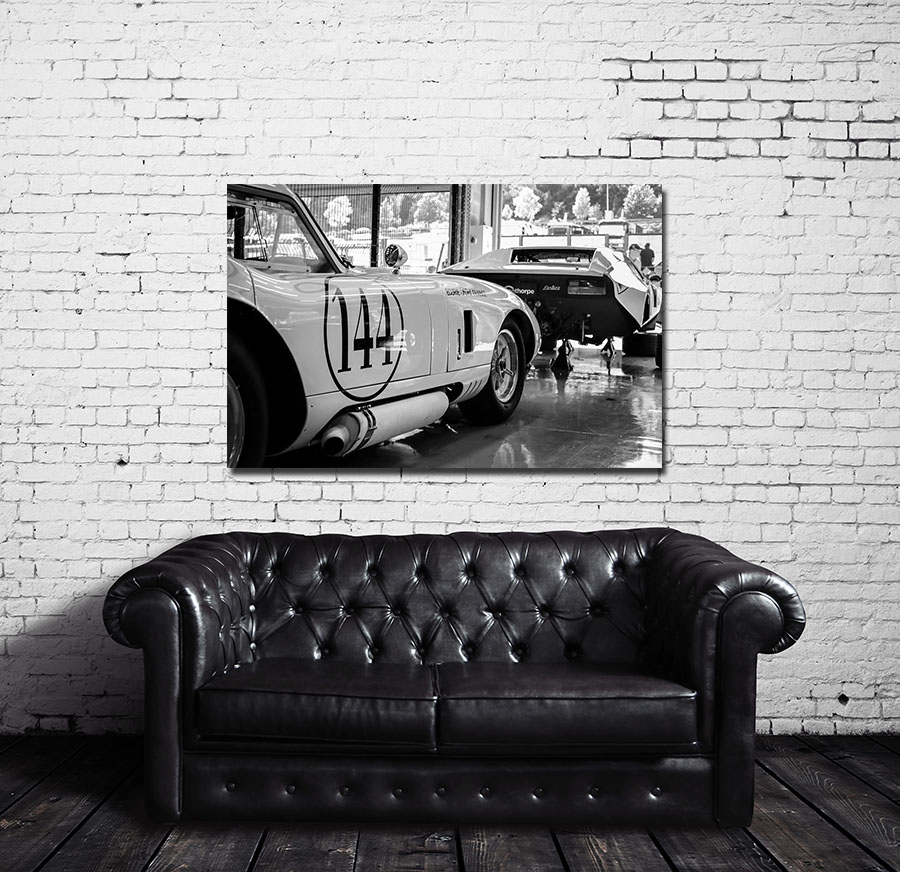
Legends like the Ford Shelby Daytona and GT40 stand as true triumphs of American engineering. The GT40 specifically secured its motorsport legacy by achieving three consecutive victories at Le Mans during the 1960s. Explore this striking black-and-white Ford GT40 artwork which emphasizes the car’s sleek lines and raw intensity, allowing you to feel the thrill of racing frozen in time.
Italian performance icons
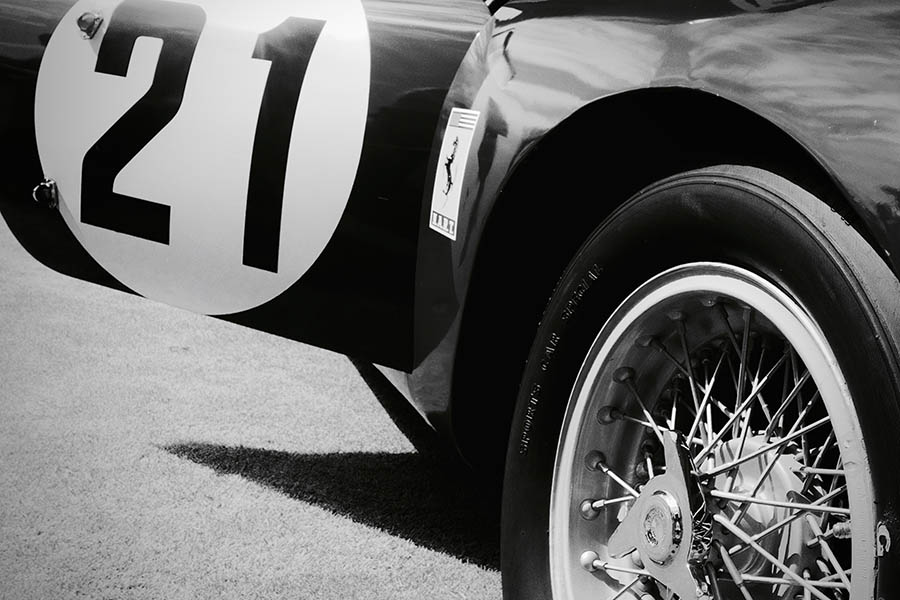
Ferrari masterpieces such as the 275 GTB, 250 LM, and F40 perfectly merge elegance with a serious racing pedigree. Utilizing white car photography techniques and monochromatic presentation draws the eye to their sculptural features. You can truly appreciate the low noses, muscular haunches, and distinct proportions that define the classic supercar silhouette through focused car photography.
Limited Editions and Collectibility
Every photograph is released as part of a strictly capped edition, typically limited to just 200 copies for each size and material (excluding canvas). This ensures genuine rarity, and each print arrives with a hand-signed certificate of authenticity that displays its specific edition number. Buyers also have the option to register their artwork in our secure online database, which helps track provenance for future resale.
Why Edition Limits Matter
Scarcity is a powerful driver for both sentimental attachment and market value. As an edition begins to sell out, the remaining prints naturally become much more difficult to acquire. Collectors value the knowledge that their artwork is part of a finite series rather than a mass-produced, unlimited reproduction. Because they are numbered sequentially, the earliest editions—such as numbers 1 through 10—often attract premium interest.
Creating Your Own Black and White Automotive Photographs
Applying professional techniques to your own personal projects requires a mix of experimentation and consistent practice. The following strategies are designed to help you achieve high-quality results.
Essential Gear and Settings
Always shoot in RAW format to ensure you have maximum flexibility during post-processing. In bright daylight, neutral density filters are essential for enabling wide apertures, which create a desirable shallow depth of field. A reliable tripod is also crucial for long exposures, allowing you to capture light trails without sacrificing image sharpness.
Location Scouting
Urban environments can provide dramatic backdrops, such as parking structures filled with geometric shadows or industrial zones with textured walls. Alternatively, natural settings like coastal highways or canyon roads effectively blend automotive beauty with grand landscapes. It is wise to scout locations at various times of day to see exactly how the light plays across different surfaces.
Working with Classic Subjects
You can often gain access to vintage vehicles through car shows, private collectors, or local automotive museums. Always respect the owner by securing permission and ensuring proper insurance coverage is in place. Prepare a shot list ahead of time to make the most of your limited access to rare models, like the iconic Mercedes-Benz 300SL.
Editing Workflow
It is best to convert images to black and white after capturing them to preserve full tonal data. Be careful when applying high-contrast curves, as pushing them too far can crush important details. Try experimenting with split-toning during the edit to introduce warm or cool contrasts that enhance the mood. Finally, print test strips on matte paper to verify that your tones translate correctly before committing to a large format.
Styling prints for interior spaces
The placement and scale of your artwork define its visual impact. A large 150 × 100 cm canvas featuring a Ford GT40 instantly commands attention in a minimalist loft setting. Alternatively, creating gallery walls with complementary images—like a vintage Porsche, classic Ferrari, and historic muscle car—can effectively narrate the evolution of racing.
Matching décor styles
Modern interiors often look best with frameless aluminum prints that feature clean, sharp edges. Traditional rooms, however, are better suited to wood-framed matte paper displayed under glass. Industrial lofts pair beautifully with raw canvas textures, especially when hung against exposed brick walls. Always consider your existing color schemes; monochrome photographs can anchor a room filled with bold accents or seamlessly complement neutral palettes.
Lighting considerations
To prevent fading, position your prints away from direct sunlight, even if you are using high-quality UV-resistant inks. Installing track lighting or dedicated picture lights adds drama by casting shadows that mirror the contrast found in black and white car photography. In office settings, hang prints where they remain visible during video calls to create a sophisticated backdrop that sparks conversation.
Perfect gifts for automotive enthusiasts
Limited-edition prints serve as unforgettable gifts for car collectors, professional designers, and admirers of performance art. The elegant packaging ensures a premium unboxing experience that feels truly special. This blend of visual impact, collectible value, and practical decoration appeals to a wide variety of people.
Curating gift selections
Try to match the subject matter to the recipient’s specific interests; a Porsche 911 owner will likely appreciate images of their car’s predecessors. Racing fans tend to connect deeply with dynamic track scenes full of motion. For general enthusiasts, iconic white car photography featuring models like the Ferrari 250 GTO offers universal appeal. Including detailed descriptions—such as the model, year, location, material, and edition number—adds provenance that significantly enhances the gift’s value.
Following contemporary automotive photography
Keep your inspiration fresh by following both emerging talent and established masters in the field. Discover stunning monochrome car images through curated feeds that emphasize texture, deep contrast, and the timeless allure of automotive design. Engaging with this community helps you learn new techniques and uncover fresh perspectives on classic subjects.
Black and white car photography elevates vehicles into lasting art that goes beyond fleeting trends. Whether you are acquiring prints for a personal collection or honing your skills as a photographer, this approach reveals the true soul of a car photo. It is about pure form, captured light, and heritage preserved in monochrome elegance.

Sorry, the comment form is closed at this time.