

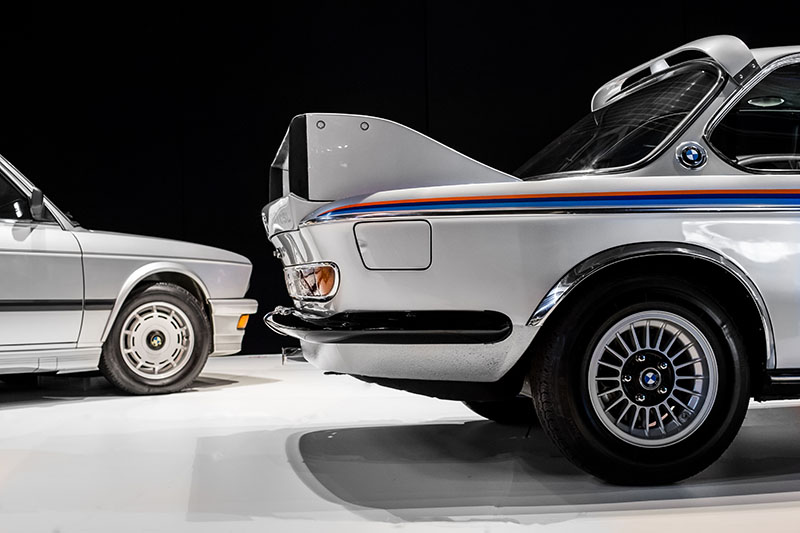
Nicknamed the “Batmobile” for its oversized rear wing and aggressive aero addenda, the BMW 3.0 CSL remains one of the most recognizable race cars of the 1970s. Discover its story and browse our fine art automotive photography collection.
Table of Contents
- The 1972 CSL: Birth of a BMW Motorsport Icon
- Why “Batmobile”? The Story of a Legendary Aero Kit
- The 3.0 CSL on Track: ETCC, Le Mans and Spa
- A Timeless Design for Your Interior
- Techniques and Mediums to Showcase the CSL at Home
The 1972 CSL: Birth of a BMW Motorsport Icon
Launched in 1972, the BMW 3.0 CSL (Coupé Sport Leichtbau, literally “lightweight construction”) was built for one purpose: homologating a race-ready version of the CS to dominate the European Touring Car Championship. BMW shed weight with aluminum body panels for the hood, trunk and doors, stripped out sound deadening, and fitted thinner glass — cutting more than 200 kg compared to the standard CS.
Under the hood, the M30 straight-six grew progressively to 3.5 liters and over 200 horsepower in race trim, with turbocharged versions producing far more by the end of the decade. This relentless pursuit of lightness and power made the CSL the first true race car to carry the BMW Motorsport badge, the division founded that very same year.
Why “Batmobile”? The Story of a Legendary Aero Kit
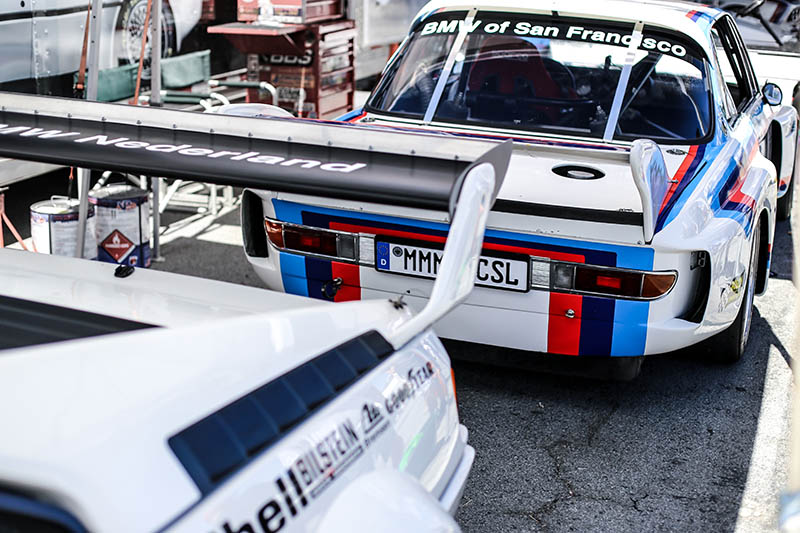
The nickname comes from the optional aerodynamic package developed for the racing version: a towering rear wing, flared wheel arch extensions, a prominent front splitter and hood-mounted fins. The result gave the CSL such an aggressive, futuristic silhouette that the German press immediately compared it to Batman’s car.
The best-known part of the story: the kit was deemed so extreme that German road authorities briefly banned it from being sold pre-installed, forcing BMW to ship the wing and spoilers loose in the trunk. Many owners simply had their local garage bolt them on right after taking delivery. This piece of automotive design history remains one of the most photographed and referenced aero kits in motorsport.
The 3.0 CSL on Track: ETCC, Le Mans and Spa
On track, the CSL dominated its era: six consecutive European Touring Car Championship titles between 1973 and 1979, driven by names like Hans-Joachim Stuck, Niki Lauda and Ronnie Peterson. It also competed at the 24 Hours of Spa-Francorchamps and the Targa Florio, where its durability often made up for a weight disadvantage against lighter rivals.
The CSL also launched an entirely different legacy in 1975, when driver and artist Alexander Calder painted one of the Le Mans entries in a bold, colorful pattern — the very first BMW Art Car. The series has since been carried on by Andy Warhol, Frank Stella and more recently Jeff Koons. The Batmobile, then, was never just a race car — it became a genuine artistic canvas, a lineage that resonates directly with our own fine art print work.
A Timeless Design for Your Interior
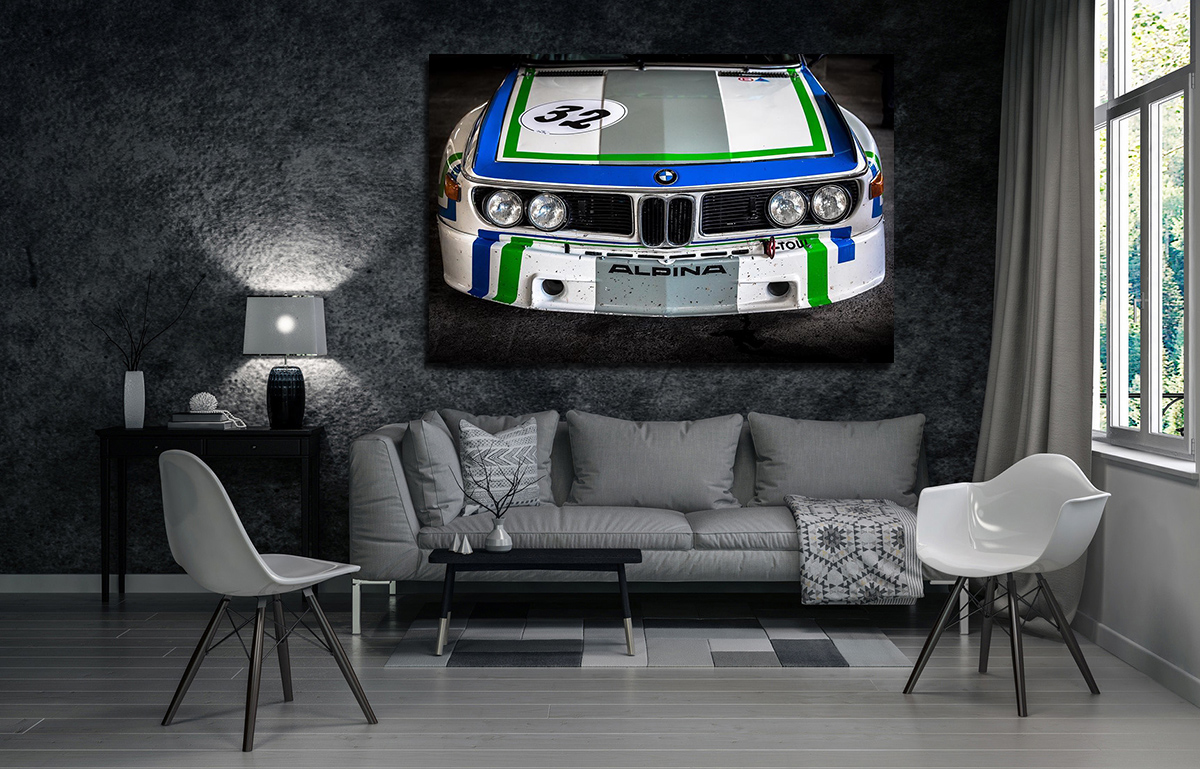
The CSL’s silhouette — long hood, thin pillars, sculptural wing — offers a photographic subject of rare graphic purity. On a large-format print, every line of that 1970s aerodynamic package becomes a striking decorative element, sitting somewhere between automotive passion and contemporary art.
A BMW CSL print fits naturally in a home office, an industrial-style living room, or a dedicated car room alongside other icons from the same decade. The contrast between the vivid BMW Motorsport livery colors (blue, purple, red) and a neutral wall creates an instant focal point, while a black-and-white print lets the purity of the lines speak for itself.
Techniques and Mediums to Showcase the CSL at Home
For a subject as graphic as the CSL, brushed aluminum perfectly captures the shine of the bodywork and the bite of the Motorsport livery colors, while a canvas print brings more warmth to a living room. Plexiglass, with its added depth, works particularly well for close crops on the rear wing or front splitter.
Every Cars and Roses print is produced in a limited, numbered edition and delivered with a certificate of authenticity. As with the rest of our automotive collection, we favor formats that let the subject breathe: starting at 24×24 in for a home office, up to 47×71 in for a spacious living room.
👉 Shop the Batmobile BMW Car Print — From €78
Frequently Asked Questions
Why is the BMW 3.0 CSL called the “Batmobile”?
The nickname comes from its extreme aerodynamic package — a towering rear wing, flared wheel arch extensions and a front splitter — that gave it a futuristic silhouette reminiscent of Batman’s car. The kit was even shipped unassembled in Germany because it was deemed too extreme for immediate road homologation.
How powerful was the BMW 3.0 CSL’s engine?
The M30 straight-six produced over 200 horsepower in race trim from 1972 onward, a figure that climbed significantly higher on the turbocharged versions raced in competition by the end of the 1970s.
How many championships did the CSL win?
The 3.0 CSL won six consecutive European Touring Car Championship titles between 1973 and 1979, a record that cemented its reputation as one of the most dominant touring cars of its era.
What’s the best medium for a BMW CSL print?
Brushed aluminum best showcases the shine of the bodywork and the vivid BMW Motorsport livery colors. Canvas suits a warmer atmosphere, while plexiglass adds depth to tighter crops.
Is the CSL connected to the BMW Art Car series?
Yes — a 3.0 CSL launched the BMW Art Car series in 1975, painted by artist Alexander Calder for Le Mans. The project has continued since with artists including Andy Warhol, Frank Stella and Jeff Koons.