

Porsche Targa: A Brief Introduction to This Iconic Model
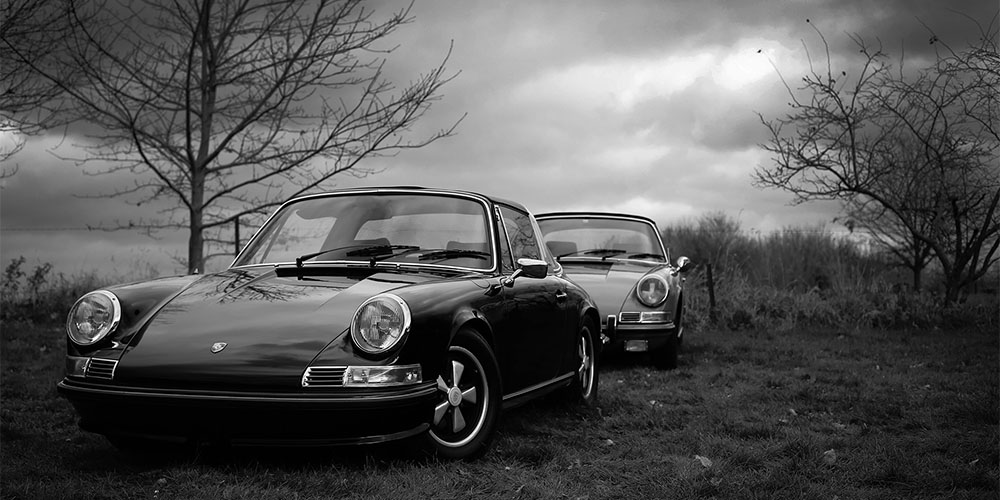
Targa, a rather nice car name for an unusual, beautiful line. It is the model of car that I prefer in the line of the old Porsche. Additionally, we photographed some of them with the team of Cars and Roses. The Porsche Targa represents a perfect blend of open-air driving and structural integrity, making it one of the most distinctive sports cars ever created.
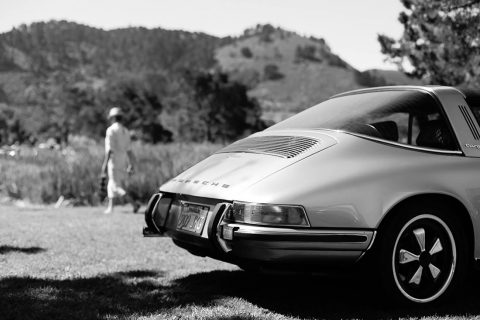
Here is one of our latest photos of a Porsche Targa, taken in Pebble Beach. Everything is there: the line of the car, its curves, its open chest, and the iconic Targa bar. This particular image captures the essence of what makes the Targa such a beloved classic among sports car enthusiasts.
You can purchase and configure the photograph here: https://www.carsandroses.com/shop/decorative-photograph-porsche-classic/
Cars & Roses — Fine Art Photography
Porsche Targa — Fine Art Photography
Celebrate the iconic Targa silhouette with museum-quality archival prints. Starting from €78.
Before diving into the technical details of the car and its different model variants, let’s first explore the fascinating origin of the word “Targa” and how it shaped the Porsche Targa identity. The collection showcases fine‑art prints and limited‑edition photographs that celebrate the Porsche Targa, highlighting its distinctive removable roof, iconic silhouette, and lasting impact on automotive design, providing enthusiasts with a visual tribute to the model’s evolution. Explore our Porsche Targa art collection to see how we’ve captured this remarkable sports car across multiple generations.
Why the Porsche Targa Got Its Name: The Targa Florio Heritage
A little flashback to the past: we are in the mid-fifties, specifically in 1956. It was at this time that Porsche won its first victory in Italy, at the famous Sicilian road race, the ” Targa Florio“. This prestigious race took place every year from 1906 to 1977. The motor race was held in the Madonie, a mountain range in Sicily. This legendary event was created by Vincenzo Florio, a wealthy car enthusiast. The winner of the race received the “Targa d’oro”, and in Italian, targa means “plate” or “placard”. This famous plate showed a car during a race with a Sicilian mountain landscape as the background. It was engraved by the famous French artist René Lalique (1860-1945).
Back to the facts. Porsche took part in this prestigious race from 1956 to 1973 and achieved 11 victories—a remarkable success that defined the brand’s racing legacy. The legendary driver-pairing of Herbert Müller (Swiss) and Gijs van Lennep (Dutch) claimed the final victory in 1973 with a 911 Carrera RSR, cementing Porsche’s dominance in this historic event.
Cars & Roses — Fine Art Photography
Porsche Fine Art — Limited Edition
Archival prints for Porsche enthusiasts — individually numbered, worldwide shipping.
Porsche therefore named one of its iconic 911 models ” Targa” in tribute to the 11 victories at the Targa Florio. This naming choice tied the model directly to the brand’s racing heritage and the thrill of open-air sports car driving, making it much more than just a body style—it became a symbol of Porsche’s competitive spirit and innovative design philosophy.
Here is another photograph taken by Cars and Roses. An old Targa (69-71). You can find this photograph in our shop, here: https://www.carsandroses.com/shop/car-print-porsche-targa/
The Porsche Targa design concept: where the story begins
The Porsche Targa concept was revolutionary: to allow drivers to enjoy the wind with the top down while remaining protected by a robust structural roll bar. The innovative design featured a fixed full-width stainless-steel roll bar at the back of the car, combined with a removable roof panel stored in the trunk. This pioneering approach was created as a response to evolving U.S. safety regulations and concerns about convertible vehicles in the 1960s. Porsche marketed the Targa as “the safest convertible,” a compromise between an open-air sports car and a rigid coupé.
The first Porsche Targa was introduced in 1965 at the Frankfurt International Motor Show, with production beginning in 1966. The first models were marketed to the public a year later, in 1967. On these original Targa models, the back part featured a removable plastic window that could be lifted, making the car almost convertible—almost, because the iconic roll bar remained in place. This removable rear window was installed on the 911 2.0 (67-69) and on the 912 Targa (67-69). The roof panel was made of rigid plastic and could be stored in the trunk, making it easy to manage for daily drivers.
This famous plastic window was soon recognized as problematic because the material was too vulnerable to cold weather and potential theft. On the following models, Porsche replaced this plastic window with a fixed glass pane, improving durability and the overall driving experience. The company filed a patent for the innovative Targa roof system in August 1965, protecting this groundbreaking design that combined safety features with the joy of open-top motoring.
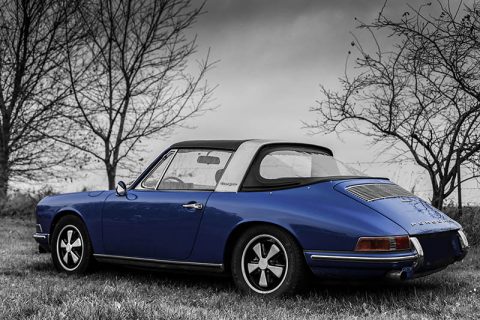
Here is our photograph “Blue Soft Window” representing a Porsche Targa with a removable soft window, first edition. You may configure this image here: https://www.carsandroses.com/shop/wall-photograph-targa-soft-window/
The evolution of Porsche Targa generations and technical milestones
The Porsche Targa underwent significant evolution across six decades, with each generation introducing innovations in the roof mechanism, engine performance, and overall handling. Here are the key model variants and generation changes that shaped this iconic sports car:
Early models (1967-1977): From 1969 to 1971, the 2.2L engine variants maintained the core design while evolving technical specifications. The 911 Targa 2.4L arrived for 1971-1973, introducing a more powerful engine for enhanced performance. The 1974-1977 models featured a 2.7L engine with increased power output and improved handling. In 1976, the iconic 3.0 arrived with the famous “turbo look” design cues, establishing the visual language that would define the Porsche Targa for decades.
1978-1993 models: From 1978 to 1983, the 911 SC Targa refined the formula further. The 1984-1989 3.2L generation brought turbocharged technology and improved efficiency. The 964 generation (1989-1993) was a watershed moment: it introduced the first all-wheel-drive Porsche Targa, the Carrera 4 Targa, featuring advanced engineering and the final removable plastic roof panels from this era. These models remain highly valued by collectors for their historic significance and distinctive blend of openness and rigidity.
Modern era (1995-present): The 1995-1998 993 generation brought revolutionary change: a fully electric, single-piece sliding glass roof panel that eliminated the separate removable component. This innovation dramatically improved usability while maintaining the iconic Targa silhouette. The 996 generation (2001-2005) continued with an electrically operated glass roof covering over 1.5 m², adding a rear hatch for improved practicality.
The 997 generation (2006-2012) further refined the Targa mechanism with reduced-weight glass panels and polished aluminum edge strips. Beginning with the 2014 991 generation, Porsche revived the classic wide roll bar while incorporating a motorized roof that stows cleanly behind the rear seats. The current 992 generation (2020 onward) represents the pinnacle of Targa design, featuring a panoramic glass roof panel, modern infotainment systems, and advanced driver assistance technologies—all while preserving the legendary Targa bar that defines this unique sports car.
The gallery showcases vintage Porsche models, including early 911 and Targa variants, captured in high‑resolution photography that highlights the design evolution and heritage of the brand, making it a visual companion for anyone exploring the history of the Porsche Targa. View our collection of Porsche classic photography to see how these remarkable vehicles have been captured across multiple eras and locations.
Why the Porsche Targa Remains the Perfect Balance of Form and Function
This car is simply beautiful. Perfection in my eyes. The original concept was to have the benefits of open-air driving while avoiding the need to manually open and close a complex roof mechanism. Porsche has achieved this with flying colors across all six generations of the Targa. They developed an innovative technique that opens and closes the roof automatically, allowing it to be stored seamlessly under the rear window.
The Porsche Targa remains a permanent third body style in the 911 lineup, alongside the coupé and cabriolet, underscoring its lasting appeal and significance in automotive design history. The Targa top originated with the 1966 Porsche 911 Targa, a semi‑convertible featuring a removable roof section and a fixed roll‑bar. Porsche trademarked ” Targa” after the famed Targa Florio race and introduced this innovative design to address U.S. safety concerns about full convertibles. The design evolved from a simple plastic panel in the 1960s to a retractable glass roof on the 1996 993, and later to fully mechanized lift‑away roof panels with motorized storage in the 991 and 992 generations, preserving the iconic Targa bar while modernizing the roof operation. Learn more about this fascinating history in our Porsche Targa history resource.
Cars & Roses
Discover Our Collections
Prestige
Porsche Collection
Fine Art Prints
Automotive
Sports Cars
Fine Art Prints
Landscape
Landscapes
Fine Art Prints
Museum-quality archival prints — from €78 — worldwide shipping