

A “dude den” is 2026’s answer to the man cave: a room meant to be actually shared — a home office, a media room, a guest suite — that still carries a collector’s edge, just without the neon signs and the taxidermy. The shift is about curation, not censorship: the right limited-edition car photograph reads as art first, hobby second, so it belongs in a room everyone in the house actually wants to sit in.
Contents
- Why interior design ditched the “man cave” in 2026
- What actually changed: exclusivity vs. curation
- Five elements of a dude den that works for everyone
- Which car photographs read as art, not merch
- Which room a dude den print actually belongs in
Why interior design ditched the “man cave” in 2026
Design writers have spent the year quietly retiring “man cave” in favor of “dude den” — and the word swap says more than it looks like. A man cave was, by definition, a room built for one person to retreat into. A dude den is the same square footage repurposed as a room the whole household actually uses: a home office that also hosts movie night, a guest room that doubles as a reading nook, a media room the kids commandeer on weekends.
The decor has to follow. Beer signs, jerseys under glass and stadium seating read as “keep out.” A well-chosen piece of limited-edition fine art photography reads as taste instead — which is exactly what makes it welcome outside a single person’s fandom.
What actually changed: exclusivity vs. curation
The old man cave logic was additive: more memorabilia, more signage, more “this room is mine.” The dude den logic is the opposite — one strong piece instead of ten small ones, chosen with the same care you’d bring to any other room in the house. A single large-format automotive photograph, properly matted and framed, does more for a shared space than an entire wall of stickers and plaques, because it doesn’t ask visitors to share your specific fandom to appreciate it. It just asks them to appreciate a well-composed photograph.
That’s also why fine art car photography works so well here: a graphic, well-lit image of a Porsche or a Ferrari reads first as photography — line, light, composition — and only second as “car guy stuff.” It’s the same reason a black-and-white limited edition print survives in rooms where a neon sign never would, and why it holds its value long after a poster has faded and been thrown out.
Five elements of a dude den that works for everyone
A handful of choices separate a room that feels curated from one that still reads as a man cave with better lighting:
One statement piece, not a wall of ten. A single large print earns more attention — and more respect from anyone who isn’t a car person — than a cluttered gallery wall of smaller ones.
A neutral frame system. Brushed aluminium or a simple black frame reads as gallery, not garage. Save the raw metal signage for an actual garage.
Warm, directional lighting. A single picture light or a well-placed floor lamp does more for a photograph than overhead fluorescents ever will.
One non-automotive piece in the mix. Pairing a car photograph with a landscape or architectural print — even from the same photographer — keeps the room from reading as a single-topic shrine.
Breathing room. Leave real wall space around the piece. A print surrounded by empty wall reads as art; the same print boxed in by shelves and posters reads as clutter.
Which car photographs read as art, not merch
Not every car photograph belongs in a shared room. Busy action shots, visible sponsor logos and oversaturated colors read as motorsport merchandise — great for an actual garage, less so for a home office your partner also uses. What reads as art is graphic composition, restrained color, and a print made and sold as a numbered, limited edition rather than a mass-produced poster.
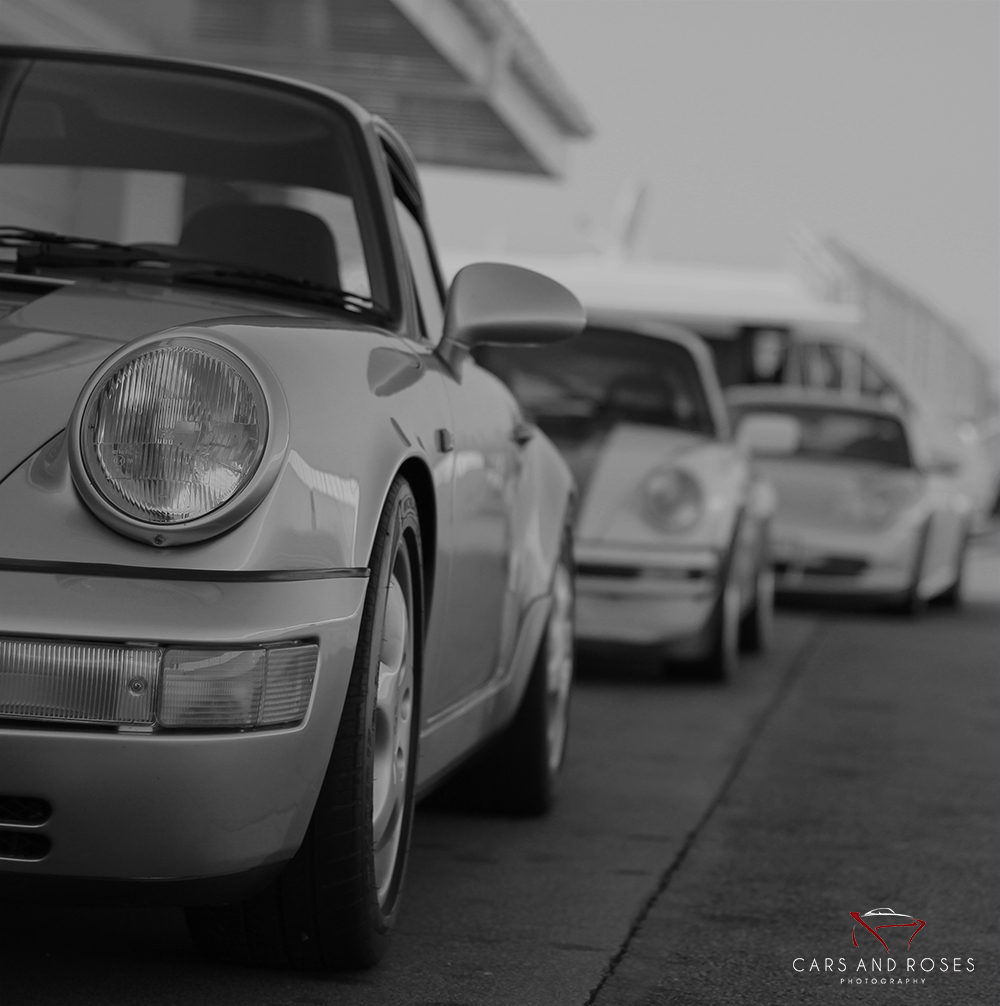
A tightly cropped, black-and-white composition like our Porsche 911 headlight lineup print is a good example: it reads as graphic art from across the room, and it only reveals itself as “car photography” up close. If your dude den can take one bolder note of color, our Yellow Porsche 930 Turbo S print works as a single, confident accent rather than a wall of loud color competing for attention.
Which room a dude den print actually belongs in
Size the piece to the room, not the other way around. In a home office nook, a smaller format near your desk keeps the focus without overwhelming the space. In a shared media room, or over a credenza in a multi-purpose living area, size up: a large-format print becomes the room’s anchor rather than one more object competing for attention. Either way, hang at eye level from a seated position — most dude dens are used sitting down, not standing, and a print hung for a standing eye-line reads as slightly off every time you’re actually in the room.
If you’re furnishing the room from scratch, resist the temptation to buy the print last. Choosing the piece first — and letting the rest of the room’s palette respond to it — almost always produces a more coherent result than trying to retrofit a print into a room that’s already full of competing colors and textures.
FAQ — Car Art for a Shared Space
What’s the actual difference between a man cave and a dude den?
A man cave is decorated for one person’s exclusive use; a dude den is decorated so the whole household wants to spend time in it. In practice, that means fewer novelty items and more curated, gallery-quality pieces like limited-edition fine art photography.
What kind of car photograph works best in a shared space?
Graphic, well-composed images with restrained color — black-and-white or muted tones — read as art rather than merchandise. Busy action shots with visible sponsor logos are better suited to an actual garage.
Is fine art car photography a good long-term choice for a shared room?
Yes — a numbered, limited-edition print holds its relevance, and often its resale value, far better than mass-produced decor, and its appeal isn’t limited to car enthusiasts the way novelty memorabilia is.
What size print works best for a home office dude den?
For a desk nook, a compact format keeps the piece personal without crowding the workspace. For a shared media room, size up to a large-format print so it reads as the room’s focal point rather than a small addition.