

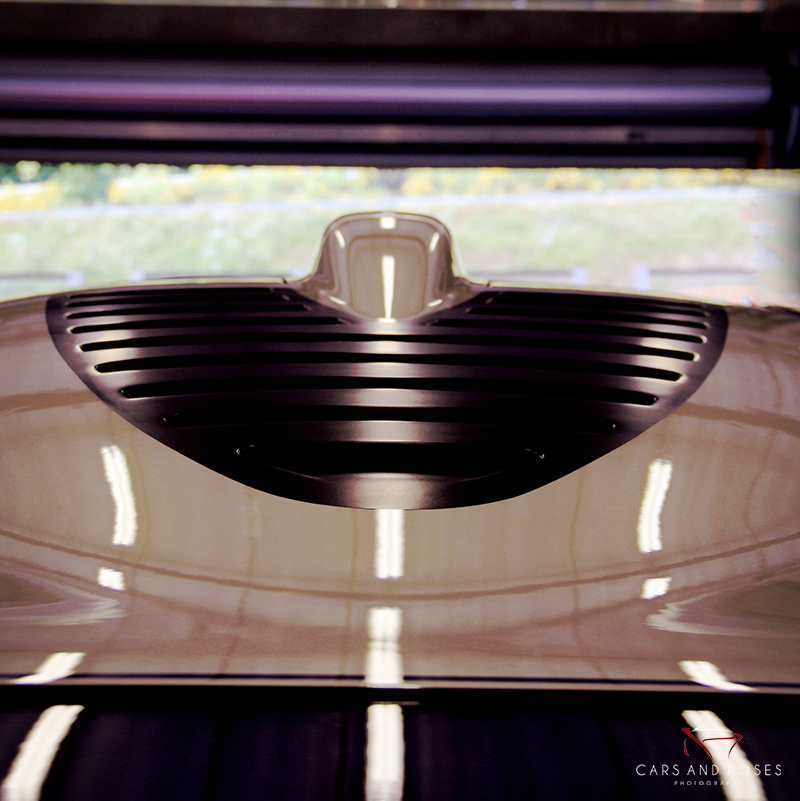
It bears a trident. Symbol of power, mastery, and an elegance that few brands in the world have managed to embody with such consistency. A Maserati is not simply a car — it is a philosophy. And like any profound philosophy, it is as much meant to be contemplated as it is to be driven.
Table of Contents
- The Trident Brand: Power and Italian Seduction
- The Maserati MC12: When the Track Becomes Fine Art
- Ghibli, GranTurismo, Bora: Silhouettes That Stand the Test of Time
- Maserati Fine Art Photography Prints
- How to Display Your Maserati Print at Home
The Trident Brand: Power and Italian Seduction
Founded in Bologna in 1914, Maserati has always cultivated a singular identity in the automotive world: neither the cold precision of a Porsche nor the flamboyance of a Ferrari, but something more nuanced — a virile, warm, almost Mediterranean elegance. The Trident, borrowed from Bologna’s Neptune fountain, says it all: ambition, strength, refinement.
Behind every Maserati lies a musicality: the six-cylinder melody of the 3500 GT, the V12 roar of the MC12, the V8 Biturbo’s distinctive note. These are the cars that fine art automotive photographers seek to capture — not in motion, but in pose, in light, in the inhabited silence of a perfect silhouette.
The Maserati MC12: When the Track Becomes Fine Art
The MC12. Fifty examples produced between 2004 and 2005. A body derived from the Ferrari Enzo, a 6-litre V12 producing 630 horsepower, dressed in white and blue that recalls Maserati’s racing glory years. There is no better demonstration of what Maserati can achieve when all practical constraints are stripped away and only the essential remains: absolute mechanical beauty.
Photographed in the right light — side-on in the golden hour, or from a low angle to accentuate the body’s tension — the MC12 becomes sculpture. Every line appears calculated not just for aerodynamic performance, but for the eye. This is no accident: Pininfarina, who designed the Enzo from which it derives, has always conceived his cars as works of art.
Ghibli, GranTurismo, Bora: Silhouettes That Stand the Test of Time
Beyond the MC12, it is the entire Maserati lineage that lends itself to fine art photography. The 3500 GT of the 1950s — Maserati’s first grand tourer — with its generous fenders and trilobal grille. The original 1967 Ghibli, designed by Giorgetto Giugiaro, whose proportions are still considered an ideal of their kind. The 1971 Bora, Maserati’s first mid-engined production car, with its taut and muscular lines.
More recently, the GranTurismo succeeded in perpetuating this tradition with a rare elegance. Designed by Pininfarina, it combines flowing coachwork with an imposing presence — exactly what a fine art print destined to inhabit a prestigious space requires.
Maserati Fine Art Photography Prints
Maserati fine art photography captures what documentaries and magazines cannot: the texture of curves, the depth of a reflection, the silent tension of a body at rest. At Cars and Roses, our Maserati prints are produced on Fine Art Giclée paper 310 g/m² or aluminium Dibond — surfaces that faithfully render the most subtle nuances of light and material.
Each print is a strictly limited edition, individually numbered and signed, accompanied by its certificate of authenticity. This is not a reproduction — it is an original photographic work, conceived to last and to appreciate in value over time, much like the brand it celebrates.
How to Display Your Maserati Print at Home
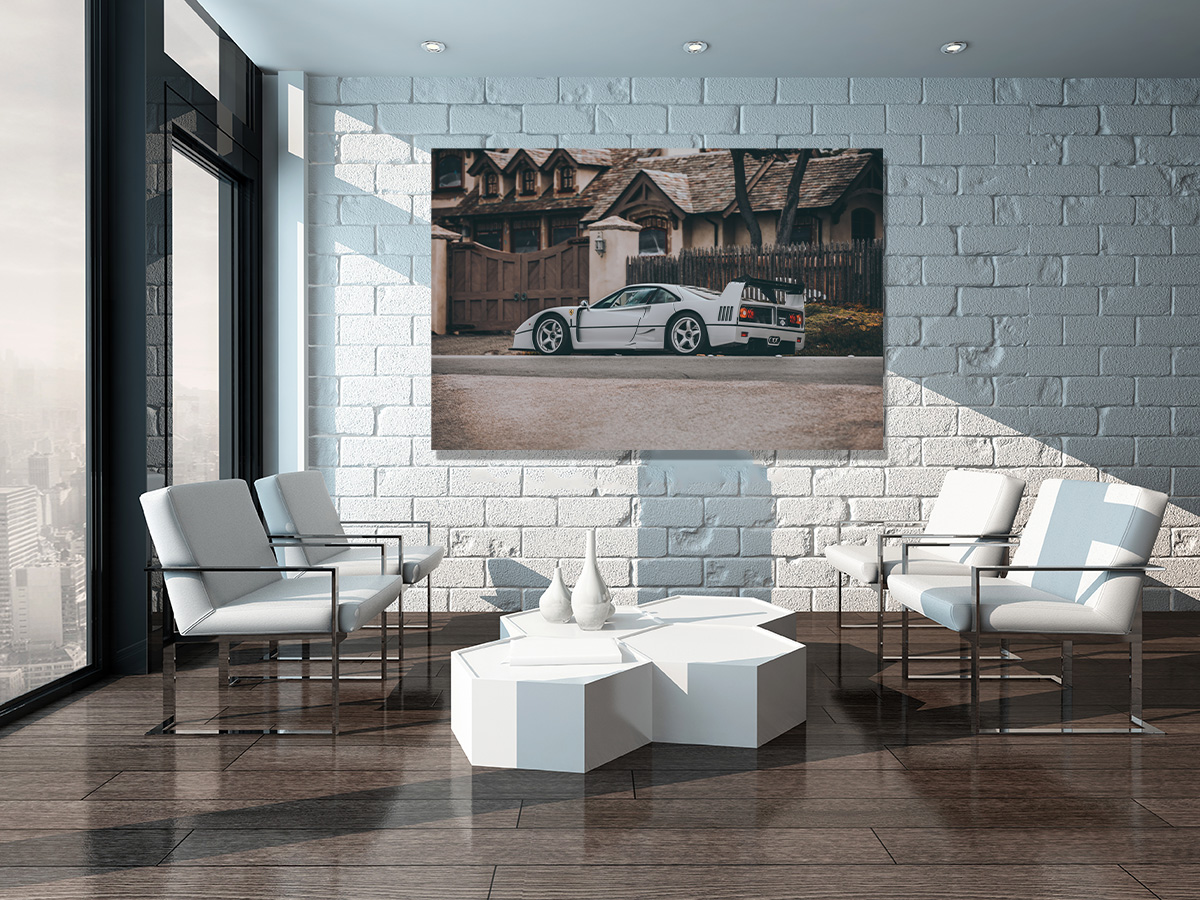
A Maserati print sits naturally in a refined, masculine space: a dark wood office, a library, a living room with clean lines. The boldest collectors choose to make the print the sole focal point of an entire wall — a large 120×80 cm aluminium format, the car commanding its space without compromise.
For the best long-term result, avoid direct and overly warm lighting that can alter colours over time. Opt for indirect lighting or a slightly angled spotlight that creates a play of shadows on the surface — giving the impression that the car is lit by a natural source, as if photographed at dawn on an empty circuit.
Which Maserati models are available as fine art prints?
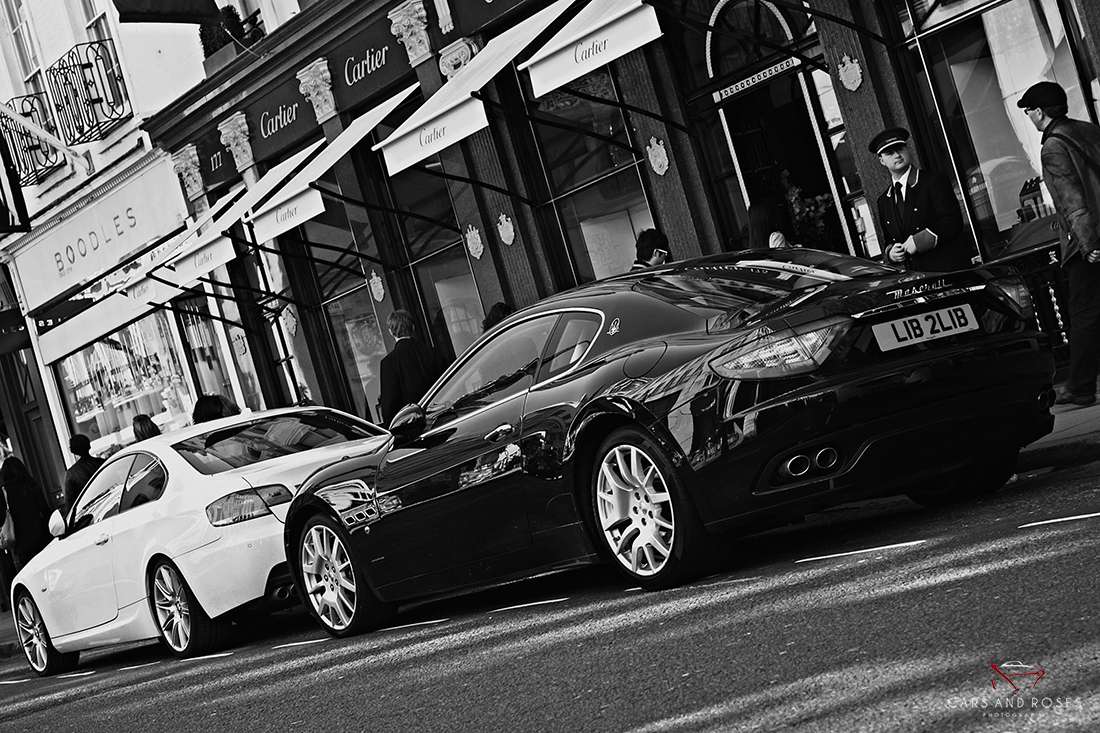
Our Maserati prints include the MC12, a Maserati captured at the Cartier Style et Luxe concours, and several classic silhouettes. The collection evolves regularly — check our shop for current availability.
What is the difference between an aluminium print and Fine Art paper?
Aluminium Dibond delivers a modern, luminous finish ideal for contemporary interiors. Fine Art Giclée paper offers a matte, warm texture closer to traditional fine art printing. Both are archival supports guaranteed for 80+ years without colour degradation.
What size Maserati print do you recommend for a living room?
For maximum impact in a living room, we recommend a minimum 100×70 cm format. Our 120×80 cm aluminium print is our most popular for larger spaces — every detail of the bodywork reads clearly from several metres away.
Fine Art Collection
Maserati Photography Prints
From €78
Giclée Fine Art & Aluminium Dibond · Limited Edition · Certificate of Authenticity
Shop the Collection