

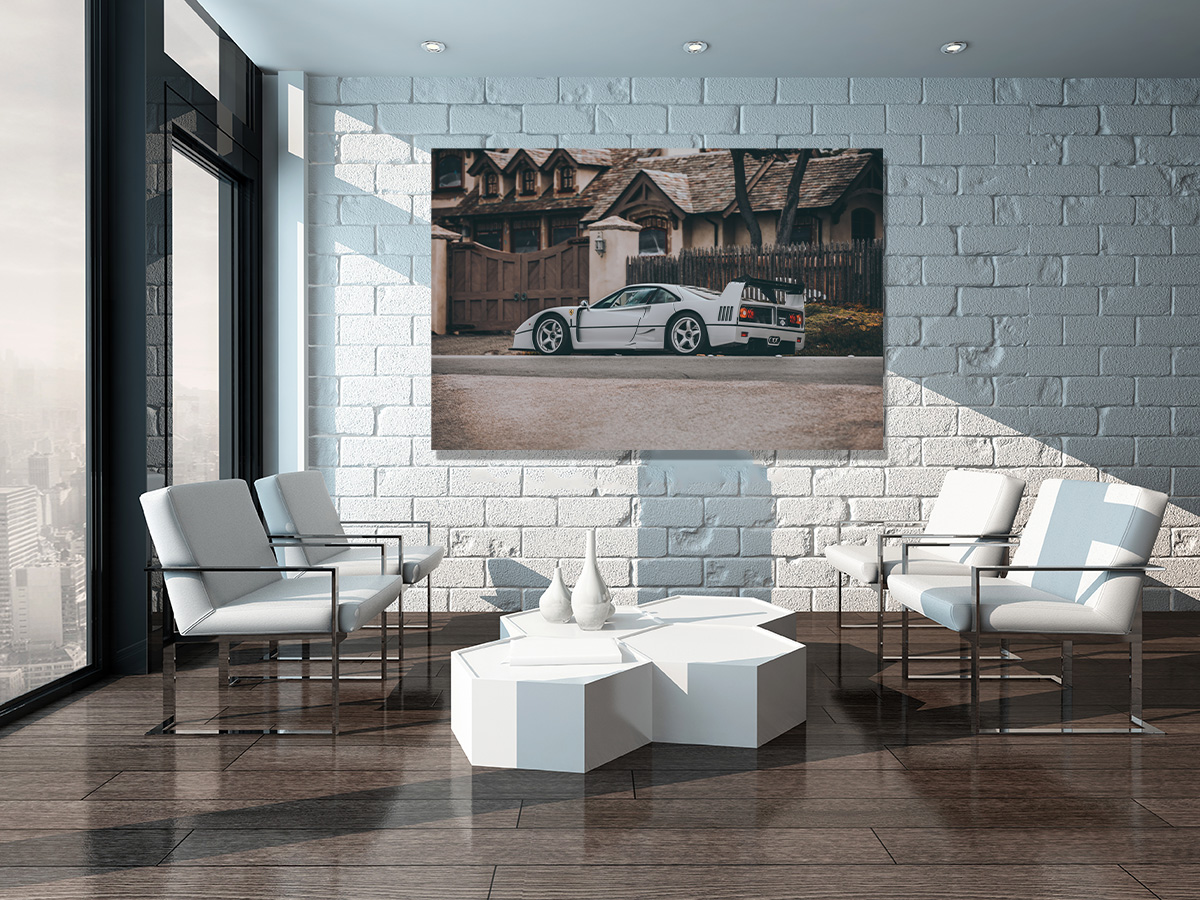
A 150 × 100 cm print, once mounted on 3mm aluminum, fundamentally shifts how a room interacts with ambient light. Properly displaying large wall art starts with reconciling this substantial physical presence with the unique architecture of your space. In practice, this requires a deliberate balance between the piece’s weight and the available natural light.
Whether vertical or horizontal, a large piece demands more than just an empty wall. Your choice of hardware and the viewing distance you establish govern how the photograph will ultimately exist within the room.
How to display large wall art like a pro
The distinction comes down to treating oversized art as a structural element, not mere decoration. You must evaluate the gallery wall potential and verify the structural integrity of your chosen hanger. The finish that earns its place here relies on precise execution. For those curating a specific collection, such as our Porsche wall art, these technical principles apply universally.
Where to hang large wall art for maximum impact
I begin by reading a room’s light paths before selecting a wall to display art. The eye naturally anchors to a fireplace or a continuous architectural line upon entry. Positioning large-scale art in these zones establishes absolute authority over the entire room.
- Above the sofa This remains the most reliable position for a large piece in a living space. The furniture provides an essential visual anchor.
- Above the fireplace A 150×100 cm print positioned here consolidates the room’s inherent focal pull. It commands the space rather than competing with it.
- On a large open wall An entire wall without furniture suits a 180×120 cm format perfectly. Here, the photograph dictates the atmosphere completely.
- Above the bed Center a vertical print directly above the headboard to establish symmetry. This single decision negates the need for secondary decoration.
Notice where natural light strikes within the first three seconds of entry. Ample space around the picture frame allows the visual composition to breathe. For comprehensive spatial planning, I recommend our guide to large wall art display.
How to properly display art at the right height
The industry standard centers the image at precisely 57 inches from the floor. This measurement corrects the most common residential error and prevents viewer neck strain. It dictates exactly where to hang large wall art for optimal engagement.
Calculating hanger placement requires precise math based on your print size. Divide the artwork height by two, subtract the hardware drop, and add 57 inches. This final figure gives the exact point for displaying your investment securely.
Lower this center point by 10 inches in dining areas to match seated eye level. When configuring a multi-piece gallery wall, treat the entire arrangement as one cohesive unit. This method ensures you know how to hang wall art in apartment settings with varying ceiling heights.
Choosing the right size, material, and format
Scale dictates the physical experience of a photograph within a room. Understanding how to display large photos means recognizing that a 150×100 cm piece visually alters room dimensions. In practice, the artwork width should equal roughly two-thirds of the furniture below it.
An art canvas absorbs ambient light beautifully through its textured fiber structure. Abstract art on acrylic, conversely, delivers sharp reflection and immediate color depth. The choice depends entirely on whether your room relies on controlled artificial lighting or diffuse natural daylight.
| Format | Ideal viewing distance | Best room type | Furniture width reference |
| 60×40 cm | 1–1.5 m | Bedroom, office | Up to 90 cm |
| 90×60 cm | 1.5–2 m | Bedroom, hallway | 90–135 cm |
| 120×80 cm | 2–3 m | Living room, dining room | 135–180 cm |
| 150×100 cm | 3–4 m | Open-plan living, reception | 180–225 cm |
| 180×120 cm | 4 m+ | Large living space, entire wall | 225 cm+ |
Hardware, tools, and installation best practices
Securing a heavy gallery collection to drywall demands specific load-bearing hardware. If you are learning how to display large posters or heavy prints, a French cleat distributes the weight evenly. For rigorous technical specifications, consult our large wall art hanging methodology.
- Painter’s tape test Tape a paper template to the wall before committing to a drill hole. This practical step instantly verifies scale and orientation.
- Stud finder A structural stud provides the only acceptable anchor for prints exceeding 20 pounds. You must map out electrical lines before penetrating the surface.
- Spirit level Always apply a level across the top frame to guarantee strict horizontal alignment. Step back to photograph the installation, as the lens often reveals subtle angles.
I advise using adhesive strips only for displaying small pieces under 15 pounds on completely smooth surfaces. Moisture or dust rapidly compromises this adhesion, putting your artwork at risk. Many prints from Cars and Roses arrive with integrated mounting systems, which eliminates complex hardware decisions entirely.
Frequently asked questions
How do you hang oversized art on a wall without damaging it?
For gallery prints over 50 pounds, use French cleats anchored into wall studs. This method distributes the weight across two interlocking strips, avoiding the single-point stress that damages plaster. For a brick wall, insert wall plugs into the mortar joints rather than the brick face.
What is the 57-inch rule for hanging art?
This standard positions the center of your piece at 57 inches from the floor, aligning with average standing eye level. Apply it to a single item or treat an entire gallery wall as one unit. For a seated space like a dining area, lower that center point by 8 to 12 inches to better match the seated level.
How do you showcase art and choose the right material for a specific room?
Canvas absorbs ambient light, making it the proper finish for spaces with soft, natural exposure. Aluminum, by contrast, reflects light uniformly, controlling how a photograph appears at different times of day in a controlled space. To display artwork opposite a large window, canvas minimizes ultraviolet reflection, protecting archival inks from direct sun damage.