

Have you ever wondered what ensures your fine art photography remains vibrant for generations? It all comes down to archival printing techniques, the gold standard for preservation. This guide explores museum-grade methods that guarantee long-lasting visual quality, highlighting the use of specialized coatings, premium substrates, and advanced archival pigment inks.
Knowing what makes a print truly archival helps collectors safeguard their investments. These methods preserve vivid colors for decades and offer remarkable resistance to light and environmental damage. The result is durable fine art prints that look stunning in any lighting condition.
What does archival print mean for fine art photography
Fine art prints demand a level of durability far exceeding standard consumer photography. An archival print is specifically designed to resist fading and yellowing for over 100 years. This incredible longevity is a result of both sturdy materials and an exceptionally stable printing process.
Defining archival quality beyond marketing claims
The term “archival” goes beyond mere marketing hype for an art print. It signifies strict adherence to industry standards established for exceptional longevity. When people ask what an archival print means, they’re usually inquiring about conservation quality.
In essence, it means a product meticulously crafted to meet the rigorous demands of galleries and museums. These archival prints retain their color vibrantly and sharp details for decades. Their reduced need for replacement makes them ideal for professional archival printing and preservation settings.
Pigment inks vs. dye inks: why the difference matters
Archival digital print technology relies on pigment, which consists of large, insoluble particles that are far more stable than dye molecules. By using these light-fast pigments instead of conventional dyes, archival printing provides outstanding resistance to fading under normal indoor lighting.
These robust pigments bond firmly to the substrate to create incredibly stable images, while standard dye inks may show fading within just a few years. For museum-quality fine art prints that are built to last, archival pigment inks are absolutely essential.
Core materials that determine true archival status
Achieving true archival status requires specific materials and careful environmental control. No single component can ensure longevity on its own; it’s the synergy of all elements working together that preserves exceptional visual quality.
- Museum-grade certified archival pigment inks: UV-resistant formulations that maintain deep color saturation for decades.
- Acid-free substrates with neutral pH: Premium archival materials that prevent the degradation common with ordinary photo paper.
- Chemical bonding between ink and substrate: A strong bond formed during the printing process that protects against image deterioration from humidity and pollutants.
Premium substrate options include aluminum dibond, matte canvas, and luxurious cotton rag, each offering unique archival properties suited to different display environments. These carefully selected components work in harmony to protect your artwork and ensure it stands the test of time.
Contemporary Archival Printing Techniques Explained
Cars & Roses — Fine Art Photography
Fine Art Archival Prints — Cars & Roses
Our prints use museum-quality archival inks on premium paper — built to last generations. From €78.
Modern technology has completely transformed how galleries create museum-quality reproductions. The techniques involved in contemporary archival printing often center around giclée printing, which uses premium substrates and an advanced coating to blend traditional craft with precise digital output.
Giclée Printing: The Modern Archival Standard
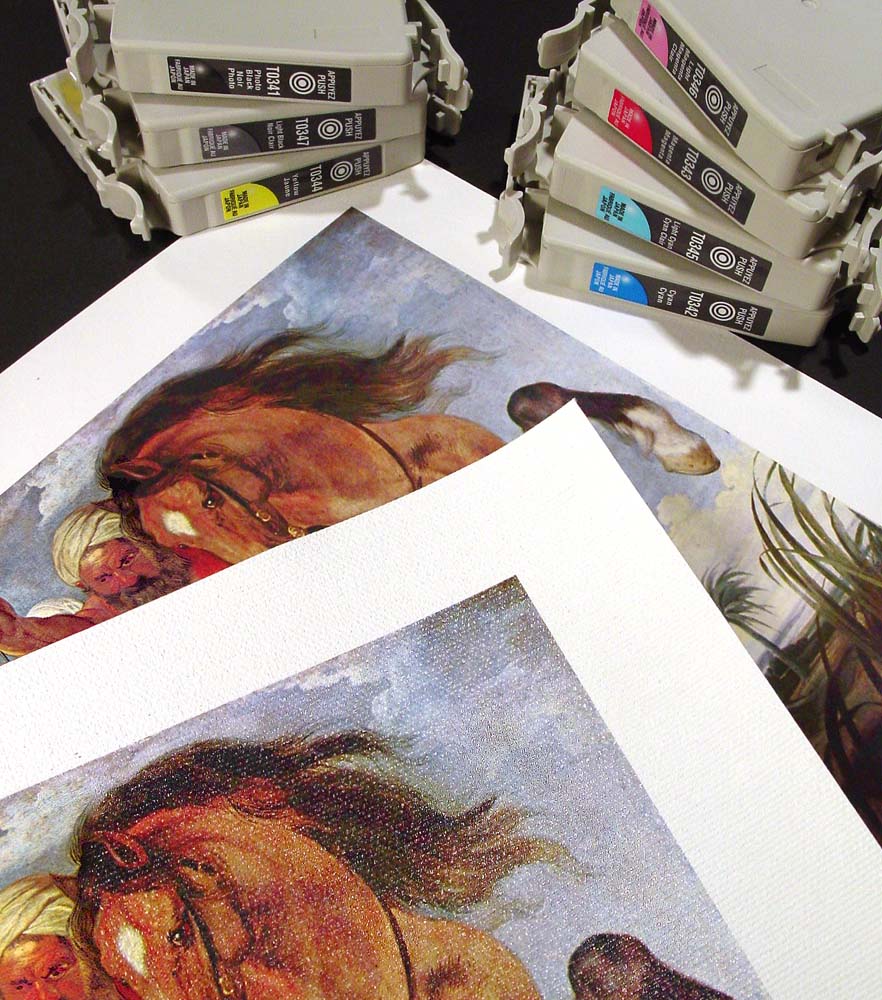
Giclée printing employs pigment inks that deeply penetrate the rag paper fibers, creating an archival print that significantly outperforms standard dye-based prints in terms of fade resistance. This printing process sprays microscopic droplets of pigment at high resolution, producing incredibly smooth tonal transitions and vibrant fine art prints.
- Multi-cartridge ink system: High-end giclée printers often include numerous ink cartridges to expand the color range, yielding much richer and more vibrant tones than standard printing.
- High-resolution pigment deposition: By placing high-resolution drops of pigment onto precisely prepared surfaces, images achieve outstanding clarity, preserving fine details in everything from architectural subjects to dramatic landscapes.
- Substrate flexibility: Because the technology sprays rather than presses ink, it allows for precise placement on materials like cotton rag paper, canvas, or metal, ensuring accurate color reproduction every time.
Premium inkjet equipment enables exact color matching, especially when used with acid-free paper, producing fine art prints that easily exceed older longevity standards. This ensures every archival fine art print maintains its visual brilliance for generations.
Specialized color software ensures digital files translate accurately into physical giclée prints, preserving the photographer’s original vision. This meticulous attention to detail is a key reason these pieces are so highly valued today.
Traditional Archival Processes Still Valued Today
Though modern digital methods dominate production, traditional techniques for archival fine art prints still offer incredible permanence. While a standard archival digital print might last a century, platinum-based methods remain stable even longer, using noble metals that resist chemical and environmental decay.
Carbon printing, which embeds colorants within gelatin, makes artwork highly resistant to light damage. Older techniques like kallitype can also be sealed to protect against oxidation. These historic methods continue to produce breathtaking to this day.
Premium Substrates and Protective Coatings for Longevity
Pairing aluminum dibond with high-quality photographic paper creates a rigid, warp-resistant surface. An elastic silicone coating helps preserve fine details indefinitely and repels moisture, making this an ideal setup for landscape photography or automotive archival fine art.
Mounting photos on aluminum with a plexiglass front protects the artwork from dust and moisture. The acrylic layer also enhances visual depth while blocking harmful UV radiation. This combination helps maintain vibrant color in bright environments for decades.
| Substrate Type | Archival Lifespan | Best For | Protective Features |
| Cotton rag paper | 100+ years | Traditional fine art prints | Acid-free, natural brightness |
| Aluminum dibond | 100+ years | Contemporary wall art | Rigid, water-resistant seal |
| Fuji Crystal + plexiglass | 100+ years | High-impact displays | UV and moisture protection |
| Matte canvas linen | 100+ years | Soft, gallery aesthetic | Non-reflective, fade-resistant |
Choosing the Right Archival Printing Paper and Substrate
Cars & Roses — Fine Art Photography
Discover Our Collections
Sports cars, Porsche, landscapes — all printed with professional archival techniques.
Selecting the proper substrate is a critical decision that directly affects the lifespan of your art print. By employing appropriate archival printing techniques using materials like fine-art matte paper, aluminum, or linen canvas, you can preserve vibrant colors. This method not only minimizes glare but also guarantees lasting durability for both automotive and landscape images.
Acid-Free and Lignin-Free Paper: The Non-Negotiable Foundation
Authentic archival printing paper must be entirely free of acid and lignin. This essential composition is what prevents yellowing and brittleness as the years pass. Without it, acids will inevitably degrade the material, compromising any archival print meant for long-term display.
- Chemical stability from natural materials: Cotton rag paper stays stable over time, making it a top choice for high-end gallery showings. It can preserve image quality for more than a century without fading.
- Avoiding optical brightening agents: Some paper types include brighteners that appear brilliant at first but will eventually fade. Using natural pigment sidesteps this problem and ensures visual consistency.
- Consumer-grade degradation risk: Ordinary photo paper frequently contains acidic substances that break down rapidly. On the other hand, premium stock combined with archival pigment inks maintains quality for hundreds of years.
- Gold standard materials: Acid-free archival materials are regarded as the gold standard for museum exhibitions. They are naturally capable of enduring for centuries, providing a solid foundation for archival fine art prints.
Choosing the correct archival materials helps safeguard your investment in fine art photography. Every element, from the ink formula to the protective coating, plays a crucial part. Together, they determine if your artwork will last for a decade or a hundred years.
How Paper Type Affects Ink Lifespan and Print Quality
The longevity of ink is heavily influenced by your choice of archival paper. An archival printmaking paper affects ink permanence through its absorption rate and chemical composition. This makes selecting your substrate just as important as the type of ink you use.
Instant-dry media absorbs ink rapidly but provides minimal defense against environmental factors like ozone. Meanwhile, swellable papers expand to encapsulate inks, offering a protective shield against air pollutants. Semi-gloss rag paper allows for richer black tones while still retaining all its archival properties.
- Absorption rate impact: A controlled absorption rate ensures colors bond correctly and don’t bleed. This is vital for accurately reproducing the subtle tones found in landscape subjects.
- Coating protection: Specialized finishes encapsulate the inks to prevent them from migrating. This helps protect the art from high humidity and environmental pollutants that can damage standard papers.
- Surface texture selection: Semi-gloss surfaces offer a pleasing balance of visual depth and reduced glare. They are an excellent choice for exhibiting fine art prints in rooms with variable lighting.
- pH neutrality verification: High-quality archival materials maintain a neutral pH level indefinitely. Acidic alternatives undergo continuous degradation that can ultimately ruin the image, regardless of ink quality.
A matte linen canvas provides a non-reflective, acid-free finish. This type of material cuts down on glare and guards against long-term light damage. It is particularly well-suited for large-format landscape photography meant to be viewed at close range.
Scanning, Framing, and Storage to Protect Archival Prints
The quality of your initial scan determines the level of detail possible in archival printing. For standard photographs, the scanning resolution should be between 300 to 600 ppi. These high-resolution digital files help ensure that your digital preservation matches your physical archival fine art practices.
Proper handling and framing are essential for protecting archival fine art prints. Every part of the frame, including the matting and backing, must be acid-free to provide lasting protection. Maintaining steady temperatures and ideal moisture levels will prevent adhesion issues and ensure your prints remain in perfect condition.
Frequently Asked Questions
What makes a print truly archival?
A truly archival print is crafted using museum-quality, pigment-based inks on acid-free and chemical-free archival paper. A protective coating is also essential to protect the image from UV light and environmental damage. Moreover, maintaining a stable environment with controlled humidity and temperature is critical for the print to achieve its potential lifespan of over a hundred years.
How long do archival prints actually last?
Fine art prints produced with high-quality archival pigment inks on acid-free paper are designed to endure for more than a century. Their actual longevity is heavily influenced by the archival materials chosen for framing and storage. For example, while an art print will fade rapidly if exposed to harsh sunlight, proper handling and storage can ensure these archival fine art prints last for generations.
What’s the difference between giclée prints and standard photo prints?
Giclée prints are distinguished from standard photo paper prints by their use of high-resolution giclée printing with archival pigment inks for superior color fidelity and endurance. Standard prints often fade within a few years, whereas a giclée printed on premium archival paper remains stable for over 100 years. This advanced technique allows artists to create stunning fine art prints on a wide array of unique surfaces.
Cars & Roses
Discover Our Collections
Prestige
Porsche Collection
Fine Art Prints
Automotive
Sports Cars
Fine Art Prints
Landscape
Landscapes
Fine Art Prints
Museum-quality archival prints — from €78 — worldwide shipping