

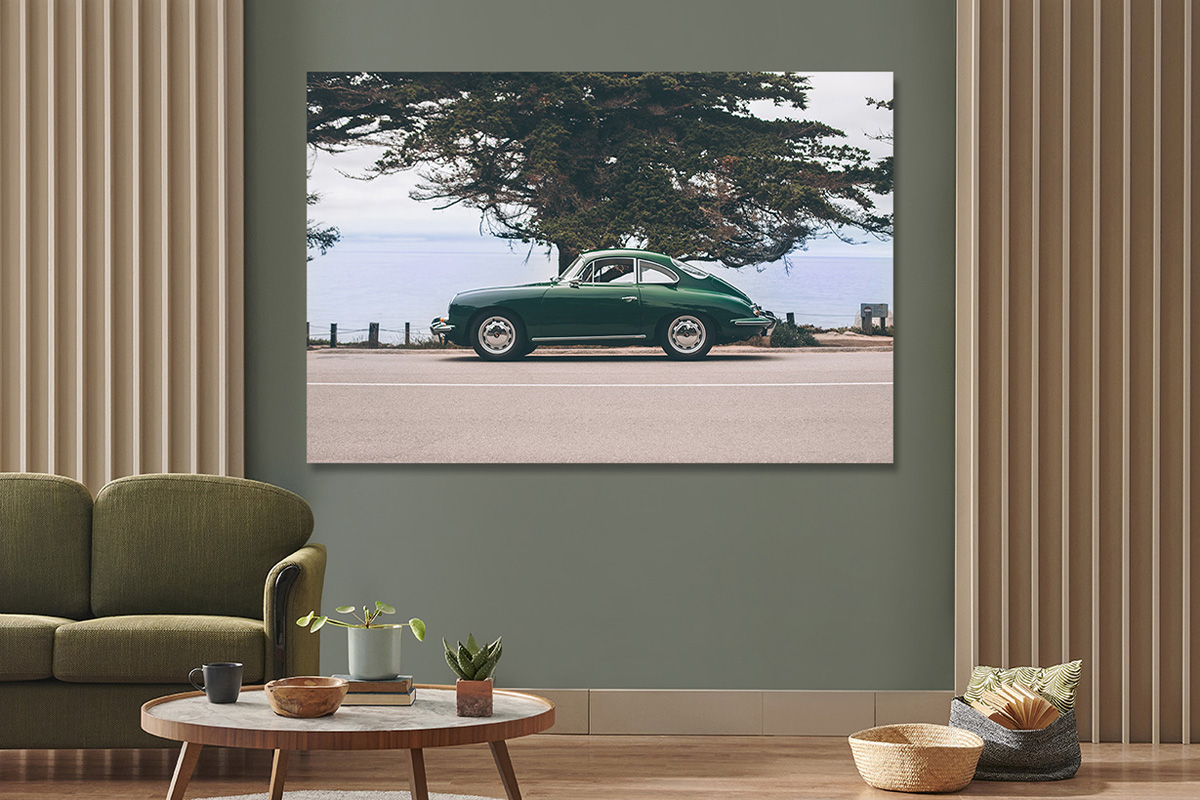
Choosing the right automotive wall art is all about finding the perfect balance between your personal style, the right size, and where to put it. This guide will help you pick pieces that transform any room into your very own automotive gallery. Whether you’re drawn to vintage photography or modern imagery, we provide practical tips to align your passion with your home’s unique aesthetic.
Selecting the right automotive wall art style
Great automotive wall decor begins by pinpointing the specific car models that truly reflect your personality. A Porsche 911 suggests sleek sportiness, while a Ford Mustang captures the raw spirit of classic American muscle. You can elevate the entire composition by pairing your chosen vehicle with a scenic backdrop, like a dramatic winding coastal road.
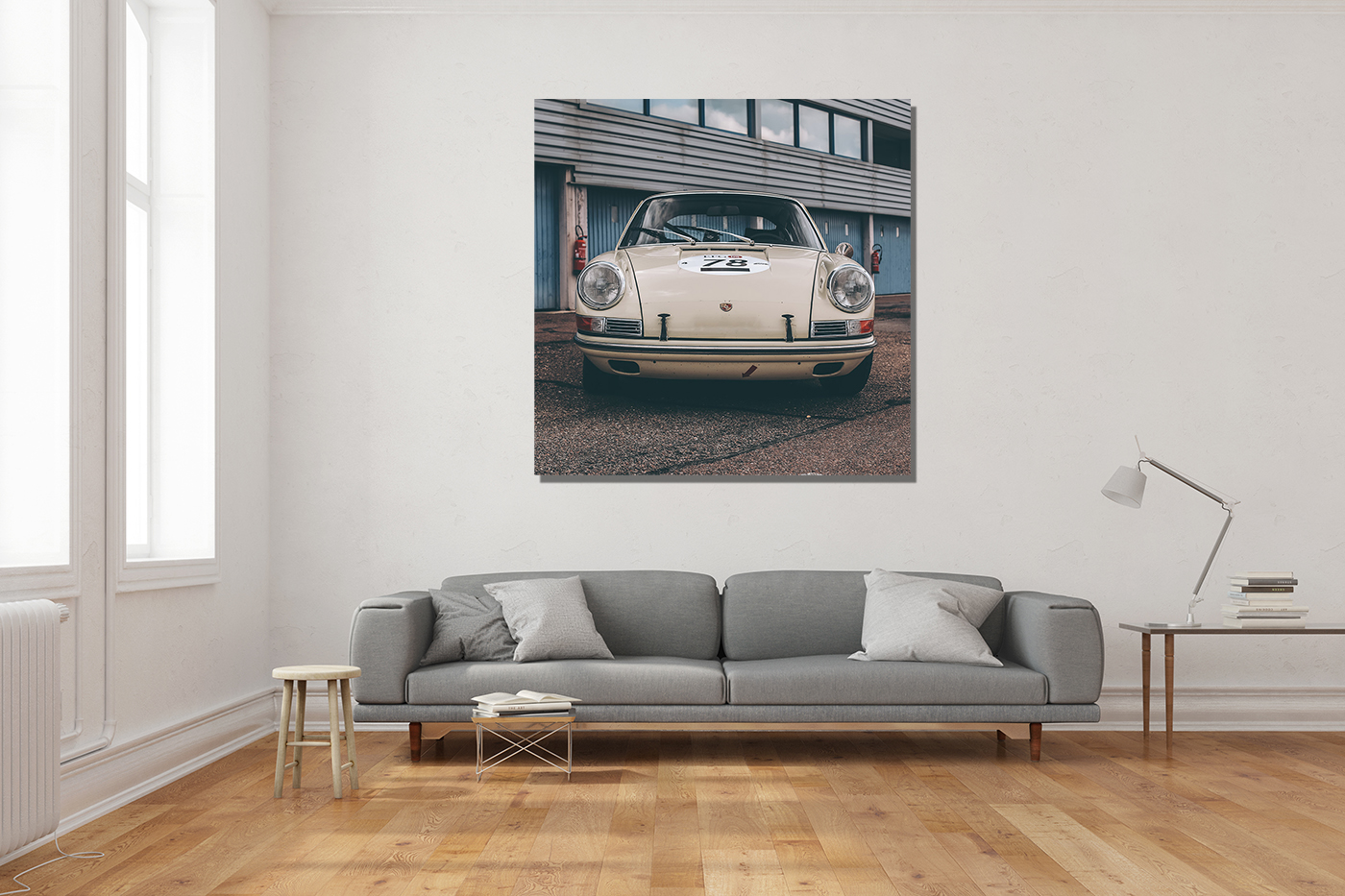
Matching car iconography to your interior design
Your automotive wall decor achieves its greatest impact when the vehicle model mirrors the era and overall vibe of your interior. Consider whether your space is best suited for vintage classics, bold muscle cars, or sleek contemporary supercars. For instance, a black-and-white Ford GT40 print can bring an air of executive sophistication, while a dynamic Porsche 964 silhouette adds a sense of movement to a gallery wall.
- Era matching: Vintage classics offer a timeless elegance that complements traditional homes, while modern supercars are a perfect fit for contemporary or industrial spaces.
- Silhouette drama: The profile of a sports car, with its flowing lines, creates immense visual interest and can easily anchor an accent wall or become a stunning focal point.
- Brand mixing: Combining different styles, like muscle cars and supercars, introduces exciting contrast and narrative depth to a gallery wall.
- Emblem integration: Iconic badges and distinct model inscriptions instantly convey rich automotive heritage while authenticating the composition’s overall appeal.
The automotive artwork you select should express your personal passion while harmonizing with your home’s existing lighting and furnishings. It’s important to decide if the piece will serve as a bold statement or function as a more subtle accent.
Choosing between vintage and modern automotive themes
Finding the ideal wall decor for car enthusiasts involves a thoughtful balance between deep nostalgia and contemporary aesthetics. Vintage black-and-white racing photography evokes a sense of timeless elegance, making it ideal for minimalist spaces where simplicity highlights the dramatic imagery. Sepia-toned classic car prints add a layer of warmth to traditional rooms, while photorealistic modern compositions suit clean, neutral interiors beautifully.
You can explore vintage car prints that capture automotive heritage to see how historical styles blend seamlessly with modern printing techniques. Vintage-style artwork often connects on a deeper emotional level with the enthusiast, while colorful modern pieces can energize a neutral room with a burst of visual flair.
Balancing color palettes with existing room décor
Monochrome black-and-white vintage car prints harmonize beautifully with minimalist spaces that feature neutral walls. This high-contrast approach elegantly emphasizes shadow and form without competing visually with your surrounding décor. These car prints also work remarkably well on bold-colored walls, where their monochromatic nature prevents any sense of visual chaos.
Vibrant compositions, like a stunning red Ferrari, serve as powerful focal points in muted, neutral rooms. Position this kind of colorful automotive wall decor where natural light can enhance its saturation, creating a striking contrast against your wall’s hue. You can further reinforce a cohesive theme by adding complementary accents, such as vintage racing posters, throughout your space.
Finding the ideal size for your wall space requires careful measurement and planning. The Porsche Modern Art collection presents a stunning reimagining of the Carrera RS emblem, available in nine vibrant color variations that change with the surrounding light. Printed on brushed aluminum, the piece utilizes the metal’s natural sheen to replace white areas, giving it a clean, modern look. Sizes range from 60×40 cm up to 180×120 cm, making these prints adaptable for a variety of wall spaces. They are an outstanding choice when choosing automotive wall art that delivers a bold statement with versatile display potential. Explore vibrant Porsche modern art for your walls to get a sense of how these sizes can fit into different rooms. This guide will walk you through sizing techniques and proportion principles to ensure your selected piece integrates seamlessly into your home.
Determining the Perfect Size for Your Wall Space
When choosing automotive wall art for your living room, begin by taking precise measurements of your available space. Use a tape measure to determine the dimensions of your wall, then subtract adequate clearance from any furniture. A 36-inch horizontal print fits beautifully above a standard sofa, while a 24-inch piece is ideal for placement above a side table. Follow the “1.5 rule”: position the artwork so the viewing distance is roughly 1.5 times its height for the most enjoyable visual experience.
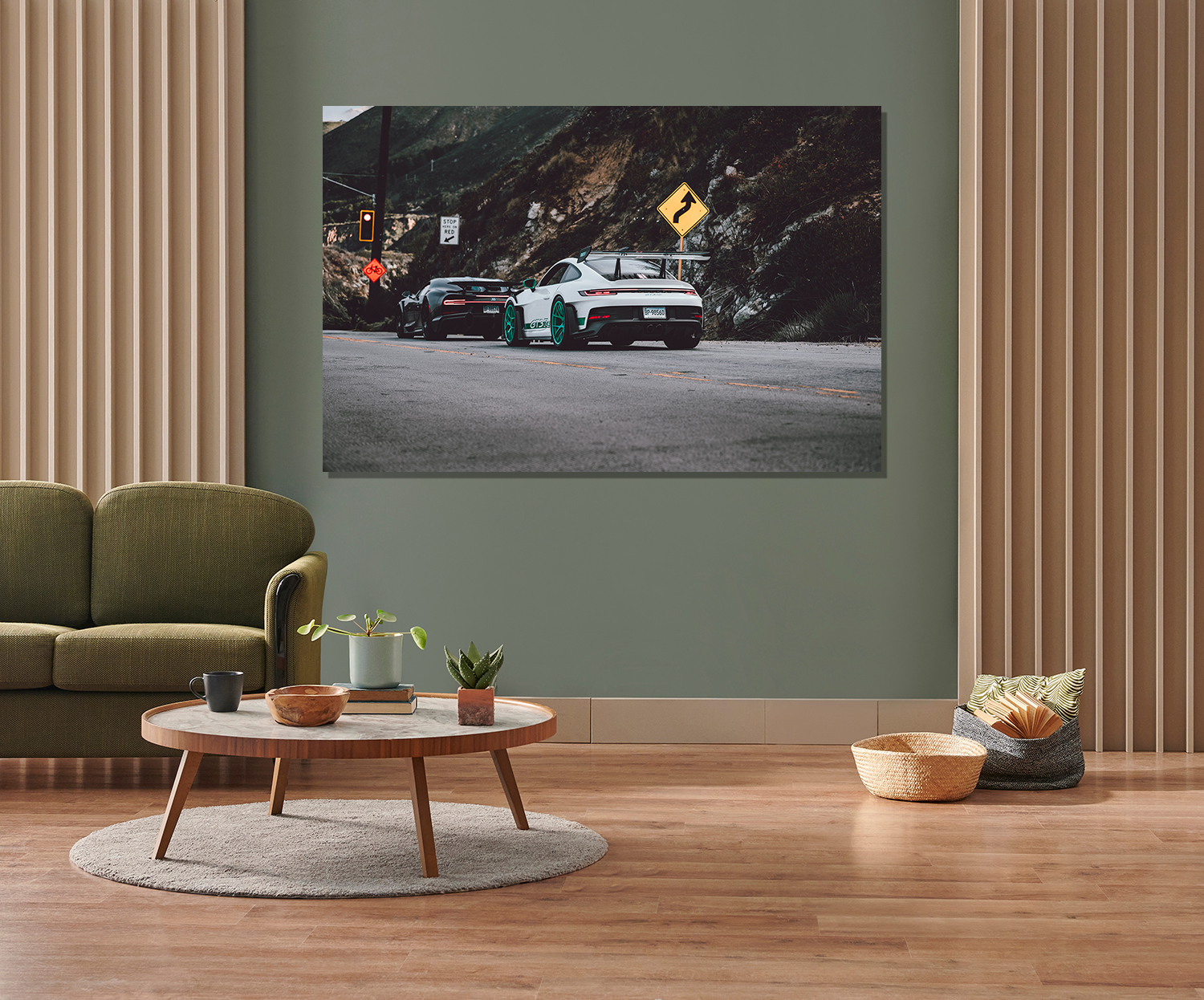
Measuring Your Wall and Furniture Proportions Correctly
Start by examining the specific wall space where you plan to hang your new automotive artwork. Measure the height and width carefully, taking note of any windows, doors, or electrical outlets. Allow for 5–10 cm of empty space between the edges of the artwork and any nearby furniture. For the best effect, hang the piece at eye level—approximately 150 cm from the floor—and use painter’s tape to outline its placement before mounting.
Creating Impactful Gallery Walls with Multiple Pieces
Garage art ideas become even more exciting when you combine multiple prints into a unified gallery wall. Aim for two to four complementary pieces. Create visual rhythm by mixing a large statement piece with smaller accents. Horizontal car prints help widen a space, while vertical ones draw the eye upward—perfect for rooms with high ceilings. Try grouping related themes, such as vintage racing posters alongside classic car photographs, to build a cohesive narrative.
- Multiple layouts: Blend various sizes and orientations of car prints to design dynamic gallery walls with visual depth.
- Spacing precision: Keep about 5 cm between framed pieces for a balanced look and to avoid a cluttered appearance.
- Thematic grouping: Arrange posters from the same era to give your gallery wall a museum-like feel.
- Proportion matching: Suit the display to the wall—use smaller groupings for hallways and larger collections for accent walls.
Hallways are ideal for vertical arrangements of vintage car prints in a stacked layout. Spacious walls can handle bigger, more ambitious displays where modern automotive artwork makes a real impact. Offices also offer a great setting for thoughtfully grouped pieces that celebrate iconic racing history or a favorite sports car.
The materials you choose for your artwork are crucial for its longevity, visual appeal, and how well it fits in with your home. Top-quality options vary from the modern, clean look of brushed aluminum to the classic, soft texture of matte canvas. Here, we’ll take a closer look at how different materials perform and what framing choices will best match your interior style.
Choosing Materials and Finishes for Home Display
For any enthusiast following car wall decor tips, it’s important to think about how the material influences both durability and appearance. Canvas prints offer a soft, fabric-like surface that minimizes glare, making them an excellent choice for brightly lit living spaces. Meanwhile, brushed aluminum provides a sleek, modern finish that reflects light gracefully and suits a contemporary home.
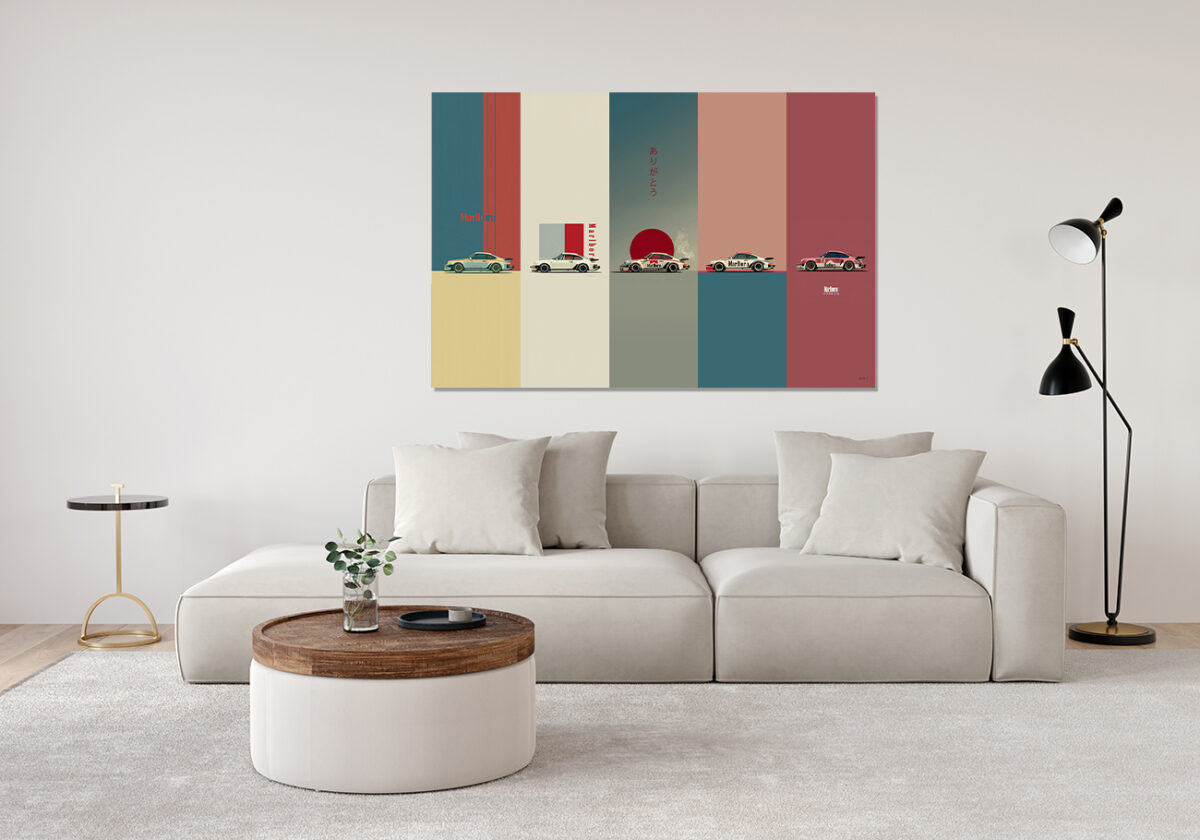
Comparing Canvas, Aluminum, and Acrylic Print Options
If you’re looking for a classic gallery feel, canvas wall art softly absorbs light for a gentle, appealing look. Its fabric texture adds depth and is ideal for enthusiasts who love that traditional museum style. On the other hand, aluminum prints offer a modern and sleek appearance, are resistant to the elements, and seem to transform as the light in the room changes.
- Canvas prints: These feature a soft surface that reduces glare and provides a timeless gallery look, making them a great fit for warmly lit interiors.
- Brushed aluminum: This modern finish reflects light beautifully and is more durable than canvas, especially in high-traffic areas of the home.
- Acrylic glass: Delivers the richest color saturation and a high-gloss finish that makes photorealistic automotive details truly stand out.
For a durable yet lightweight option, aluminum Dibond features a polyethylene core sandwiched between aluminum sheets. These high-quality materials support large-format canvas prints without being overly heavy, making them much easier to hang, especially for larger pieces.
Ensuring Durability and UV Protection for Longevity
When choosing automotive wall art, it’s essential to understand the role of UV-stable inks and color calibration in preserving your print for years to come. Museum-grade materials use archival inks that resist fading, even in naturally lit rooms. Professional calibration ensures that fine details—like metallic finishes and racing stripes—stay vibrant and never yellow.
Using UV-filtering glass or acrylic adds a vital layer of protection against sun damage, which is key for preserving color intensity. This is especially important for vintage car prints, where the overall impact depends heavily on true-to-life colors. For best results, try to hang your automotive artwork away from direct sunlight.
To keep your art in top condition, monitor the humidity in your home to avoid warping of canvas or adhesive issues on metal prints. Gently dust canvas prints with a soft cloth each month and steer clear of harsh cleaners. Rotating your displays with the seasons can also help reduce light exposure and keep your space feeling fresh.
Selecting Frames That Complement Your Interior Style
The frame you pick plays a big role in how well your automotive artwork blends with your existing décor. Wood frames in walnut or oak bring warmth to traditional spaces and are a natural match for vintage car prints and classic photography. Discover premium black-and-white automotive wall art to see how high-resolution imagery masterfully plays with light, shadow, and line for a timeless look. For a more contemporary style, sleek metal or floating frames pair well with prints of modern supercars.
Floating frames offer a clean, gallery-like statement without any visible hardware, perfect for a minimalist aesthetic. Many come with ready-to-hang hardware that makes installation simple while keeping a polished look. Be sure to choose a frame width that balances well with the size of your print.
You can never go wrong with a black frame—it adds a touch of sophistication to both colorful supercars and dramatic black-and-white racing photography. Natural wood frames introduce organic warmth and are ideal for rustic or industrial decors. Matte finishes help reduce glare, keeping the focus exactly where it belongs: on your stunning automotive subject.
Transforming automotive artwork from mere decoration into a commanding focal point begins with its placement. This section explores how to expertly position your car prints for maximum visual appeal, use lighting to bring out rich details, and personalize your space with custom imagery. Whether you’re styling a man cave, home office, or living area, the right arrangement amplifies both the aesthetic strength and emotional impact of your collection.
Placement Strategies to Maximize Visual Impact
Creating Focal Points in Living Rooms and Offices
Wall decor for car enthusiasts makes the biggest statement when it immediately catches the eye upon entering a room. Establish a powerful visual hierarchy by positioning large, bold statement pieces above sofas, fireplaces, or desks. For instance, a monochrome Ford GT40 print in a home office conveys timeless class, while an oversized piece of automotive artwork (around 120 × 80 cm) on a living room feature wall creates an immersive, gallery-like experience.
- Sofa Focal Points: Position substantial automotive wall art roughly 10 cm above the sofa’s back to create a harmonious look that grounds your seating area.
- Mantel Statements: Display medium-sized prints (60 × 40 cm) above the fireplace to add balance without overwhelming other decorative items.
- Gallery Wall Rhythm: Arrange a set of two to four complementary car prints with even spacing for a cohesive, museum-worthy tribute to automotive heritage.
- Office Authority: Opt for iconic supercars or vintage racing posters in your workspace to express both passion and refined taste.
Turn hallways into personal automotive galleries by thoughtfully arranging smaller vertical prints (40 × 60 cm) at eye level. Stairwells offer a perfect opportunity to guide the eye upward with a sequence of three or four pieces that follow the staircase’s incline. In bedrooms, more intimate-sized pieces (50 × 35 cm) celebrate your love for cars without dominating the room’s cozy atmosphere.
For a dedicated man cave, consider using back-lit panels or recessed shelving to accentuate metallic finishes and create an authentic showroom ambiance. Layering your automotive wall decor with industrial elements—like vintage car parts or metal accents—beautifully reinforces the theme. The key is to balance these pieces with the surrounding décor so that everything complements, rather than competes with, your primary automotive artwork.
Lighting Techniques to Enhance Automotive Photography
The right lighting makes your automotive wall decor truly stand out, revealing intricate details that ordinary room lighting might miss. Subtle LED strips or adjustable track lighting positioned above your prints can highlight glossy finishes and dynamic racing stripes with a professional flair. The goal is to use directional light that minimizes glare while accentuating the shadows and highlights in your high-quality automotive artwork.
- LED Accent Strips: Install these above your prints to cast light downward, which enhances textures and deepens colors for a premium showroom effect.
- Track Lighting: Choose adjustable fixtures that let you modify the angle, perfect for emphasizing specific details on your car prints as needed.
- Natural Light Positioning: Hang high-contrast black-and-white posters opposite windows to allow natural light to enrich the shadows without creating a distracting glare on the glass.
Avoid hanging artwork in direct sunlight, as UV exposure can lead to fading and create harsh reflections that wash out the image. If your chosen wall space is near a window, protect your investment with UV-filtering glass or acrylic to maintain color fidelity. Warm-toned lighting (around 3000K) is ideal for vintage car prints, while cooler light (4000–5000K) better suits modern supercars and vibrant, full-color digital art.
Personalizing Your Space with Custom Car Prints
Commissioning custom silhouettes of your own vehicle is a fantastic way to create unique automotive wall art that reflects your personal story. High-resolution photos from car shows or track days translate superbly into canvas prints, metal art, or sleek acrylic pieces. With modern digital art techniques, you can even place your favorite models against stunning dreamscapes, like mountain passes or scenic coastal roads.
Always check the copyright status before using any stock images to avoid legal issues with protected photography. For a truly one-of-a-kind piece, consider collaborating with artists who specialize in automotive subjects to create narrative artwork that highlights your vehicle’s unique character. Discover expert tips for selecting automotive wall art that resonates emotionally, turning generic wall space into a deeply personal gallery of mechanical artistry.
Frequently Asked Questions
How do I choose the right size automotive artwork for my wall space?
Begin by carefully measuring your available wall space. A good rule of thumb is to use the 1.5 times height rule to find a comfortable viewing distance.
A 36-inch horizontal canvas print makes a fantastic statement piece above a standard sofa, while a 24-inch piece fits nicely on narrower walls.
Before you commit, use painter’s tape to outline the dimensions of the proposed automotive artwork directly on your wall. This helps you visualize the scale. Remember to leave about 5–10 cm of clearance around the edges for a balanced look that doesn’t feel crowded.
What material works best for automotive wall art in different room settings?
The best material for your automotive art depends on your room’s style. Canvas prints provide a soft, textured look that fits well in a classic interior and helps reduce glare.
For a modern or minimalist home, brushed aluminum offers a sleek, reflective finish that changes with the light. If you want maximum color vibrancy for detailed racing scenes, acrylic glass delivers a glossy, photorealistic finish perfect for contemporary spaces.
Consider your lighting: matte finishes are ideal for bright rooms, while glossy options pop in areas with natural light.
Where should I position automotive artwork to create the strongest visual impact?
For the strongest impact, position large statement pieces at eye level above key furniture like sofas or fireplaces. This creates a powerful focal point that anchors the room.
Placing high-contrast automotive artwork opposite natural light sources allows shadows to accentuate details without creating harsh glare. You can also install subtle track lighting above the piece to create a dynamic, showroom-like atmosphere that highlights its racing heritage.
To protect your automotive investment from fading, avoid direct sunlight. For prints near windows, consider using UV-filtering glass.